Guide · · Shopping Baskets
Cleaning shopping baskets: a routine that holds up through peak trading
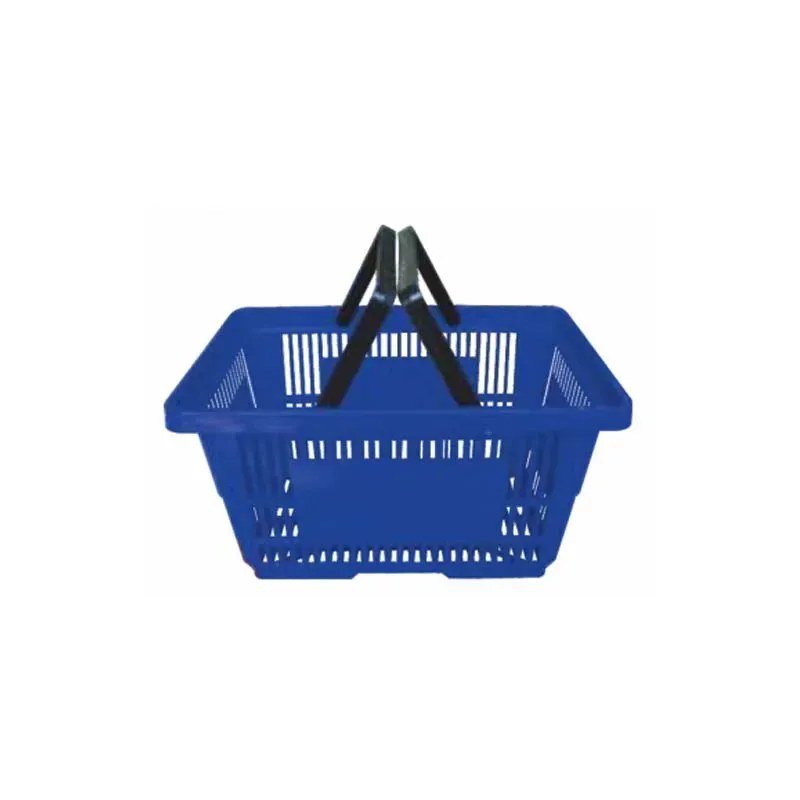
Cleaning shopping baskets is a weekly job in most shops and a twice weekly one anywhere selling loose produce, bakery, raw meat or fish. A 40 L solid plastic hand basket starts from £3 ex VAT, bulk price and wipes down in under a minute, while a 50 L folding mesh basket starts from £11 ex VAT, bulk price and drains on its own once rinsed. Hold roughly one spare basket for every ten on the floor so a batch can be out of use while it dries.
How often should you be cleaning shopping baskets?
For a general convenience store or a hardware shop, once a week is usually enough. Where the basket carries loose produce, bakery items, raw meat or fish, move to twice a week, and daily on the baskets nearest those aisles. Spills in those departments soak into the base ribs and the handle pivots instead of sitting on a flat surface where a customer or a member of staff would spot them.
The practical test takes two minutes. Lift ten baskets off the stack by the door and look inside each one. If more than one or two have crumbs trapped in the base, a sticky patch on a handle or a smear down one wall, the gap between washes is too long for the volume going through the shop.
Peak trading weeks are the usual pinch point. Footfall rises, baskets stay in circulation longer, and the stack by the entrance rarely gets deep enough for anyone to carry a batch away. Set the rota and buy the spare baskets before that period starts, not in the middle of it. The full range sits on the shopping baskets page.
What ends up on a basket between washes
Three things account for most of it: food residue from leaking packaging and soft fruit, hand soil on the handles, and floor grit picked up when a basket is set down in a doorway and carried straight back to the stack.
- Base ribs and corners: crumbs, juice and flour collect where the mouldings meet.
- Handle grips and pivots: the part every customer touches, and the part a cloth usually skips.
- Stacking rims: the surfaces that press against the basket below, so anything on one rim transfers down the stack.
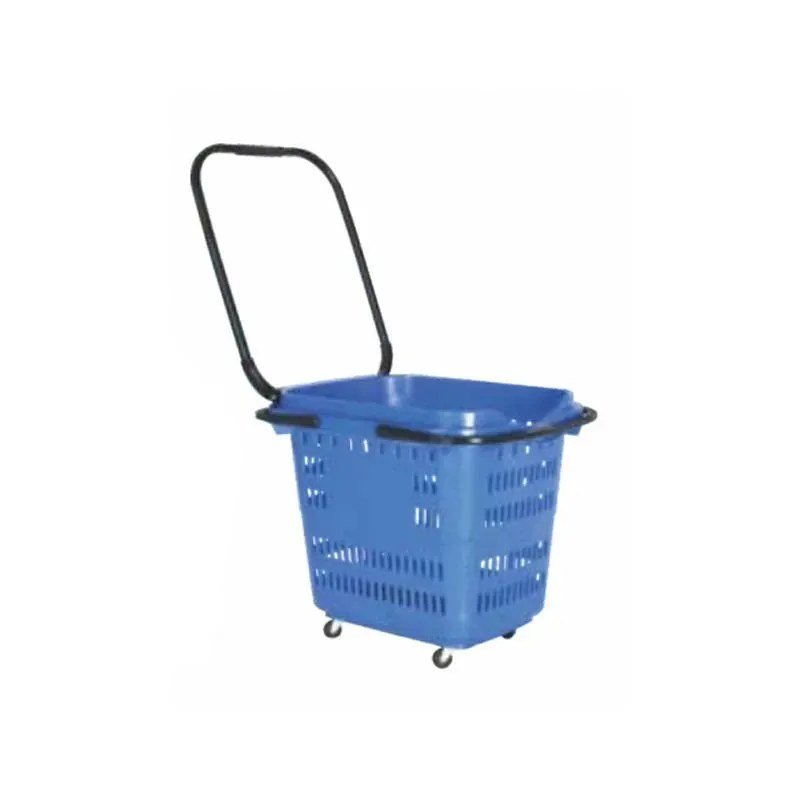
- Castors and the pull handle on a wheeled basket: grit, hair and packaging tape wind round the wheels.
Mesh baskets hold less residue because there is less flat surface for it to sit on, but the mesh traps fibres, tape and bag ties. Solid walled baskets collect more and give it up faster under a cloth, which is why shops that wash in volume tend to buy solid plastic and keep mesh for the heavier shops.
Hand basket, mesh basket or wheeled basket: which cleans up fastest
| Basket | Capacity | Guide price | How it cleans | Back on the stack |
|---|---|---|---|---|
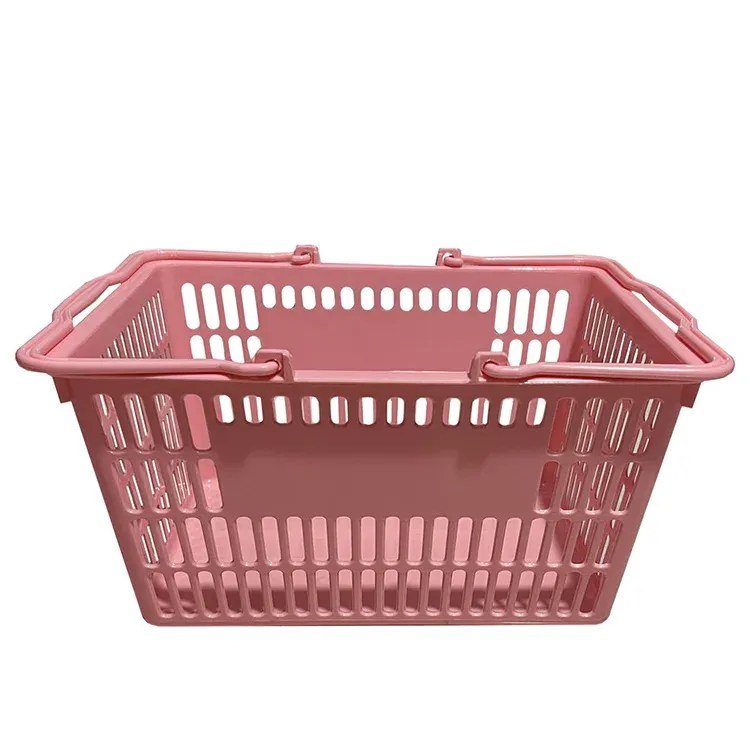
| Solid plastic hand basket | 40 L | from £3 ex VAT, bulk price | Spray, wipe, rinse; smooth internal walls | Fast, once stood on edge |
| Solid plastic supermarket basket | 50 L | from £4 ex VAT, bulk price | Same routine, more wall area to cover | Fast |
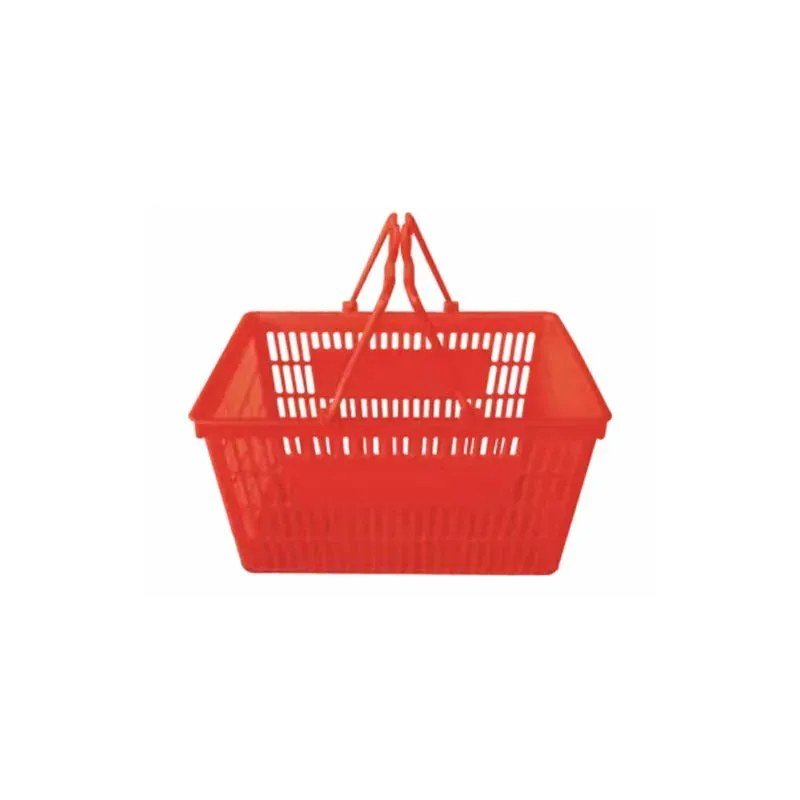
| Folding mesh hand basket | 50 L | from £11 ex VAT, bulk price | Rinses through and drains; fibres catch in the mesh | Quickest to dry |
| Wheeled basket with pull handle | 35 L | from £3 ex VAT, bulk price | Body wipes down, castors need a brush | Slowest, because of the wheels |
The gap in handling time is small per basket and large across a shop floor. A wheeled basket takes two or three times as long as a solid hand basket because the castors have to be picked clean before the body is worth washing. If your staff clean baskets in batches between tills, that difference decides how many get done in a shift.
Compare the two ends of the range on their own pages: the 40 L plastic hand basket and the 50 L folding mesh basket.
A washing routine that fits around trading hours
Work in batches, never one basket at a time, and keep the stack by the door full while you do it.
- Pull a batch off the stack at a quiet hour and put spares in its place so the entrance never runs empty.
- Knock loose waste into a bin before anything gets wet. Crumbs turn to paste the moment water hits them.
- Wash with warm water and a general purpose detergent, or run the baskets through a warewash cabinet if the shop has one and the plastic is rated for that temperature.
- Use a brush on the handle pivots and the base ribs. A cloth skates over both.
- Rinse, then stand the baskets on edge rather than nesting them wet, so the water runs out instead of pooling in the base.
- Return them to the stack once dry and bring the next batch through.
Check the maximum wash temperature for the plastic before anyone puts a basket through a hot cabinet. Polypropylene takes warm water and detergent without complaint, but repeated high temperature cycles soften a thin stacking rim, and a basket that has lost its shape will not nest properly afterwards.
What to check before you buy a basket you will be washing every week
A basket that is easy to clean is a different specification from a basket that is simply cheap to buy. Look at these points on the sample before you order a batch:
- Internal corners: rounded mouldings release residue, sharp internal angles hold it.
- Handle fixings: riveted or moulded pivots survive repeated wetting better than a clipped-in handle that works loose.
- Drainage: a base with open ribs or mesh lets water out; a flat sealed base keeps it in.
- Colour: strong colours fade under daily detergent, so expect a batch bought later to differ slightly from the first.
- Capacity against weight: 30 L to 40 L suits a top up shop, 45 L to 50 L suits a full basket, and the bigger the basket the heavier it is to carry to the sink.
- Stacking: check that a wet basket still nests cleanly, because that is when rims are most likely to stick.
If customers are regularly filling 50 L baskets to the brim, the answer may not be a bigger basket at all. A small wheeled basket or a shopping trolley takes the weight off the customer and off your handles.
How many spare baskets to hold, and what they cost
Count the baskets on the floor and add roughly one in ten as spares. A shop running 100 baskets keeps around 10 back, which is enough to take a batch out for washing at any hour without the stack by the door running down. Shops that wash daily in a food department usually run closer to one in six.
Guide prices start from £3 ex VAT, bulk price for a 40 L solid plastic hand basket and from £4 ex VAT, bulk price for the 50 L version. A 50 L folding mesh basket is from £11 ex VAT, bulk price, and a 35 L basket on wheels with a metal pull handle is from £3 ex VAT, bulk price. Those are guide prices in GBP excluding VAT; the written quote confirms price, freight, duty, VAT and lead time for the quantity you actually want, and any quantity is welcome.
How the guide prices are put together is set out on the price guide. Send a list of capacities and quantities and the quote comes back by email.
Shopping baskets that wash well
Questions people ask
How often should shopping baskets be cleaned?
Once a week covers most general retail. Stores selling loose produce, bakery, raw meat or fish should wash twice a week, and daily on the baskets used nearest those aisles.
What should you use to clean a plastic shopping basket?
Warm water and a general purpose detergent, with a brush for the handle pivots and the base ribs. Rinse afterwards, because dried detergent leaves a film that collects dust.
Can shopping baskets go through a warewash cabinet?
Many polypropylene baskets can, but check the maximum temperature for the plastic first. Repeated hot cycles can soften a thin stacking rim so the basket no longer nests properly.
Do mesh baskets clean up better than solid plastic ones?
Mesh drains faster and holds less residue, but it traps fibres, tape and bag ties. Solid walls take a wipe quicker, so shops washing large numbers usually prefer solid plastic.
How many spare shopping baskets should a shop hold?
About one in ten of the number on the floor, so a batch can be away being washed without the stack by the entrance emptying. Food departments that wash daily often hold one in six.
What does a replacement shopping basket cost?
A 40 L solid plastic hand basket is from £3 ex VAT, bulk price and a 50 L folding mesh basket is from £11 ex VAT, bulk price. The written quote confirms the price for your quantity.