Comparison · · Warehouse & Platform Trolleys
Warehouse trolley prices: what you pay for each type, and why
Warehouse trolley prices sit in clear bands: a flat stock trolley from £28 ex VAT, bulk price, a 200 kg single deck platform trolley from £37 ex VAT, a three tier wire shelf trolley from £48 ex VAT, bulk price, and a heavy duty folding mesh trolley from £87 ex VAT, bulk price. Most of that spread comes from the number of tiers, the mesh sides and the folding frame, not from the rated load. Price, freight and VAT for your quantity are confirmed on your written quote.
What a warehouse trolley is, and why the prices spread so widely
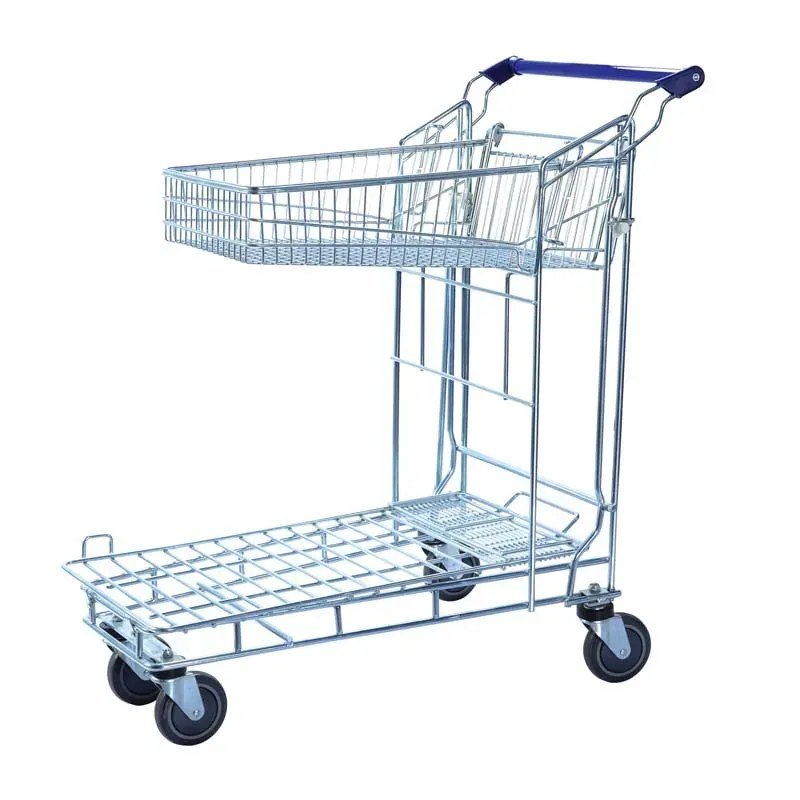
A warehouse trolley, also called a platform trolley or a flat trolley, is a four or five wheel cart that moves cases, totes and loose stock around a building by hand. It is usually the least expensive piece of handling equipment a site buys, and the one replaced most often, because it takes knocks in doorways and on kerbs that a pallet truck never sees.
Across the warehouse trolley range the guide prices run from £28 ex VAT, bulk price, at the entry point to £87 ex VAT, bulk price, for the heaviest folding mesh cart. That is a threefold spread on what looks from a distance like the same product. Four things drive it: how many tiers the trolley carries, whether the sides are open or meshed, the finish on the steel, and whether the frame folds.
Warehouse trolley price bands: what each type costs
These are guide prices in GBP ex VAT from the current range. Freight, VAT and the price for the quantity you need are confirmed on your written quote.
| Trolley type | Typical rated load | Guide price | Where it suits |
|---|---|---|---|
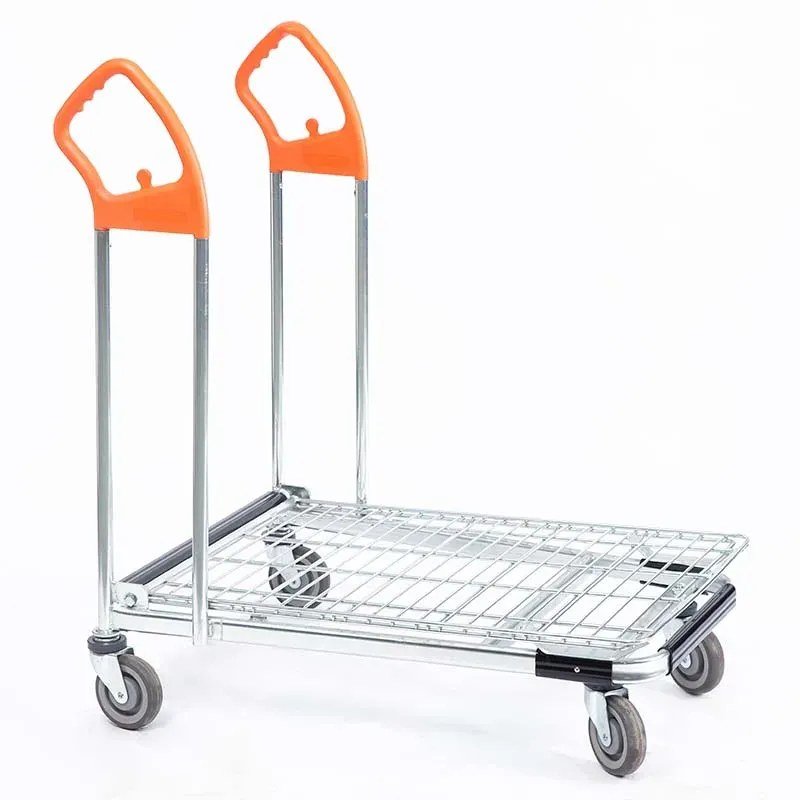
| Flat deck stock trolley | 500 kg | from £28 ex VAT, bulk price | Backroom stock runs, long cases, yard to shop floor |
| Single deck platform or mesh trolley | 200 kg | from £37 ex VAT | General goods in and goods out, mixed cases |
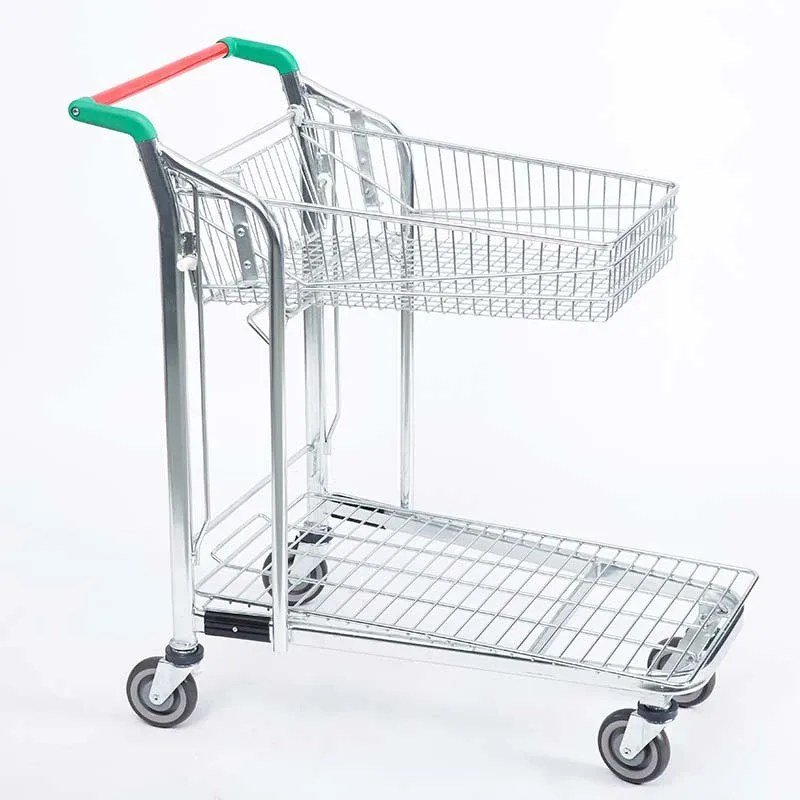
| Two tier folding mesh cart | 300 kg | from £44 ex VAT, bulk price | Picking rounds with two levels of sorting |
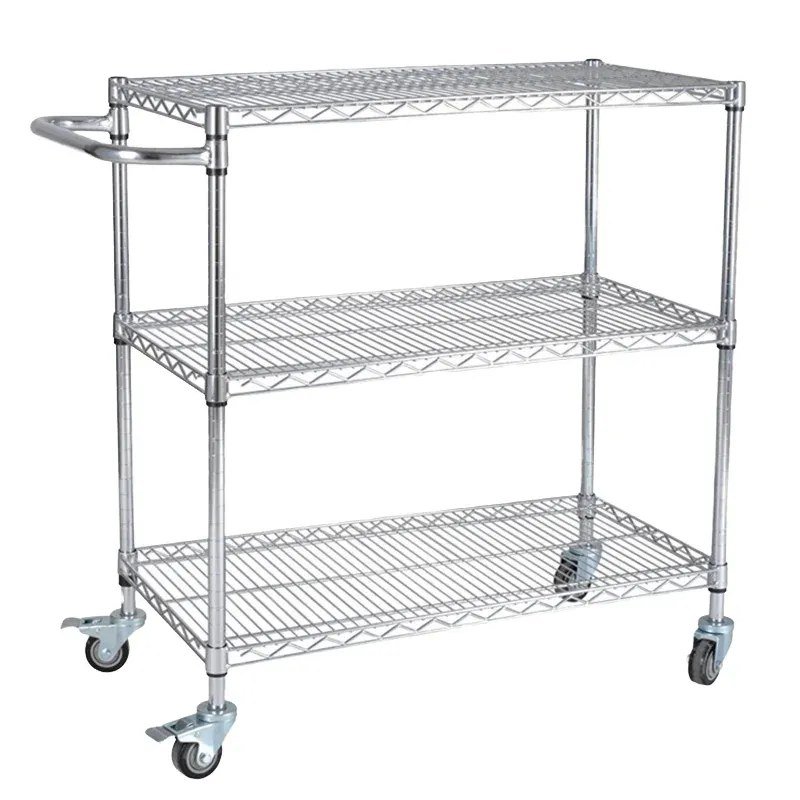
| Three tier wire shelf trolley | 100 kg | from £48 ex VAT, bulk price | Light, bulky stock and shelf replenishment |
| Heavy duty folding mesh trolley | Mesh sided, folds flat | from £87 ex VAT, bulk price | Loose stock that must not slide off the deck |
Guide prices are converted from the factory list at a buffered exchange rate and hold for 30 days on a written quote. The price guide explains how the figures are built.
Does a higher rated load cost more?
Less than most buyers expect. A flat stock trolley rated at 500 kg starts at £28 ex VAT, bulk price, while a three tier wire shelf trolley rated at 100 kg starts at £48 ex VAT, bulk price. The heavier one is one welded deck on four castors. The lighter one carries three shelves, four uprights and a great deal more welding, and that is what you are paying for.
What the rated load does decide is whether the trolley lasts. Load a 200 kg deck to 300 kg every day and it will bow in the middle, the castor plates start to work loose and the swivels tighten up. Choose a rated load above your heaviest routine load rather than level with it, and the same trolley will still be straight in three years.
One tier, two tiers or three: what the extra shelves cost
The step from one deck to two is the smallest worthwhile upgrade in the range. A single deck 200 kg trolley is £37 ex VAT, and a two tier folding mesh cart rated at 300 kg is £44 ex VAT, bulk price. For seven pounds the picker gets a second level, which means fragile or small items travel on top instead of being stacked on heavy cases.
Three tiers are a different job. The shelves sit closer together, so the trolley suits light and bulky goods, paperwork, empty totes and shelf replenishment rather than full cases. If your pickers work from a list and sort as they go, look at the picking trolleys instead, where the basket and shelf patterns are grouped together.
A practical test: count how many times a day your team puts something on the floor because the deck is full. If it happens more than twice a shift, the second tier pays for itself in handling time.
Why two trolleys that look the same quote differently
Once the pattern is fixed, four details move the figure on the quote.
- Finish. Painted steel is the base. Zinc plated costs a little more and holds up in damp loading bays. Stainless steel is the most expensive and is worth it only in chilled rooms, food preparation areas or anywhere that gets hosed down.
- Deck size. A longer deck needs heavier section in the frame to stay flat, so a 1200 mm deck is not the same price as a 900 mm one.
- Castors. Larger diameter wheels, braked castors and heavier mountings all add to the figure, and all three are worth specifying if your floor has expansion joints or thresholds.
- Folding. A folding frame adds hinges, pins and a locking catch. The heavy duty folding mesh trolley at £87 ex VAT, bulk price, is the clearest example: the mesh sides and the fold are most of the difference against a plain deck.
Quantity also moves the figure. Several lines show a from price that applies above a single unit, which is why some figures carry the words bulk price. Any quantity is welcome, and the written quote confirms the price for the number you actually need.
What to check before you buy a warehouse trolley
Five minutes with a tape measure saves a return.
- Measure the deck against the cases or totes you really move, not against the biggest box in the building.
- Set the rated load above your heaviest routine load, and remember that a mixed pallet broken down onto a trolley is heavier than it looks.
- Check the castor diameter against your floors. Small wheels stop dead on expansion joints, drain covers and yard thresholds.
- Decide whether the trolleys have to nest or fold. Twenty trolleys parked in a backroom take real floor space if they do neither.
- Check the handle height against the people pushing. A low handle on a long run is hard work.
- Pick the finish for the wettest place the trolley will stand, not the driest.
Send the deck size, the rated load and the quantity by email and the quote comes back with price, freight, duty and VAT on it. Everything is made to order at our partner factories and inspected before dispatch, with photos and video sent to you, then delivered anywhere in the UK.
Warehouse trolleys discussed in this guide
Questions people ask
How much does a warehouse trolley cost?
Guide prices in the current range run from £28 ex VAT, bulk price, for a flat stock trolley to £87 ex VAT, bulk price, for a heavy duty folding mesh trolley. A single deck 200 kg platform trolley sits at £37 ex VAT.
Why is a 500 kg trolley cheaper than a 100 kg one?
Because the price follows the steel and the welding, not the rated load. A 500 kg flat deck is one welded platform on four castors, while a 100 kg three tier trolley needs three shelves and four uprights.
Is a two tier trolley worth the extra over a single deck?
Usually, if the team picks mixed goods. The step from £37 ex VAT to £44 ex VAT, bulk price, buys a second level so small or fragile items are not stacked on heavy cases.
What is the difference between a warehouse trolley and a roll cage?
A warehouse trolley has an open deck and is loaded and unloaded by hand from any side. A roll cage has fixed or folding mesh walls and a gate, so the load is contained for transport between sites.
Which finish should I ask for?
Painted steel is fine for a dry warehouse. Zinc plated suits damp loading bays and yards. Stainless steel is for chilled rooms, food preparation and anywhere washed down, and it carries the highest price of the three.
Does the price change with the quantity I order?
It can. Some lines show a from price that applies above a single unit, shown as a bulk price. Any quantity is welcome and your written quote confirms the price, freight and VAT for the quantity you need.