Guide · · Children's Shopping Trolleys
Kids shopping trolleys: which type earns its place in your store
A kids shopping trolley is a scaled down supermarket trolley, normally 17 L or 50 L, that a child pushes alongside a parent. Factory-direct guide prices start from £10 ex VAT at trade quantities (minimum order applies), and a full size 160 L trolley with a moulded child seat and toy front is from £18 ex VAT. Capacity, flag height, castors, colour and branding are all specified on your written quote because every trolley is made to order.
What does a kids shopping trolley actually do for a store?
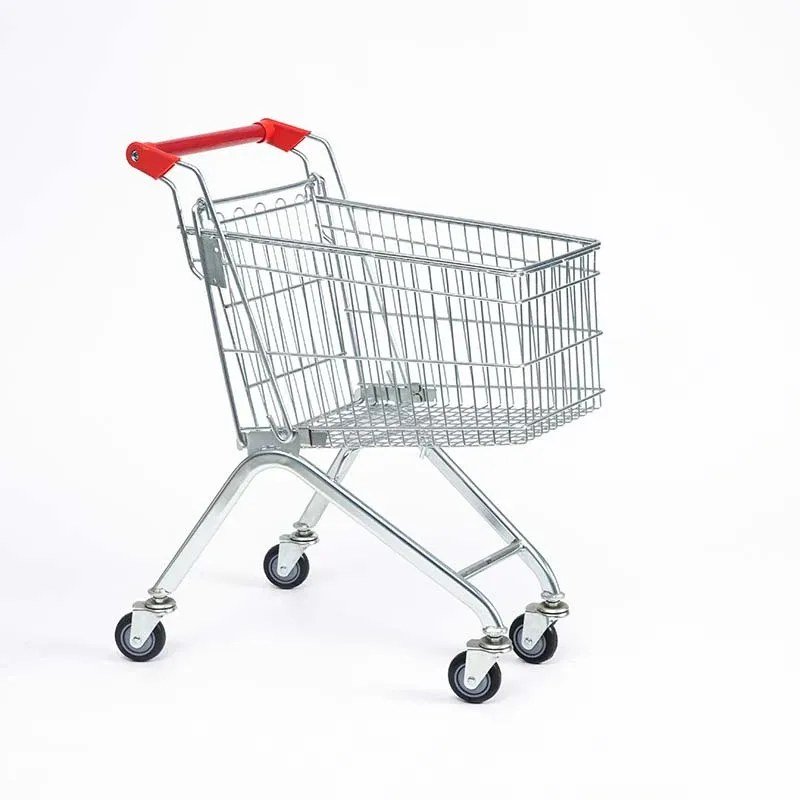
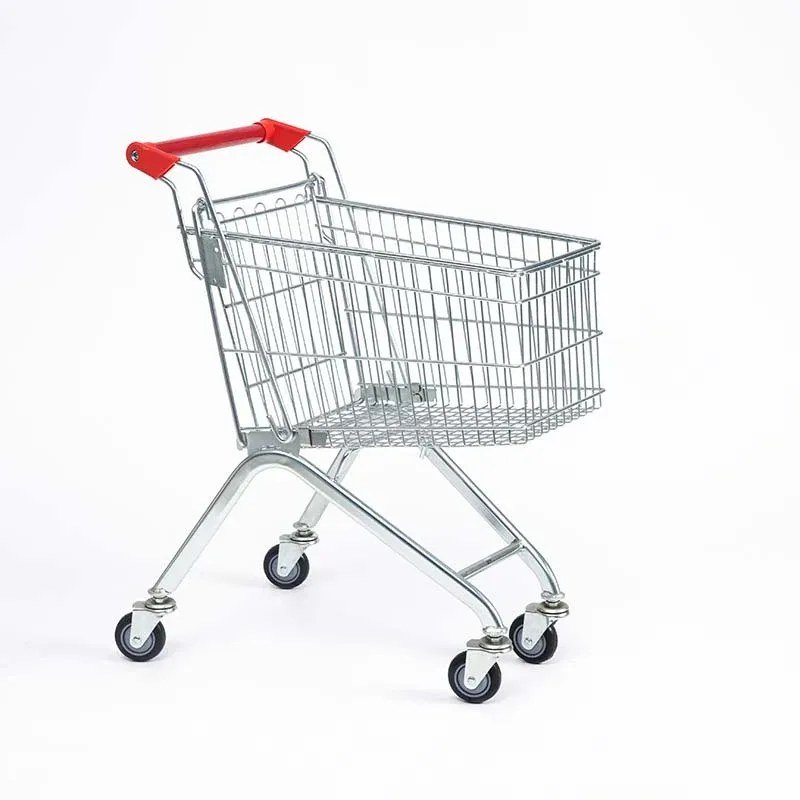
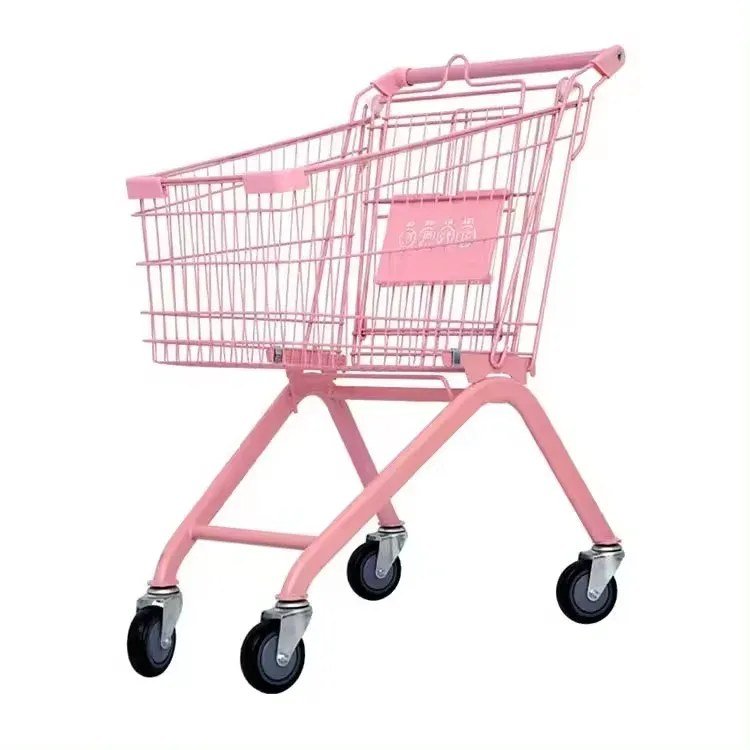
A kids shopping trolley, also called a children's trolley or a mini shopping cart, is a scaled down version of the trolley your customers already push: the same basket shape, the same swivel castors, roughly a third of the height. The child pushes their own trolley, the parent gets round the aisle without a tug of war at every shelf, and the basket fills with the items the child picks up on the way.
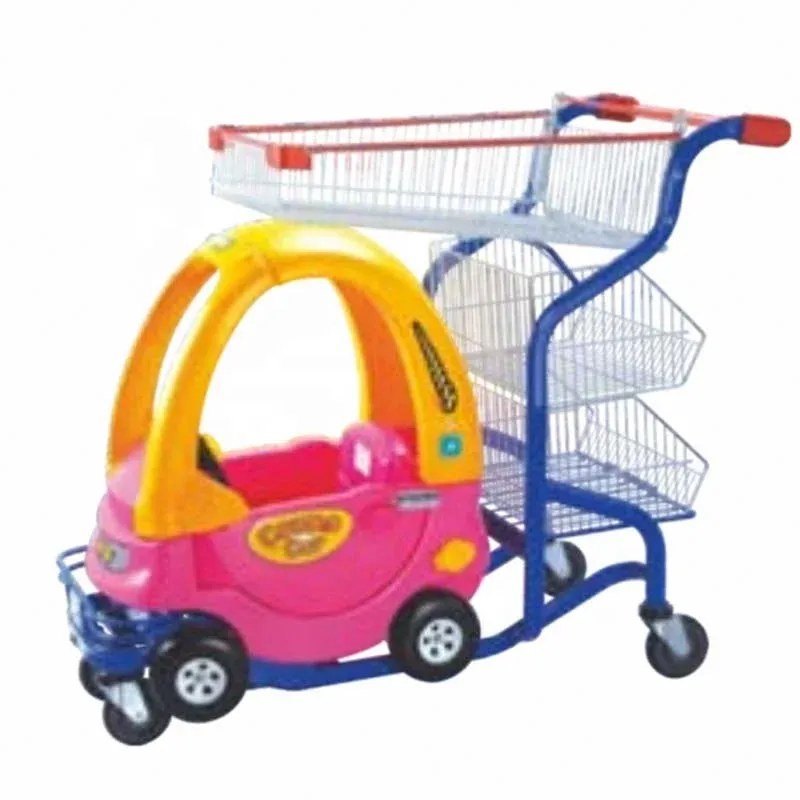
There are two different jobs here, and they need different equipment. The first is the child pushed trolley: a 17 L or 50 L basket on four castors, usually with a tall flag so staff and other shoppers can see it over the shelf line. The second is the parent pushed trolley: a full size 160 L basket with a moulded child seat, often with a toy car front the child sits in. Both sit in the children's trolley range, and both are made to order at our partner factories.
Most orders come in as part of a wider refit, which is worth planning in one go: children's trolleys alongside adult supermarket shopping trolleys and hand shopping baskets on one quote keeps the colour, the powder coat finish and the branding consistent across the shop floor.
Mini, junior or child seat: the three types compared
Capacity is the quickest way to decide. Below 20 L the trolley is a token basket for a small child; at 50 L it holds a real contribution to the shop; at 160 L it is an adult trolley that happens to carry a child as well.
| Type | Capacity | Who pushes it | Best for | Guide price |
|---|---|---|---|---|
| Mini trolley, unfolding steel | 17 L | Child | Convenience stores, forecourts, bakery and greengrocer aisles | from £10 ex VAT |
| Junior trolley | 50 L | Child | Supermarkets and cash and carry aisles wide enough for two trolleys | from £18 ex VAT |
| Trolley with child seat and toy front | 160 L | Adult | Main weekly shop with a child under four riding | from £18 ex VAT |
| Twin seat trolley | 17 L basket, two seats | Adult | Family stores where two children ride together | from £24 ex VAT |
A practical split for a mid size supermarket is a small batch of child pushed trolleys near the entrance, held in their own short bay, plus child seat trolleys mixed into the main trolley bay. The 50 L junior trolley is the one most stores settle on, because it survives being pushed into a shelf end and still holds enough to feel real to a child.
Sizes, materials and finishes: what the numbers mean
Capacity in this range runs from 17 L up to 280 L, with 20 L, 25 L, 50 L, 60 L and 160 L models in between. Read those figures the way you would read adult trolley litres: 17 L is about one carrier bag, 50 L is a small basket shop, 160 L is a standard family trolley.
- Powder coated steel. The default for child pushed trolleys and the most repairable. Wire baskets take knocks, and a chipped panel can be touched in rather than replaced.
- Galvanised steel under powder coat. Worth specifying for entrance lobbies, garden centres and anywhere trolleys stand in the wet, because the galvanised layer carries on protecting the frame once the coating is scratched.
- Plastic bodied baskets on a steel chassis. Lighter for a small child to steer, quick to wipe down, and the colour runs right through the moulding rather than sitting on the surface.
Folding and unfolding models matter more than buyers expect. An unfolding mini trolley collapses flat for storage and stacks in a fraction of the floor space, which is useful when children's trolleys only come out at weekends or through the Christmas trading period.
What to check before you buy
Children's trolleys are handled by people who do not read warning labels, so the detail matters more than on an adult trolley. Work through this list before you sign off a specification.
- Edges and welds. Every wire end capped or turned in, no burrs on the basket rim, no sharp corner at child head height.
- Flag height and fixing. The flag is what stops an adult walking into a trolley they cannot see. Check the pole height, check it is bolted rather than pushed into a socket, and order spares with the trolley.
- Handle height. Fixed handles suit a single age group; an adjustable handle model covers a wider age range and is the safer choice if you serve a broad family customer base.
- Castors. Ask for the wheel diameter and whether all four swivel. Small hard castors judder on tiled floors and are the first thing to fail on a trolley pushed into a shelf end all day.
- Seat, straps and harness points. On any trolley with a child seat, check the moulded seat, the leg openings and the strap fixings, and make sure replacement straps can be ordered separately.
- Nesting and bay space. Measure the nested pitch and the length of bay you have. A trolley that nests badly will end up parked in an aisle.
- Colour and branding. Powder coat colour, basket colour, printed flag and a handle plate are all specified at order stage, not afterwards.
Ask for the same checks in writing on your quote. Everything is inspected before dispatch with photos and video sent to you, so the specification you agree is the specification you can check against.
Prices, minimum order and how to specify a batch
Guide prices in this range start from £10 ex VAT at trade quantities (minimum order applies) for a 17 L steel mini trolley and run to the seated and toy front models. A 50 L junior trolley is from £18 ex VAT, a 160 L trolley with a child seat and toy front is from £18 ex VAT, and a twin seat model is from £24 ex VAT. All prices are guide prices in GBP ex VAT and a written quote by email confirms price, freight, duty, VAT, minimum order and lead time.
Minimum order is the figure that catches buyers out in this range, because it moves with the model rather than the price. Some of the seated trolleys start at 2 units, several mid range models at 50, and the lowest priced mini trolleys at 100. If you only want a dozen children's trolleys, say so at enquiry stage: the model you can actually buy at that quantity is often not the one at the bottom of the price list.
When you send an enquiry, give the store format, the number of stores, the colour, whether you want a flag and what branding you want on it. That is enough to quote against. Freight is quoted per order to your delivery address, so a single consolidated order across trolleys, baskets and shelving usually lands better than three small ones.
Children's trolleys discussed in this guide
Questions people ask
What size is a kids shopping trolley?
Child pushed trolleys are normally 17 L or 50 L. A 17 L mini trolley suits a convenience store or a young child, and a 50 L junior trolley suits a supermarket aisle where the child is carrying a real part of the shop.
How much does a kids shopping trolley cost?
Guide prices start from £10 ex VAT at trade quantities (minimum order applies) for a 17 L steel mini trolley. A 50 L junior trolley is from £18 ex VAT and a twin seat model is from £24 ex VAT.
What is the minimum order on children's trolleys?
It varies by model, from 2 units on some seated trolleys to 50 or 100 units on the lowest priced mini trolleys. The figure that applies to the model you choose is confirmed on your written quote.
Can we have them in our store colours with a logo?
Yes. Powder coat colour, basket colour, flag print and a branded handle plate are specified at order stage because every trolley is made to order. Send your colour reference with the enquiry.
Do children's trolleys nest like adult trolleys?
Most do, and several models fold flat as well. Measure the nested pitch against the bay length you have before you order, because a trolley that nests badly ends up parked in an aisle.
What is the difference between a child pushed trolley and a trolley with a child seat?
A child pushed trolley is a small 17 L or 50 L basket the child steers themselves. A trolley with a child seat is a full size 160 L adult trolley with a moulded seat, and sometimes a toy car front, for a child who rides rather than pushes.