Comparison · · Forklift Attachments
Paper roll clamp: do you actually need the rotating version
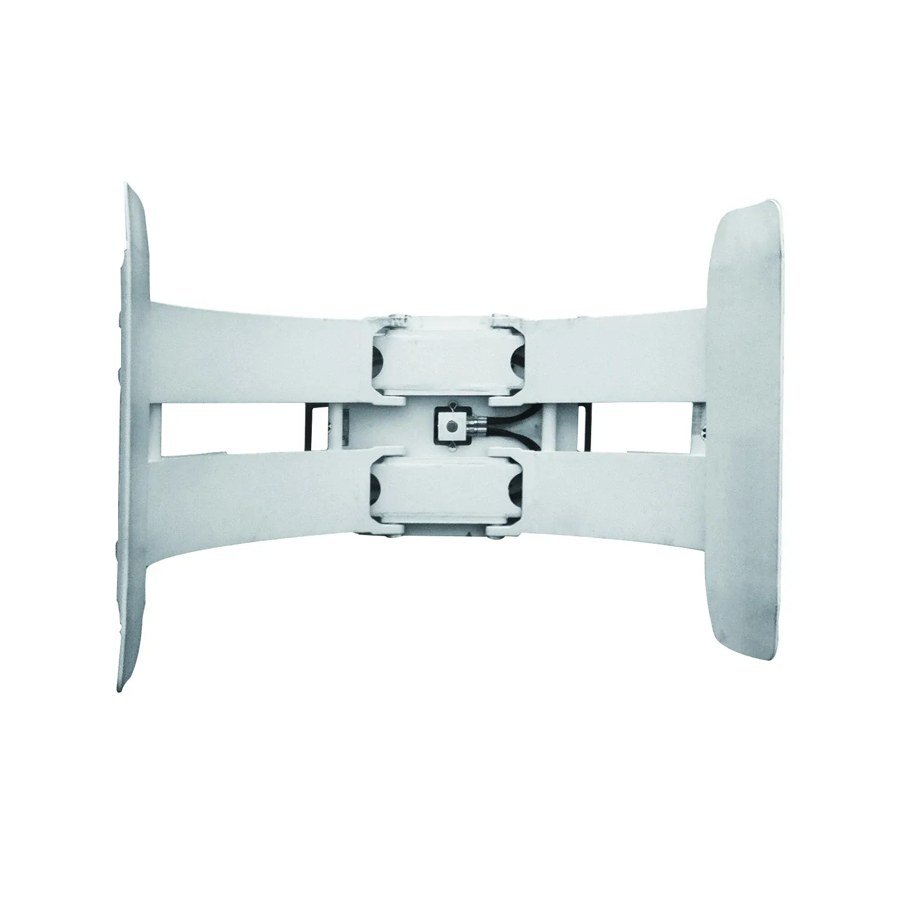
A paper roll clamp holds reels, drums and barrels between curved arms that follow the shape of the load, and the fixed arm version starts from £3,280 ex VAT. A rotating clamp does the same work and turns the load through 360 degrees, from £3,620 ex VAT, so it is worth the extra only if you tip, invert or lay rolls on their side. Both versions need a spare hydraulic service on the forklift, and rotation needs one more.
What a paper roll clamp does that plain forks cannot
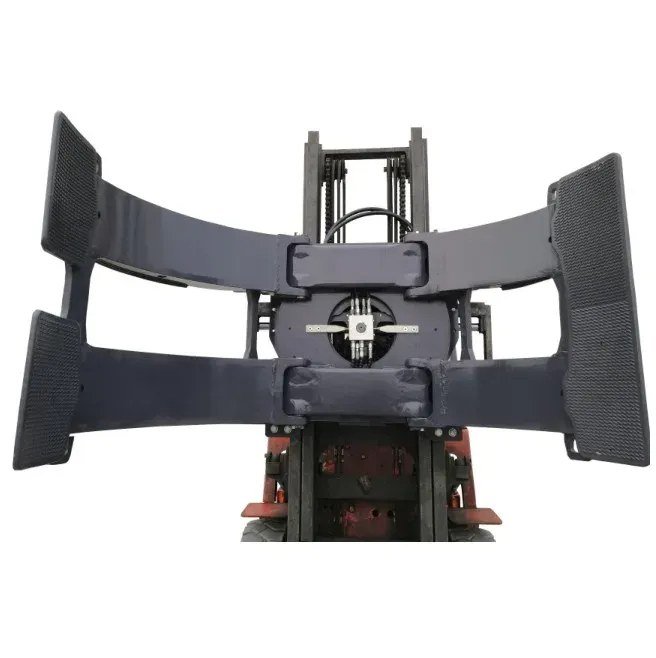
Forks carry a load from underneath. A reel stood on its end has nothing underneath it unless you pallet it first, and a reel laid on its side rolls. A paper roll clamp solves both: two curved arms close around the circumference and hold the roll by friction, so it travels with no pallet and no strapping.
The curve matters more than it looks. A flat armed clamp grips a round load on two narrow lines of contact, which is where crushed edges and telescoped reels come from. Curved arms spread the same closing force around a much larger area of the roll, so you can carry tissue, board, film, carpet, cable drums and plastic barrels without flattening them.
That is also why the clamp is sized by truck capacity rather than by roll diameter alone. A unit covering 1.5 to 4 t trucks starts from £3,280 ex VAT and suits most single reel work. A heavier unit covering 1.5 to 5 t trucks starts from £4,900 ex VAT and is the one to look at if you handle wide reels, two rolls at a time, or anything near the top of the arm opening. You can see the full set of options on the forklift attachments page.
Rotating or fixed: when rotation earns the extra cost
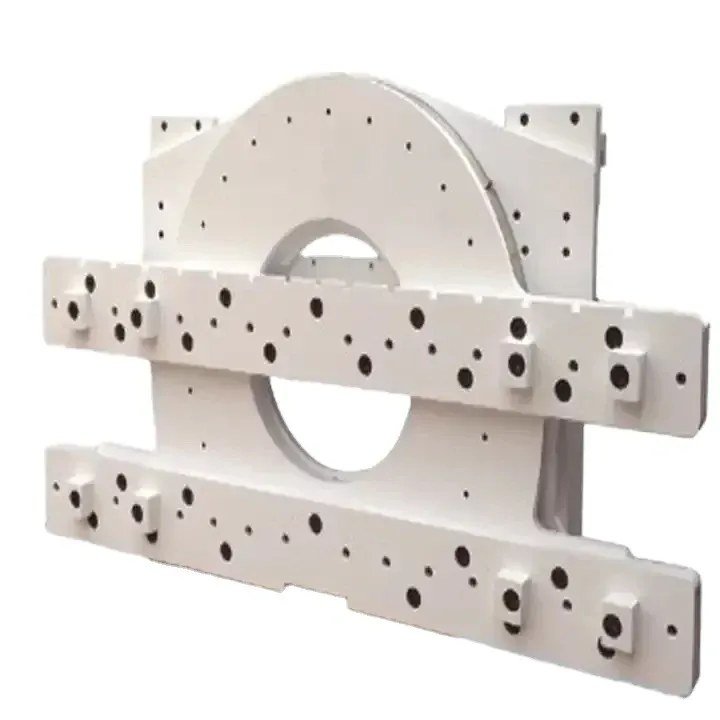
A fixed clamp picks a roll up and puts it down the same way round. A rotating clamp adds a hydraulic motor and a slew ring so the whole head turns, normally a full 360 degrees in both directions. Our rotating clamp for 1.5 to 5 t trucks starts from £3,620 ex VAT, against £3,280 ex VAT for the fixed arm version.
So the price gap is small. The weight gap is not, and neither is the maintenance. A rotating head is heavier and sits further forward of the carriage, which takes more off what the truck can lift, and it brings a motor, a rotary coupling and a second pair of hoses to keep an eye on.
Buy rotation if your process needs the load turned: reels delivered on their side that have to stand up for the machine, drums that are emptied by inverting them, stock that arrives one way round and feeds another. If reels come in upright and go into racking upright, rotation buys you nothing and costs you capacity.
- Rotation pays when the load changes orientation between goods in and the line.
- Rotation is dead weight when every roll is picked and placed the same way up.
Paper roll clamps and the alternatives compared
| Attachment | Truck capacity | Turns the load | Suits | Guide price |
|---|---|---|---|---|
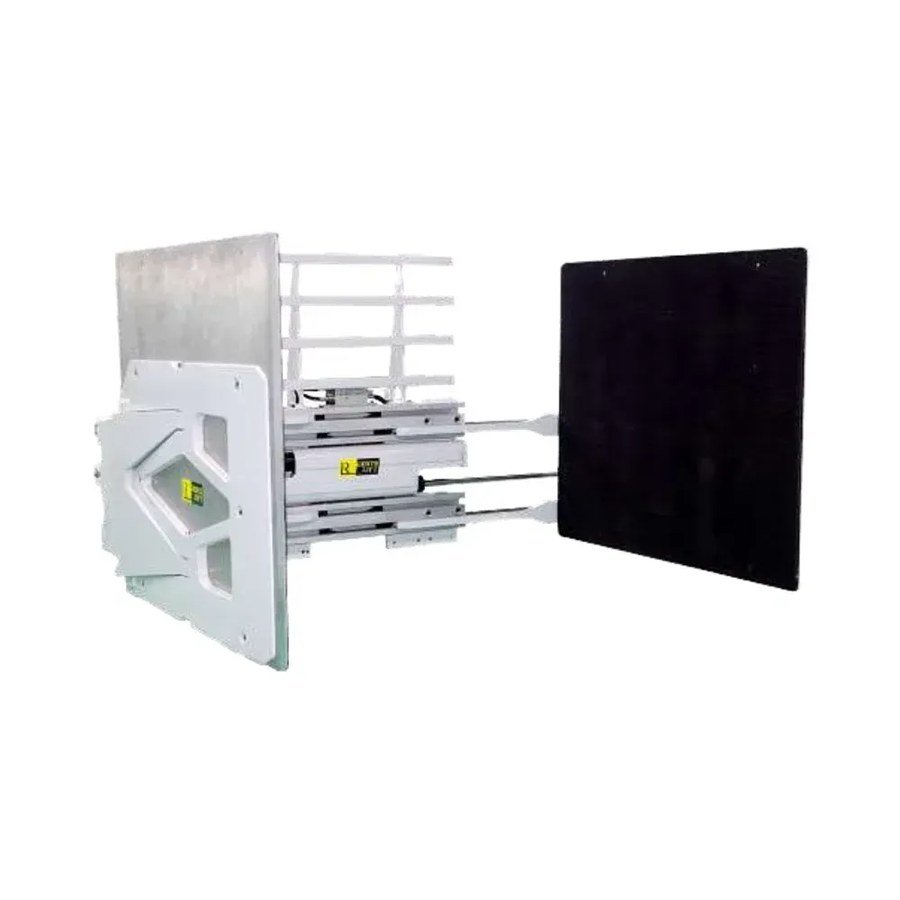
| Carton clamp with side shifter | 2 to 3 t | No | Boxed goods moved without a pallet | from £1,990 ex VAT |
| Paper roll clamp, fixed arms | 1.5 to 4 t | No | Reels and drums kept the same way up | from £3,280 ex VAT |
| Rotating clamp, 360 degrees | 1.5 to 5 t | Yes | Reels that stand up or lie down, drum emptying | from £3,620 ex VAT |
| Paper roll clamp, heavier duty | 1.5 to 5 t | No | Wide reels and loads near the arm limit | from £4,900 ex VAT |
Every figure is a guide price in pounds ex VAT for the attachment on its own. Arm length, arm opening, pad facing and the carriage class your truck uses all move it, and the figure that counts is the one on your written quote. The price guide explains how our guide prices are set.
What your forklift needs before a clamp will work
This is where most orders stall. A plain forklift has two hydraulic functions on the mast, lift and tilt. Clamping needs a third, worked from a lever or a thumb roller in the cab, and rotation needs a fourth. If the truck left the factory with two, you are adding a valve section, a solenoid or diverter, and hose runs up the mast, and that work has to be priced alongside the clamp.
Three things to read off the truck before you ask for a quote:
- How many hydraulic services the carriage already has, and whether the spare ones are plumbed to the carriage or stop at the valve block.
- The carriage class and the distance between the fork bar hooks, because the clamp hangs on those hooks.
- The truck plate: capacity, load centre and mast type. A clamp changes all three in practice.
On capacity, work on the attachment doing two things at once. Its own weight comes off the truck rating, and because the load now sits further forward than a fork face, the effective load centre grows. A truck plated at 2.5 t at 500 mm will not move 2.5 t on a clamp. The derated figure for your exact truck and attachment combination is confirmed on your written quote, and it should be on a revised plate fitted to the truck. If you are still choosing the truck itself, start with the forklift range and buy enough capacity at the outset.
What to check before you buy a paper roll clamp
- Arm opening against your real stock. Measure the smallest and the largest diameter you handle, not the average. A clamp that will not close far enough on a part used reel is as useless as one that will not open wide enough for a full one.
- Pad facing. Rubber faced pads grip tissue and board without marking. Harder facings suit drums, cable reels and anything with a tough outer wrap.
- Clamping pressure control. Ask for an adjustable pressure setting if you handle both crushable and heavy loads on the same truck, so the driver is not relying on a light touch.
- Side shift. On a close stack, side shift saves the driver repositioning the whole truck. It is standard on some units and an option on others.
- Hose routing and guarding. Hoses that chafe on the mast are the most common early failure. Check the reeving and the protection at the top of the mast.
- Visibility. A clamp head blocks more of the driver's view than forks do. Walk the route and look at the pick and place positions before you commit.
Fitting, examination and what the quote should confirm
A clamp is lifting equipment, so it falls under the Lifting Operations and Lifting Equipment Regulations 1998 once it is in service. That means a thorough examination at the intervals a competent person sets, records kept, and the unit taken out of use if it fails. The day to day checks sit under the Provision and Use of Work Equipment Regulations 1998: hoses, pads, pins and pressure, looked at before each shift. Drivers also need to be trained on the attachment specifically, not just on the truck.
Everything we supply is new and made to order at our partner factories, inspected before dispatch with photos and video sent to you, then delivered anywhere in the UK. Guide prices are in pounds ex VAT. Ask for a written quote by email and it will confirm the price for the quantity you want, the arm opening and capacity, freight, duty, VAT and the lead time, and it holds for 30 days. Any quantity is welcome, from one clamp upwards.
Paper roll clamps and clamp attachments from the range
Questions people ask
How much does a paper roll clamp cost?
A fixed arm paper roll clamp for 1.5 to 4 t trucks starts from £3,280 ex VAT, and a heavier unit covering 1.5 to 5 t trucks starts from £4,900 ex VAT. Arm opening, pad facing and carriage class move the figure, which is confirmed on your written quote.
What is the difference between a fixed and a rotating clamp?
A fixed clamp sets the load down the same way round it picked it up. A rotating clamp turns the head through 360 degrees, so a reel can be stood up or laid down and a drum can be inverted to empty it. Rotation starts from £3,620 ex VAT.
Can a paper roll clamp handle drums and barrels?
Yes. Curved arms suit any round load, including steel and plastic drums, cable reels and carpet rolls. Match the arm opening to the diameters you actually handle and choose a pad facing that suits the outer surface.
How many hydraulic services does my forklift need?
Clamping needs one spare hydraulic service beyond lift and tilt, and rotation needs a second. If the truck has only lift and tilt, a valve section and hose runs up the mast have to be added, and that work should be priced on the same quote.
Will a clamp reduce what the forklift can lift?
Yes, on both counts. The attachment weight comes off the rating and the load sits further forward, which increases the effective load centre. The derated figure for your truck and clamp is confirmed on your written quote and should appear on a revised capacity plate.
Does a forklift clamp need a thorough examination?
A clamp is lifting equipment under LOLER 1998, so it needs a thorough examination by a competent person at the set interval, with records kept. Daily checks on hoses, pads and pressure sit under PUWER 1998.
Sources: HSE: LOLER 1998 guidance, HSE: PUWER 1998 guidance, HSE L117: Rider-operated lift trucks, operator training