Guide · · Warehouse Step Ladders & Ladder Trolleys
Platform ladders for picking: how many steps, and which safety rail
A mobile platform ladder starts from £36 ex VAT for a two step stainless steel trolley and runs to £124 ex VAT for an eight step unit with a full safety rail, at trade quantities (minimum order applies). The number that decides the purchase is not the price, it is the platform height you need to reach the top shelf and whether the picker has both hands full when they get there. Most cash and carry and warehouse aisles are settled by a three step or six step unit rated at 500 kg.
What is a platform ladder, and when does it beat a step ladder?
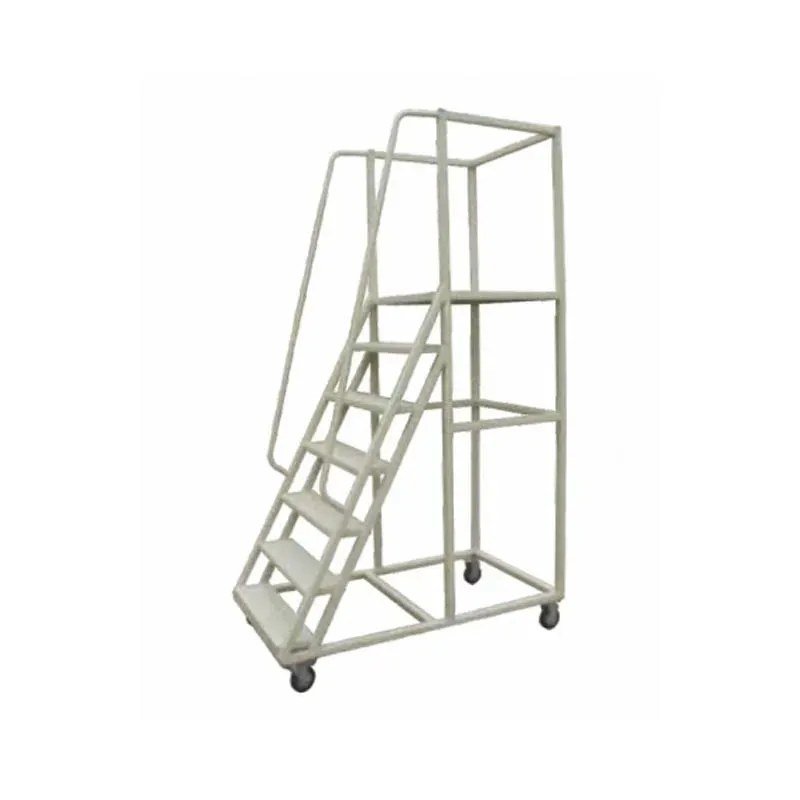
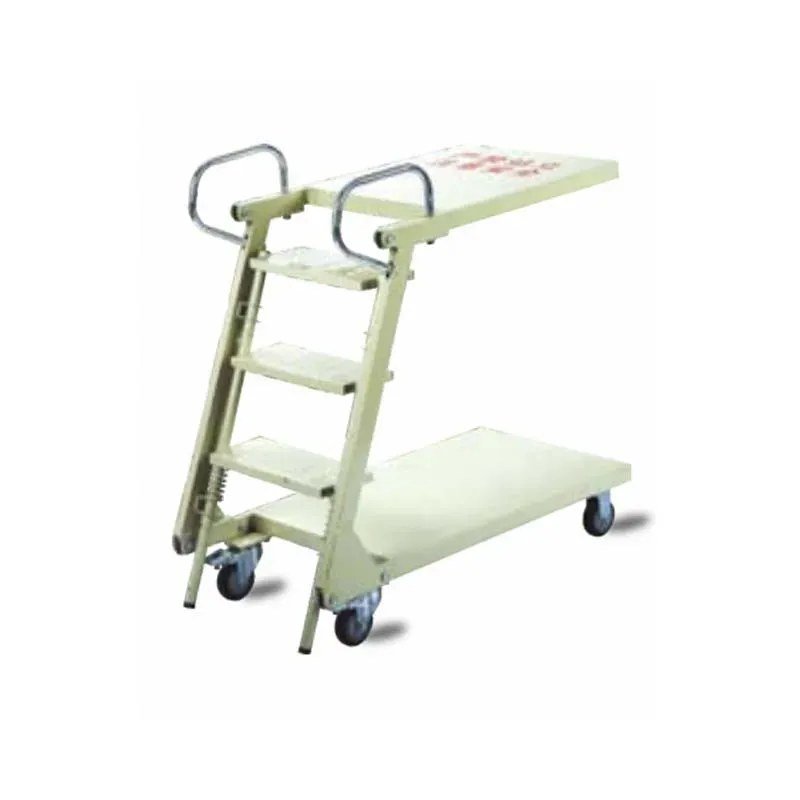
A platform ladder is a set of treads leading up to a flat standing area with a handrail, mounted on castors so one person can walk it down an aisle and lock it in place. The trade also calls it a ladder trolley, a rolling ladder or warehouse steps. It is not the same thing as the folding step ladder in the maintenance cupboard.
The difference shows up the moment someone has to do real work at the top. On a step ladder the picker keeps one hand on the stile and works with the other. On a platform ladder both feet sit on a flat platform, the rail takes the lean, and both hands are free for a case of stock. That is why stock counts, label runs and shelf resets end up on platform ladders rather than on step ladders or, worse, on an upturned crate.
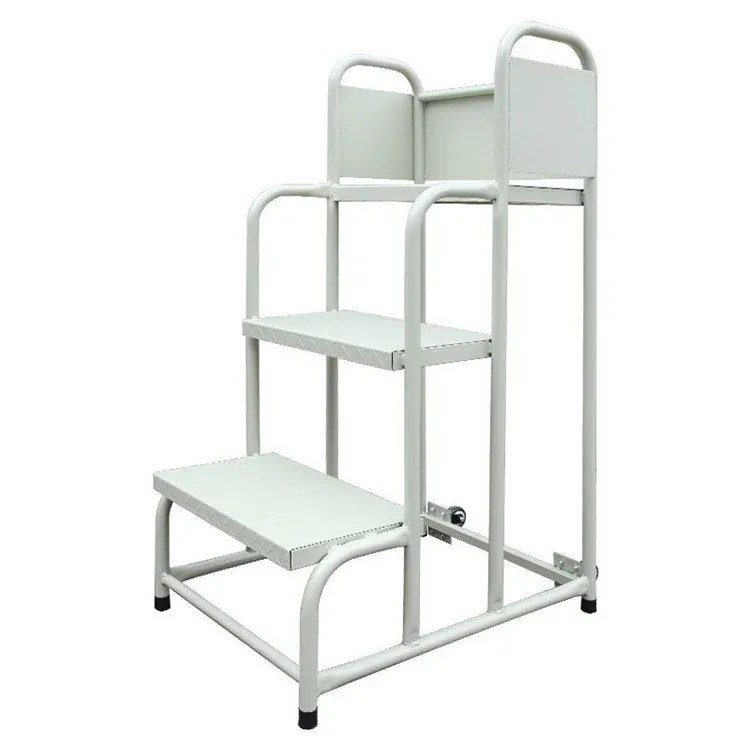
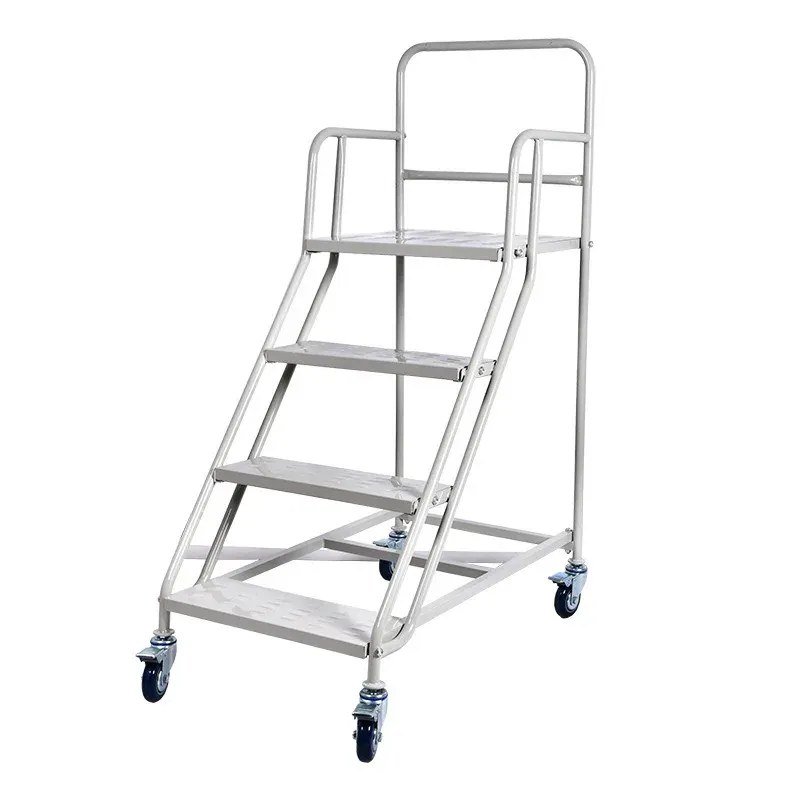
The ladder truck range runs from a two step trolley to eight step units with a rail around three sides. Everything is made to order at our partner factories in the finish and step count you specify.
How many steps do you need? Two, three, six and eight compared
Work backwards from the top shelf, not from the price. Measure the height of the highest thing a picker has to lift down, subtract their own comfortable reach, and the remainder is the platform height you are buying. Then check the aisle: a taller unit has a bigger footprint and needs more room to turn at the end of a run.
| Steps | Typical job | Rated capacity | Frame | From (ex VAT) | Minimum order |
|---|---|---|---|---|---|
| Two | Second shelf picking, chilled rooms, food prep, anywhere the frame gets washed down | Not stated | Stainless steel | £36 | 1 |
| Three | General aisle picking and stock counts at low level | 500 kg | Steel | £39 | 5 |
| Six | Racking beams above head height, shelf resets, label runs | 500 kg | Steel | £80 | 5 |
| Eight | Top beam access in a warehouse or stockroom, with a rail around the platform | 500 kg | Steel | £124 | 5 |
The frame has to get wider and heavier to stay stable as it gets taller, which is what you are paying for between three steps and eight. If two step counts would both do the job, take the shorter one: it is lighter to move, it turns in a narrower aisle and people actually use it.
Guardrails, castors and treads: what makes a platform ladder safe to stand on
Four details separate a unit that gets used from one that ends up parked by the goods in door.
- The castors. They must stop the ladder moving once someone is on it, either by retracting under the weight of the user or by locking. Test this on your own floor, because a castor that grips resin can still slide on a dusty block surface.
- The rail. Up to three steps a grab handle is usually enough. Above that, specify a handrail on both sides and a rail across the back of the platform, so the picker cannot step backwards into space while reading a label.
- The treads. Serrated or perforated treads shed water and grit. Smooth painted treads in a chilled room are a slip waiting to happen.
- The platform. It needs to take both feet with room to turn, not just the toes. A picker who has to stand sideways will lean, and leaning is what tips a ladder.
These units are work equipment, so PUWER 1998 applies in the same way it applies to a pump truck or a stacker: suitable for the job, maintained in good order, used by people who have been shown how. The HSE work at height guidance is the other half of it, and the short version is that if a platform ladder is the right tool, it has to be in good condition every time it is used, not just on the day it arrives.
Stainless steel or painted steel: which frame for which building
Stainless steel earns its money where the frame gets wet, washed or inspected. Chilled and frozen rooms, food prep areas, pharmacy and cosmetics stockrooms, and any aisle where a cleaning contractor hoses the floor. The two step stainless trolley starts from £36 ex VAT and has a minimum order of one, which makes it the easy unit to trial before committing to a run.
Painted or powder coated steel is the right call for a dry warehouse, a back of house stockroom or a general goods aisle. You get more steps for the same money: the three step steel unit rated at 500 kg starts from £39 ex VAT, the same money as a small stainless trolley, and takes a full pallet load rating with it.
Colour is worth a thought if the ladder lives in a public area of a store. A bright frame is easier to spot when a picker has left it in a fire route. Specify the finish on your enquiry and it is priced on your written quote.
What to check before you buy a platform ladder
- Platform height against your top beam. Ask for the platform height in writing, not the overall ladder height. The overall figure includes the rail, which nobody stands on.
- Aisle width and the turn at the end. A six or eight step unit is a long footprint. Walk the route with a tape before you order a batch.
- Doorways, lifts and mezzanine clearance. If the ladder has to go upstairs or through a roller shutter, check the assembled height and whether the unit ships flat.
- The floor. Castor size decides whether the ladder rolls over an expansion joint or has to be lifted over it. Small castors and a rough floor will get the unit abandoned within a month.
- Who loads it. The 500 kg rating on the steel units is the structure, and it is generous. The real limit is what a picker can safely carry up and set down while standing on a platform.
- Quantity. Most units in this range start at five, with the two step stainless trolley at one. See minimum order for how that works, and price, freight, duty, VAT and lead time are all confirmed on your written quote.
Decide how many you need per aisle before you enquire. One shared ladder tends to walk off, and the picking slows down while someone looks for it.
When to stop adding steps and move to a powered platform
A platform ladder is a good answer for occasional access to a high shelf. It stops being the right answer when the work is continuous, when the picker needs to carry more than they can hold, or when the height is beyond an eight step frame.
At that point the comparison is with a powered unit from the work platform range: a scissor lift, a mast lift or an order picker, which raise the operator and the load together and are examined on a schedule. They cost a great deal more to buy and to run, so be honest about how often the high shelf gets touched. A few times a day and an eight step unit from £124 ex VAT does the job. All shift, every shift, and the ladder is the wrong tool.
Platform ladders in this guide
Questions people ask
What is the difference between a platform ladder and a step ladder?
A platform ladder has a flat standing platform with a handrail at the top and castors at the bottom, so the user stands with both feet level and both hands free. A step ladder has treads only, keeps one hand occupied and is not designed to be rolled along an aisle.
How much does a platform ladder cost?
A two step stainless steel ladder trolley starts from £36 ex VAT and a three step steel unit from £39 ex VAT. A six step rolling platform ladder starts from £80 ex VAT and an eight step unit with a full safety rail starts from £124 ex VAT, at trade quantities (minimum order applies).
What weight can a platform ladder take?
The three, six and eight step steel units in this range are rated at 500 kg. That rating covers the structure, so the practical limit is the picker plus whatever they can safely carry up and set down.
Do platform ladders need to be inspected?
They are work equipment under PUWER 1998, so they must be suitable, maintained in good order and checked before use. A quick look at castors, treads, welds and rail fixings before each shift, with a recorded check at sensible intervals, is normal practice.
Can someone stand on a platform ladder while it is moved?
No. The ladder is positioned, the castors are locked or retracted under load, and only then does anyone climb. Moving an occupied ladder is how most falls from this kind of equipment happen.
Is there a minimum order on platform ladders?
The two step stainless trolley starts at one unit and most steel units start at five. The exact quantity, price, freight, duty, VAT and lead time are confirmed on your written quote.
Sources: HSE: Provision and Use of Work Equipment Regulations 1998 (PUWER), HSE: Work at height