Comparison · · Floor Scrubbers & Sweepers
Scrubber dryer tanks: how much floor you clean before you refill
A scrubber dryer carries its own clean and dirty water, so the tank size decides how much floor you cover before you stop and refill. A 540 mm walk behind machine starts from £930 ex VAT, a ride on with a 90 L tank from £1345 ex VAT, and the largest tanks on this site hold 155 L and 166 L. Size the tank to the area you clean in one run, not to the square metres per hour printed on the spec sheet.
What a scrubber dryer tank actually has to do
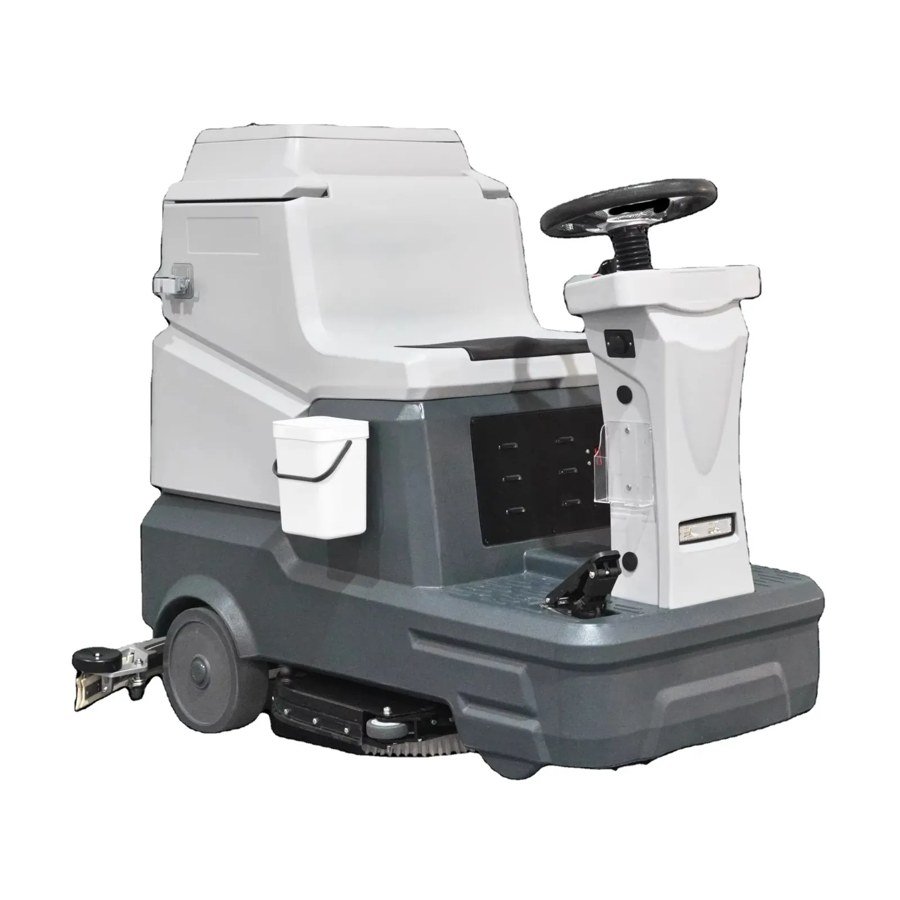
A scrubber dryer does three jobs in one pass. It lays clean water and detergent on the floor, it works that water with a rotating brush or pad, and it lifts the dirty water straight back off with a rubber squeegee and a vacuum. That last step is the difference between a scrubber dryer and a mop: the floor behind the machine is damp rather than wet, so staff and trolleys can use the aisle again quickly.
To do that the machine has to carry two tanks. The solution tank holds clean water going down. The recovery tank holds dirty water coming back up. Both sit on the machine, and both have to be dealt with by hand: the clean side refilled at a tap, the dirty side emptied at a drain. Every one of those stops is time the operator is not cleaning.
So when you compare machines across the floor cleaning range, the tank figures are not a detail at the bottom of the spec. They set the rhythm of the whole job.
How big a scrubber dryer tank do you need?
Work it out from the floor you clean in one go, not from the total floor you own. A cash and carry that cleans two trading aisles at close and leaves the rest for the weekend has a very different answer from a chilled warehouse that does the whole floor in one night shift.
Start by measuring the area that has to be done in a single run, in square metres. Then ask what the machine's solution flow rate is, in litres per minute, and how long a full solution tank lasts at that setting. Those two numbers are the honest version of run time, and a supplier should put them on the written quote rather than leaving you to read them off a brochure. Flow rate also moves: turn it up on a greasy goods in area and the tank empties faster than it would on a dry sales floor.
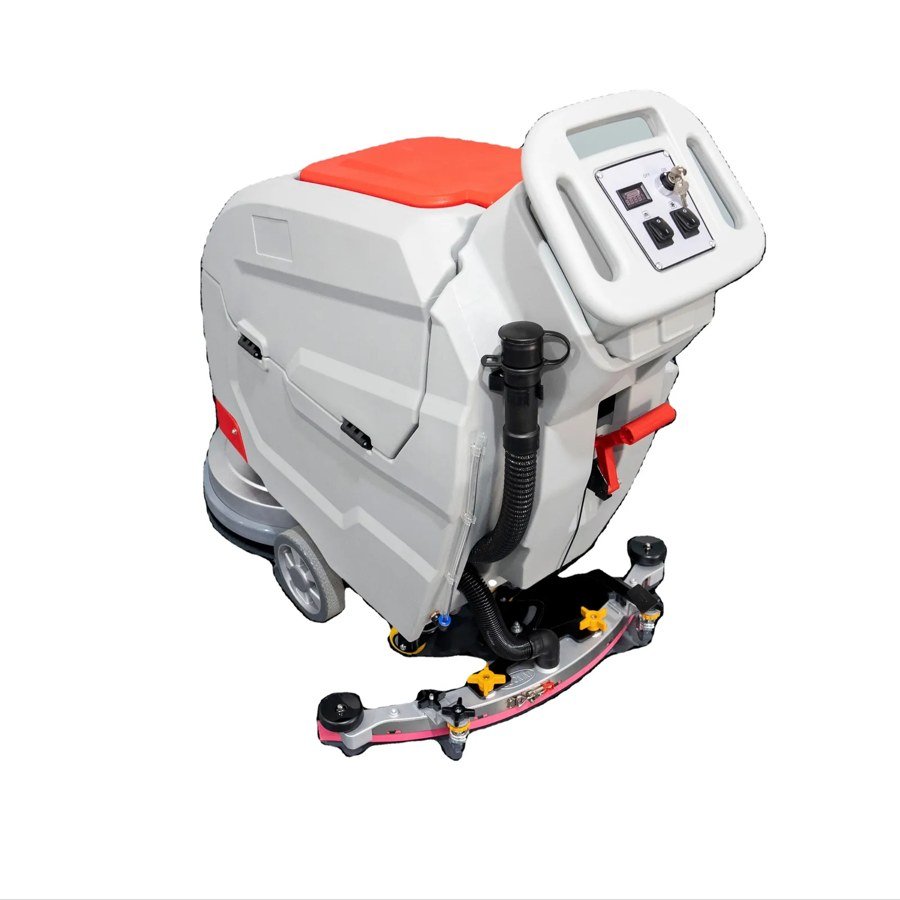
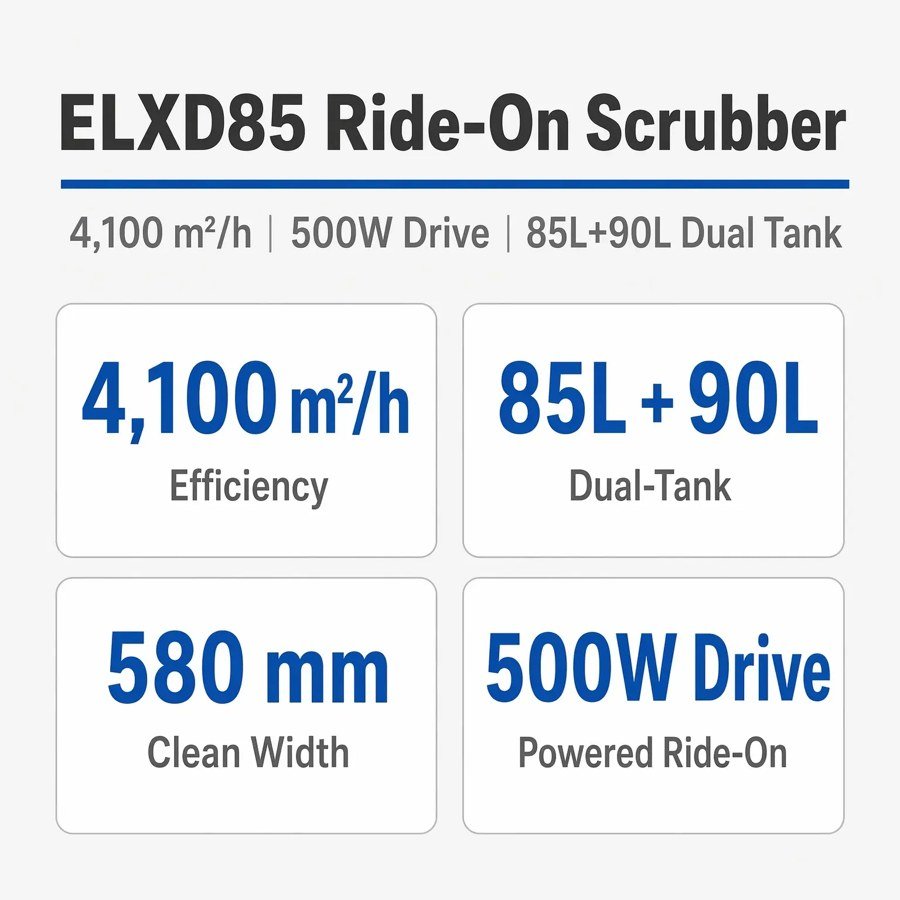
As a rule of thumb for sizing by format: a 540 mm walk behind machine, from £930 ex VAT, suits a shop floor, a back room or a cafe area where the operator is already walking the route. A ride on with a 90 L tank, from £1345 ex VAT, suits a medium warehouse or a supermarket where the operator would otherwise spend the shift walking. The 155 L and 166 L tanks on the largest machines, from £2,720 ex VAT, are for distribution floors where a stop to refill costs real time.
Scrubber dryer tanks and prices compared
| Machine | Cleaning width | Tank | Where it fits | Guide price |
|---|---|---|---|---|
| Battery walk behind | 540 mm | Compact, carried on the machine | Shop floors, back rooms, kitchens | from £930 ex VAT |
| Ride on, 90 L | Ride on | 90 L | Medium warehouse, supermarket aisles | from £1345 ex VAT |
| Ride on, 120 L | 800 mm | 120 L | Large retail floor, production area | from £1910 ex VAT |
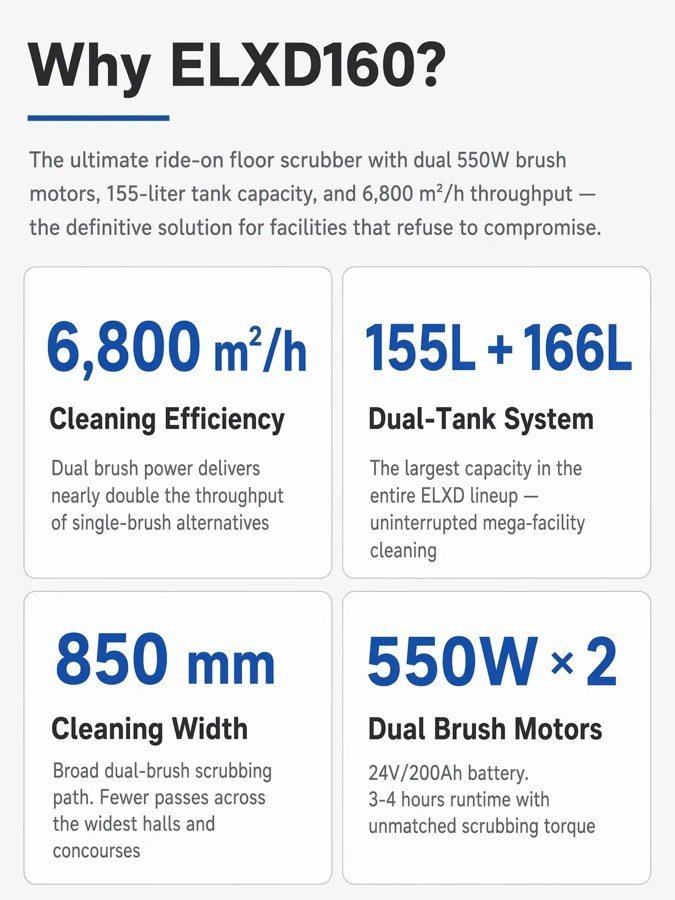
| Ride on, 155 L and 166 L | 850 mm | 155 L and 166 L | Distribution floors, long single runs | from £2720 ex VAT |
The pattern is steady: width and tank grow together, because there is no point putting a wide brush on a machine that runs out of water in a few aisles. The 800 mm ride on with a 120 L tank is the middle of that ladder and is where most warehouse buyers land. Guide prices are in GBP ex VAT and the figure for your order is confirmed on your written quote.
Why the rated square metres per hour is not your run time
Every machine in this category carries a theoretical cleaning rate, often several thousand square metres per hour. It is worth knowing how that number is made. It is the cleaning width multiplied by travel speed, with the machine driving in a straight line and never stopping. An 850 mm brush rated at 6,800 square metres per hour is simply a machine travelling at about 8 kilometres per hour with the brush down.
Your floor does not look like that. There are racking legs to steer round, pallets left in the aisle, doorways, a slow pass over the spill by the goods in door, and the stops to empty and refill. The rated figure is useful for ranking machines against each other. It is not a promise about your shift.
- Use the rated figure to compare two machines, never to plan a cleaning rota.
- Plan the rota on measured floor area, the solution flow rate and the tank size.
- If a floor must be finished inside a fixed window, choose the tank that avoids a mid shift refill rather than the widest brush.
What to check before you buy a scrubber dryer
Six things decide whether the machine suits the floor, and all of them are easier to settle before the order than after.
- Where the drain and the tap are. If the nearest drain is at the other end of the building, a bigger tank saves more time than a wider brush.
- Battery and charging. Ask what the battery is, how long it charges and whether the charger is on board. The machine has to be ready for the next shift, not still on charge.
- Narrowest point on the route. Measure the tightest aisle and any doorway the machine has to pass. A 850 mm machine that cannot turn in your end aisle is the wrong machine.
- Floor surface. Sealed concrete, tiles and resin all behave differently under a brush. Say what your floor is when you ask for a quote.
- Who drives it. A ride on needs a trained operator and somewhere to park it. A 540 mm walk behind machine can be handed to a cleaner at close with ten minutes of instruction.
- Consumables. Brushes, pads and squeegee blades wear. Ask what they cost and confirm it in writing with the machine.
What a scrubber dryer costs and what the quote confirms
Guide prices on this site run from £930 ex VAT for a 540 mm battery walk behind machine up to £2720 ex VAT for a ride on with 155 L and 166 L tanks, with the 90 L and 120 L ride on machines at £1345 ex VAT and £1910 ex VAT in between. Those are guide figures in GBP ex VAT, converted from the factory list at a buffered rate, and you can see the full ladder on the price guide.
Everything is made to order at our partner factories and inspected before dispatch, with photos and video sent to you. Price, freight, duty, VAT and lead time are confirmed on your written quote by email, which is valid for 30 days. Tell us the floor area, the tightest aisle and the time window you have to clean in, and the quote will name the machine that fits rather than the biggest one in the range.
Scrubber dryers in this guide
Questions people ask
How long does a scrubber dryer run on one tank?
It depends on the solution flow rate you set and the tank size, not on the machine's rated square metres per hour. Ask for the flow rate in litres per minute and the tank capacity, and have both confirmed on your written quote.
What is the difference between a scrubber dryer and a floor scrubber?
They are usually the same machine. A floor scrubber that lifts the water back off with a squeegee and vacuum is a scrubber dryer, which is why the floor behind it is damp rather than wet.
Should I buy a bigger tank or a wider brush?
A wider brush covers more floor per pass, a bigger tank covers more floor per fill. If your drain and tap are a long walk from the floor you clean, the tank saves more time.
Can one machine clean both a shop floor and a warehouse floor?
Often yes, if the tightest aisle and the lowest doorway on both routes suit the same machine. Measure the narrowest point on each route before you choose a width.
How much does a scrubber dryer cost?
Guide prices here start from £930 ex VAT for a 540 mm walk behind machine and reach £2720 ex VAT for a ride on with 155 L and 166 L tanks. The figure for your order is confirmed on your written quote.
What happens to the dirty water?
It is held in the recovery tank until the operator empties it at a drain. The recovery tank fills slightly faster than the solution tank empties, so plan the stop around the dirty side.