Comparison · · Shopping Baskets
Shopping baskets: hand carried or on wheels, and what each one costs
A plastic shopping basket for a UK shop floor starts at from £2 ex VAT at trade quantities (minimum order applies), and a version on two wheels with a pull handle starts at from £3 ex VAT. Hand baskets of 35 L to 45 L suit a quick top up shop, while wheeled baskets and folding mesh baskets of 50 L take the weight off customers who buy in bulk. Choose by how far people walk with a full basket, not by price alone.
What does a shopping basket cost at trade quantities?
Prices on this range are guide prices in pounds sterling, ex VAT, and they move with quantity. A light duty 40 L plastic basket for a convenience store or forecourt shop starts at from £2 ex VAT at trade quantities (minimum order applies), on a minimum order of 50 units. A heavier 45 L basket in a choice of colours starts at from £3 ex VAT with a minimum order of 10 units, which suits a single shop rather than a chain.
Move to a basket on two wheels with a pull handle and the guide price starts at from £3 ex VAT. A 50 L folding mesh basket, the sort used where baskets are stacked out of the way overnight, starts at from £7 ex VAT. Freight, duty, VAT, minimum order and lead time are confirmed on your written quote, which is valid for 30 days.
The gap between a 40 L hand basket and a wheeled basket is small in money and large in use. If your average customer leaves with more than about 10 kg of goods, the wheels earn their place in the first week.
Hand basket or shopping basket with wheels: a straight comparison
| Type | Typical capacity | Guide price | Minimum order | Best for |
|---|---|---|---|---|
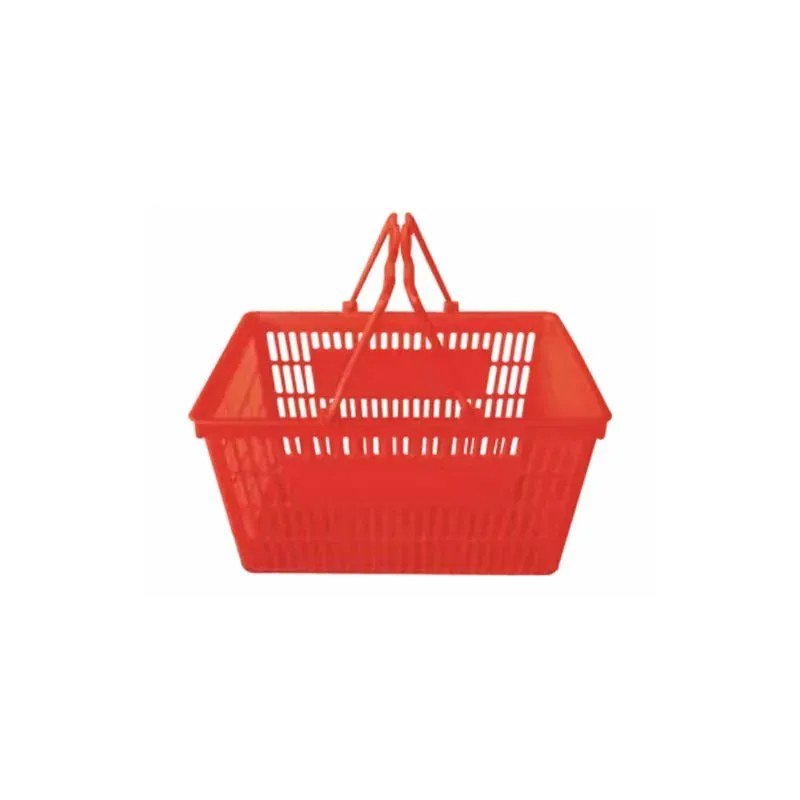
| Light duty hand basket | 30 L to 40 L | from £2 ex VAT | 50 units | Convenience stores, forecourts, small top up shops |
| Standard hand basket | 45 L | from £3 ex VAT | 10 units | Independent supermarkets, off licences, food to go |
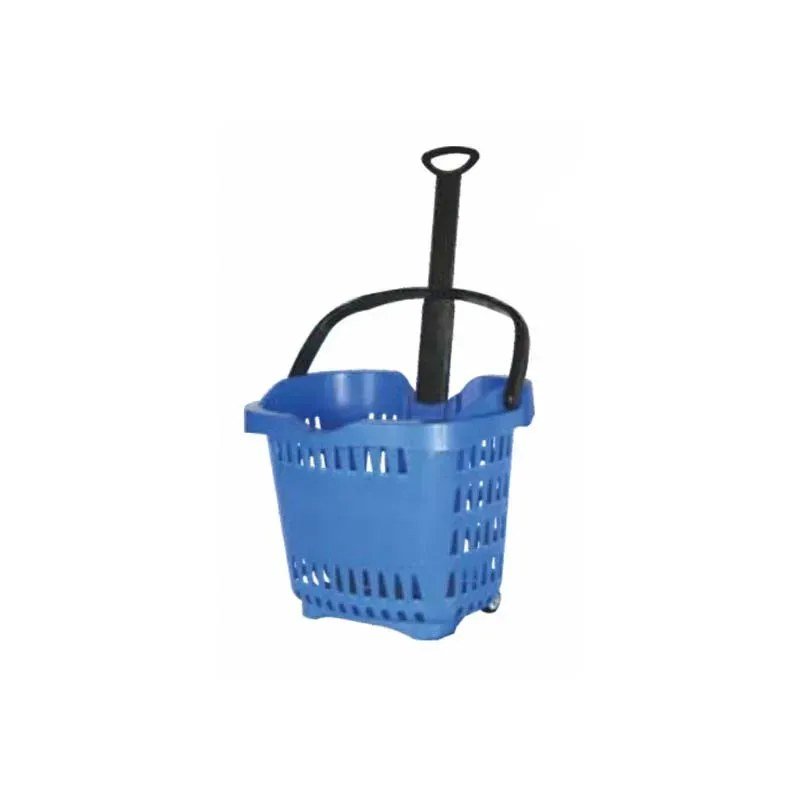
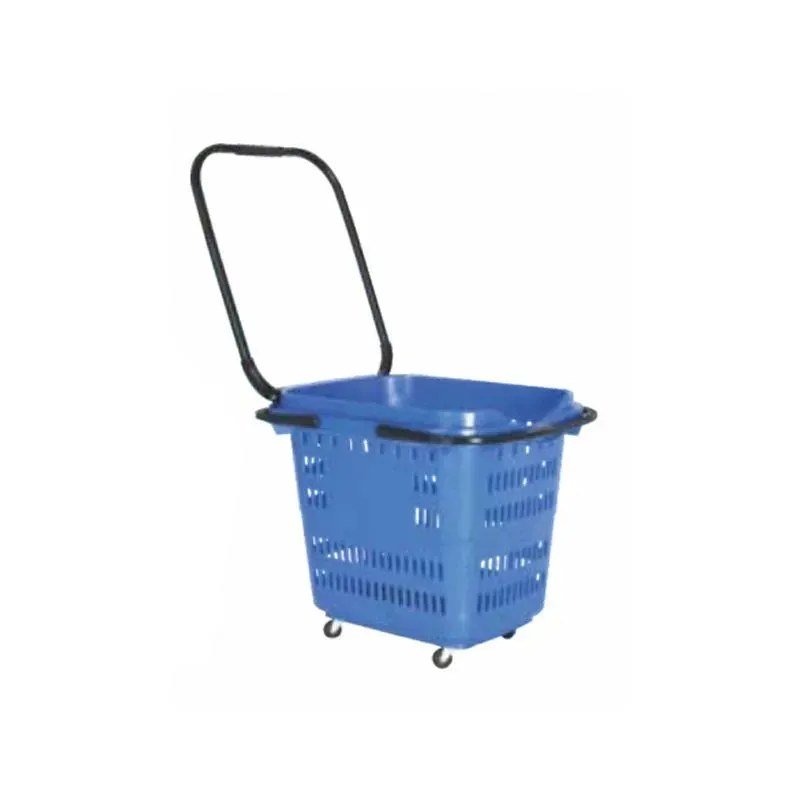
| Basket on two wheels with pull handle | 35 L | from £3 ex VAT | 10 units | Long aisles, bulk buyers, older or less mobile customers |
| Folding mesh basket | 50 L | from £7 ex VAT | 50 units | Market stalls, pop up retail, back of house picking |
Hand baskets are the cheaper unit and the faster one to hand out, stack and clean. They stop being comfortable at roughly 12 kg to 15 kg, which a 45 L basket reaches quickly once there are bottles or tins in it. A wheeled basket with a metal pull handle keeps the same footprint at the till but lets the customer keep shopping instead of putting things back.
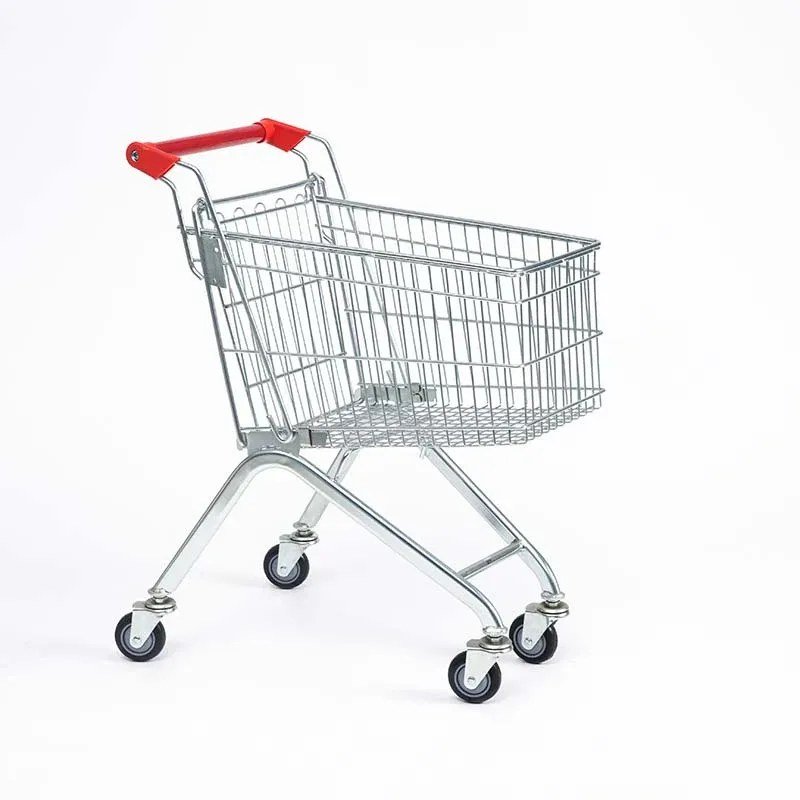
Where a customer is filling more than one basket, the answer is usually a trolley rather than a bigger basket. Our shopping trolley range starts where baskets run out of capacity.
Which size: 30 L, 35 L, 40 L, 45 L or 50 L?
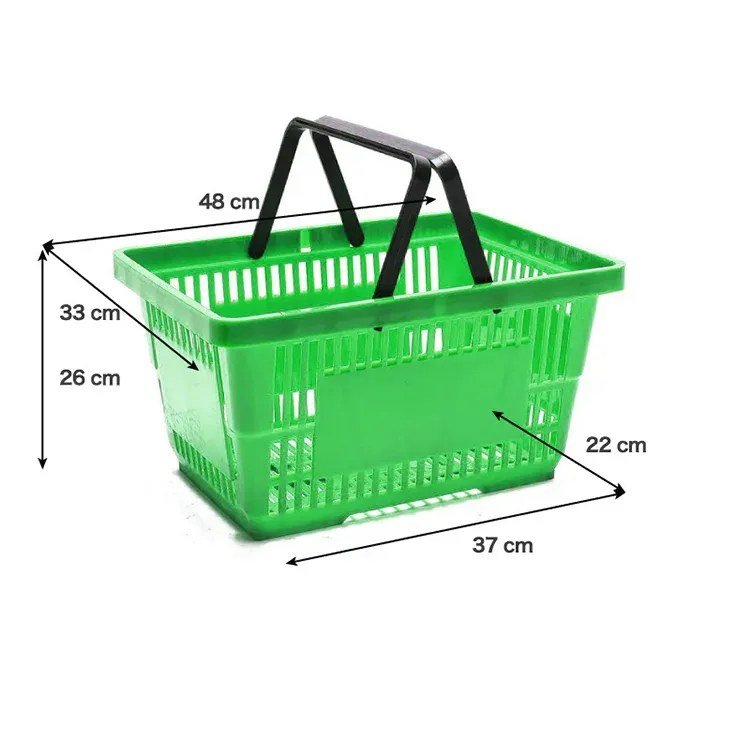
Capacity in litres is the honest measure, because outside dimensions vary with the handle design. As a rule of thumb for a UK shop floor:
- 30 L to 35 L: a basket of meal deals, milk and a newspaper. Light enough for anyone to carry the length of the shop.
- 40 L: the common size in convenience and forecourt retail. Holds a small top up shop without getting awkward on the stairs or at the till.
- 45 L: the size independents buy when customers shop for the evening meal. Heavy when full, so pair it with a basket stand near the door.
- 50 L: best on wheels or folding, and often used behind the counter for picking online orders as much as on the shop floor.
Stacking matters as much as capacity. Nested plastic baskets take up little floor space at the entrance, while a folding mesh basket collapses flat when the stall or the department closes.
How many shopping baskets should you order, and where do they go?
Count the tills, not the square metres. A rough working figure used across small format retail is 10 to 15 baskets per till for a convenience store, and more where the shop has two entrances. Order a few above that number, because baskets are lost, cracked or walked out with, and a second small order later costs more per unit than adding them to the first.
Position is what keeps baskets circulating. Put a stack at every entrance at waist height, one stack at the end of the till run so customers can drop them without bending, and, in a longer shop, one halfway down the main aisle for the people who came in for one item and changed their mind. Baskets left on the floor get kicked and cracked, so a holder or stand pays for itself in replacements.
If your floor space is tight, a wheeled basket doubles as the halfway point option: it stands upright on its own wheels and does not need a stand.
What to check before you buy a shopping basket
- Handle fixing. Twin swing handles take the whole load. Check how they are pinned to the body, because that is the first part to fail on a cheap basket.
- Material and finish. Moulded polypropylene handles cold storage and washdown better than a brittle filled plastic. Ask for the material on your quote.
- Nesting depth. Measure the stack height of 20 baskets, not one. That is what decides whether the stack fits under the window or blocks the door.
- Colour. A single colour per site makes stock counting and loss easy to spot. Colour choices are confirmed on your written quote, as some colours carry a higher minimum.
- Wheels and handle on rolling baskets. Look for a metal pull handle rather than plastic, and wheels that clear a door threshold and a shallow ramp.
- Cleaning. Baskets carrying fresh produce and chilled goods need to survive a hot wash. Drainage holes in the base help more than most buyers expect.
- Minimum order. Some models start at 10 units and others at 50. Check the minimum order page before you settle on a model.
Ordering, quotes and what happens next
Everything in the shopping basket range is made to order at our partner factories, so a quote is the first step rather than a checkout. Send the model, the quantity, the colour and the delivery postcode, and the written quote comes back with the unit price, the minimum order, freight, duty and VAT, and the lead time, valid for 30 days.
Before dispatch, goods are inspected and photographs and video are sent to you, so you see the baskets you are paying for rather than a catalogue picture. Delivery is anywhere in the UK and the details are confirmed on your written quote. If you are fitting out a new store, price the baskets, the stands and the trolleys in one quote: the freight is usually better on one consignment than three.
Shopping baskets in this guide
Questions people ask
How much is a plastic shopping basket for a shop?
Guide prices start at from £2 ex VAT for a 40 L light duty basket at trade quantities (minimum order applies). A 45 L basket starts at from £3 ex VAT and a 50 L folding mesh basket at from £7 ex VAT.
What is the most common shopping basket size in UK convenience stores?
Around 40 L. It holds a top up shop of roughly a dozen items without becoming too heavy to carry to the till, and it nests tightly at the door.
Are shopping baskets with wheels worth the extra cost?
In a long shop, yes. A 35 L basket on two wheels with a pull handle starts at from £3 ex VAT, and it lets a customer keep adding items instead of stopping when the basket gets heavy.
How many baskets does a convenience store need?
A working figure is 10 to 15 per till, plus spares for breakage and loss. Shops with two entrances need a stack at each door.
Can I order shopping baskets in our own colour?
Colour options are quoted per model, and some colours carry a higher minimum order. Ask for the colour you want when you request the quote and it is confirmed in writing.
What is the minimum order on shopping baskets?
It varies by model: some start at 10 units and others at 50. The minimum for your chosen model and colour is confirmed on your written quote.