Guide · · Roll Cages & Roll Containers
Stillage Cages: Which Capacity Stacks, What It Holds, What It Costs
A stillage is a rigid steel or mesh cage built to be stacked when it is full, so it stores stock off the floor instead of only moving it around. Capacities run from 250 kg to 1,000 kg, starting from £56 ex VAT, bulk price for a 250 kg stackable mesh cage and from £80 ex VAT, bulk price for a 1,000 kg galvanised one. A roll container is cheaper at from £28 ex VAT, bulk price, but it rolls rather than stacks.
What is a stillage, and when do you need one instead of a roll cage?
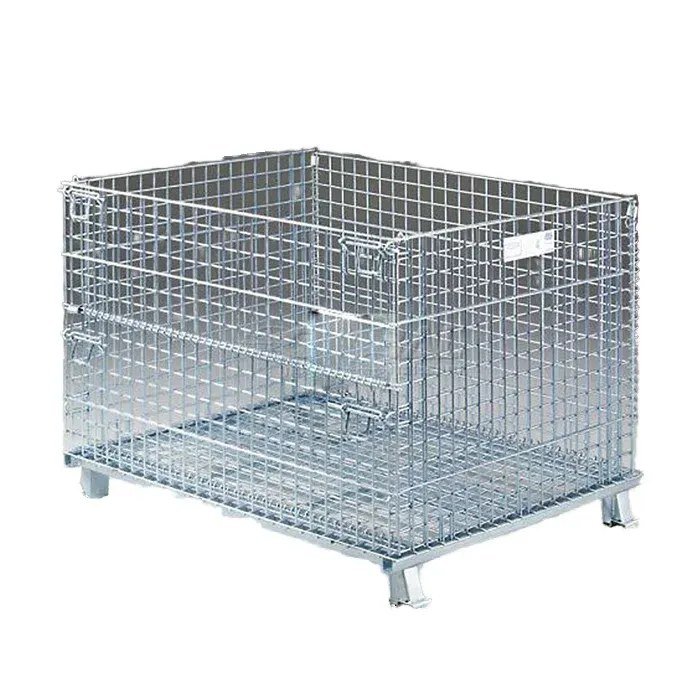
A stillage is a rigid steel cage, usually wire mesh, designed to sit on the floor loaded and to take another loaded cage on top of it. The corners carry the weight, not the sides. That is the whole difference between a stillage and a roll container: one is built to be stacked, the other is built to be pushed.
In practice sites end up with both. Roll containers go out on the vehicle and come back with empties and returns. Stillages stay on site and hold the things that do not suit a pallet: loose components, fixings, offcuts, empty crates, damaged stock waiting on a credit, seasonal kit that is out of rotation for nine months of the year.
The decision is simple. If the load moves several times a day by hand, buy a roll container from the roll container and storage cage range. If the load sits still and you are short of floor space, buy a stillage and stack it.
Stillage capacities compared: 250 kg, 600 kg and 1,000 kg
Capacity is the rating of the cage itself. It is not the stack rating, which depends on how many cages you put on top and on the state of your floor. Work to the plated figure on the cage and keep the heaviest units at the bottom of a stack.
| Cage | Capacity | Typical use | Guide price |
|---|---|---|---|
| Stackable wire mesh storage cage | 250 kg | Parts, fixings, returns, small packaged goods | from £56 ex VAT, bulk price |
| Rolling pallet storage cage | 600 kg | Mixed stock that has to be moved as well as stored | from £64 ex VAT, bulk price |
| Zinc galvanised stackable container | 1,000 kg | Heavy components, metal, tooling, yard storage | from £80 ex VAT, bulk price |
| Collapsible roll container (for comparison) | 500 kg | Deliveries and store replenishment, not stacking | from £28 ex VAT, bulk price |
Most warehouses over-buy on capacity. A cage of fixings rarely passes 250 kg, and the 250 kg stackable mesh cage at from £56 ex VAT, bulk price does that job at the lowest cost per cage. Go to 1,000 kg when the contents are metal, castings or tooling, or when the cage lives outside and will be handled by a forklift.
How much floor space a stillage actually gives back
The case for stacking is easy to work out for your own site. Count the cages standing in a row on the floor, then halve or third that number, because a stacked cage uses the same footprint as the one underneath it. A bay that holds twelve cages in a single layer holds twenty four at two high and thirty six at three high, with no building work and no racking.
Two things set the limit. The first is the cage rating and the condition of the corner posts: a cage with a bent post does not go at the bottom of a stack. The second is your floor. Stacking wants a level, sound concrete floor and enough headroom to land the top cage squarely.
For the lifting itself, a pallet stacker handles two-high work in a tight aisle, while a counterbalance forklift is the tool if you are stacking three high or working in a yard. Check that the cage has forklift entry channels or a base that a pair of forks can pick up safely before you plan on lifting it at all.
Mesh or sheet steel, zinc plated or dip galvanised
Mesh is the default for storage. A stock checker can read a mesh cage from the aisle without opening it, air moves through it so damp packaging dries rather than sweats, and it weighs less than a sheet steel cage of the same size. Sheet steel sides make sense only when the contents are small enough to fall through mesh or need to be kept out of sight.
Finish is the part buyers get wrong. Zinc plating is a thin bright coating and it is fine for a dry indoor store. Dip galvanising leaves a thicker, duller grey layer that takes knocks and rain, which is what you want in a yard, a loading bay with open doors, or anywhere the cage gets pressure washed. The 1,000 kg galvanised stackable container at from £80 ex VAT, bulk price is the specification for outdoor work.
If the cage has to move as well as store, wheels change the picture. A 600 kg rolling pallet storage cage at from £64 ex VAT, bulk price gives you castors and a rated cage in one unit. Ask for two braked castors if it will stand on any slope.
What to check before you buy a stillage
- Internal dimensions, not external. Measure what you actually put in the cage, including any crate or tote, and check it against the internal size on the product page.
- Stack feet and corner posts. The top of one cage and the feet of the next have to locate into each other. Without that, the stack is only as good as your floor.
- Forklift entry. If you will lift loaded cages, confirm the base takes forks and note the fork spread you run.
- Folding or fixed. A collapsible cage saves space when empty and costs a little more per unit. A fixed cage is stiffer and better if it is always full.
- Half drop front. A hinged half gate lets a picker reach the back of a full cage without unloading the front.
- Finish against the environment. Dip galvanised outdoors, zinc plated indoors.
- Quantity and price. Any quantity is welcome, and the price for your quantity, along with freight, duty, VAT and lead time, is confirmed on your written quote.
On the paperwork side, a stillage is work equipment once it is lifted or stacked, so it sits under PUWER 1998: keep it in efficient working order, take damaged cages out of the stack, and log what you inspect. Cages that are only pushed across a floor are lower risk, but the same habit applies.
If you are not sure which capacity fits, send a photo of what you are storing and the floor area you have to our sales team and we will price two options against each other.
Stillage cages and storage containers in this guide
Medium-sized Heavy Duty Stackable Wire Mesh Storage Cage with 250 kgfrom £56 ex VAT, bulk price Rolling Pallets Material Storage Cage (LPT-20375)from £64 ex VAT, bulk price
 Heavy Duty Zinc Galvanised Steel Wire Stackable Storage Containers Metalfrom £80 ex VAT, bulk price
 Heavy Duty Collapsible Roll Container Logistic Storagefrom £28 ex VAT, bulk price
Questions people ask
What is the difference between a stillage and a roll cage?
A stillage is a rigid cage built to be stacked when loaded, with the weight carried on its corner posts. A roll cage or roll container is built to be wheeled and should not be stacked with stock in it.
How much does a stillage cage cost?
A 250 kg stackable wire mesh cage starts from £56 ex VAT, bulk price, and a 1,000 kg galvanised stackable container from £80 ex VAT, bulk price. The price for your quantity is confirmed on your written quote.
How high can you stack stillages?
That depends on the cage rating, the condition of the corner posts and your floor, so there is no single figure. Put the heaviest cages at the bottom, never stack a cage with a bent post, and only stack to a height your lifting equipment can land squarely.
Can a pallet truck move a stillage?
Only if the base has channels a pair of forks can enter. Many mesh cages are designed for forklift or stacker handling rather than for a hand pallet truck, so check the base type on the product page before you plan your handling.
Should I choose zinc plated or dip galvanised?
Zinc plating is enough for dry indoor storage. Dip galvanising gives a thicker coating that copes with rain, washdown and yard use, so choose it for anything stored outside.
Do you supply stillages in small numbers?
Any quantity is welcome. Everything is made to order at our partner factories and inspected before dispatch with photos and video sent to you, and your written quote confirms price, freight, duty, VAT and lead time.
Sources: HSE: Provision and Use of Work Equipment Regulations 1998 (PUWER)