Comparison · · Electric Pallet Stackers
Straddle stacker or fork over: which electric stacker fits your pallets
A straddle stacker carries the load between two outrigger legs, so it will lift a closed base pallet, a stillage or a cage that a fork over stacker cannot get under. Guide prices run from £1,065 ex VAT for a 1.2 t fork over walkie, from £1,145 ex VAT for the straddle version at the same capacity, and from £2,750 ex VAT for an 800 kg counterbalance stacker with no legs at all. Measure the base and the outside width of your heaviest load before you choose, because the legs, not the mast, decide whether the truck fits.
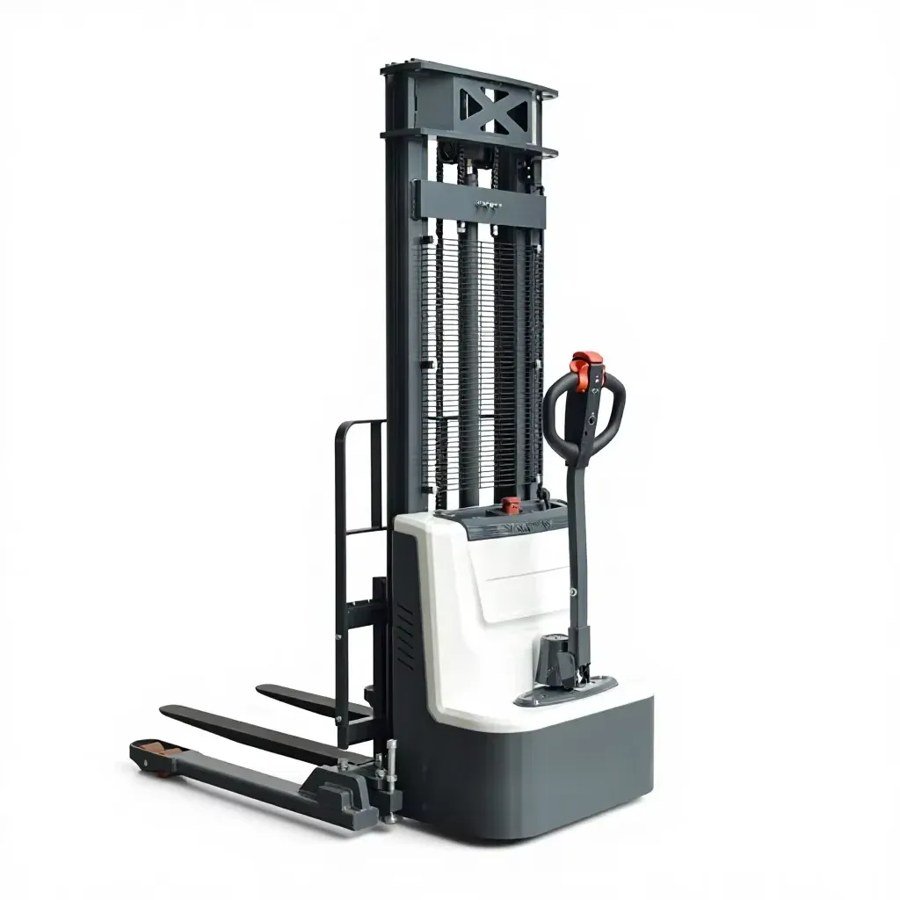
What is a straddle stacker and what do the legs actually do?
A straddle stacker is a walk behind electric stacker with two outrigger legs that run forward on either side of the forks, outside the load. The legs take the forward weight of the pallet, so the truck does not need a counterweight at the back and stays short, light and easy to turn in a stock room.
The alternative layout is the fork over stacker. Its legs sit directly under the forks, so they have to travel inside the pallet, between the bottom boards. That is the cheaper build, from £1,065 ex VAT for a 1.2 t walkie with 1,150 mm forks, and it is the right choice when every pallet you move is a standard open bottom pallet in good condition.
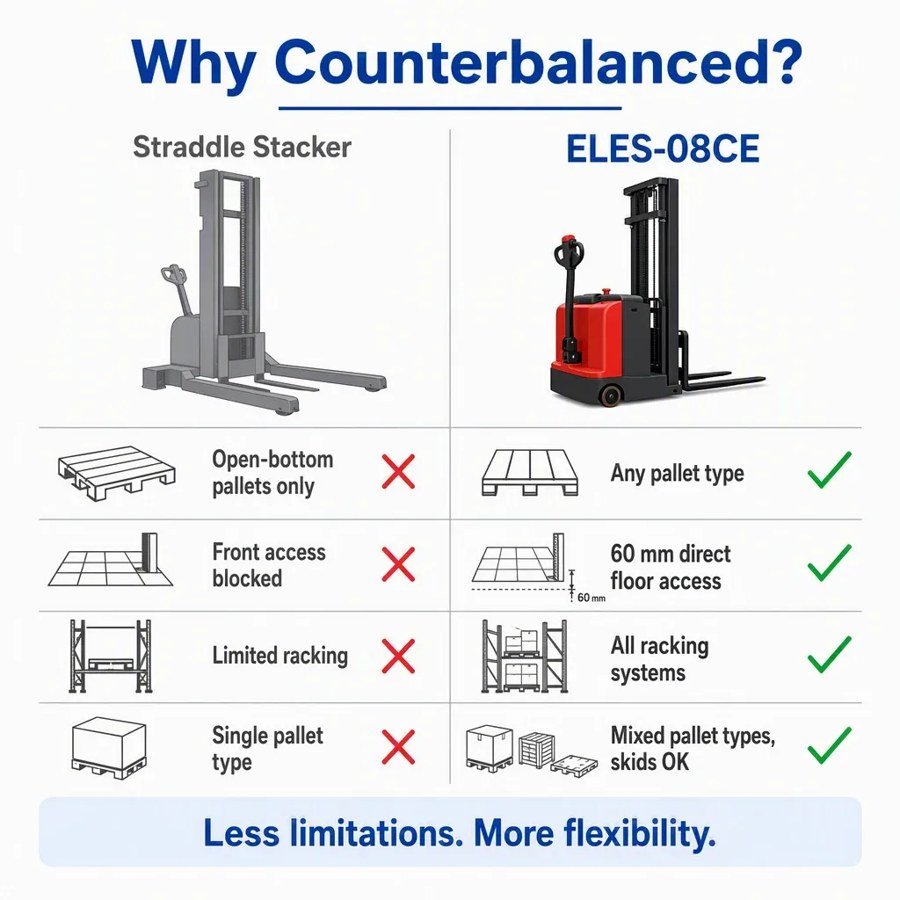
The third layout is a counterbalance stacker, which has no legs at all and carries the load entirely on a weighted chassis. It goes anywhere the other two cannot, at a price: from £2,750 ex VAT for an 800 kg truck with 1,070 mm forks. Our full selection sits on the electric stacker range page.
Fork over, straddle or counterbalance: which chassis fits your load?
This is the comparison that decides the order. Mast height and battery type can be changed on the specification sheet, but the chassis is the truck. Get it wrong and the forks will not go under half your stock.
| Chassis | Where the support is | Works with | Does not suit | Guide price |
|---|---|---|---|---|
| Fork over | Legs under the forks, inside the pallet | Open bottom timber pallets, two way and four way entry, clean level floors | Closed base pallets, stillages, cages, machinery on a solid frame | from £1,065 ex VAT |
| Straddle, standard legs | Legs outside the load, either side of the forks | Closed base pallets, plastic pallets with a perimeter base, stillages and cages up to about pallet width | Loads wider than the leg spread, stacking inside existing racking apertures | from £1,145 ex VAT |
| Straddle, wide or adjustable legs | Legs outside the load, set further apart | A 1,200 mm pallet taken across its width, oversized stillages, drums and crates on a base | Narrow aisles, because the footprint is wider | from £1,530 ex VAT |
| Counterbalance | Weight in the chassis, nothing in front | Any base at all, racking apertures, lorry tail lifts, mixed loads | Tight aisles and weak floors, since the truck is longer and heavier | from £2,750 ex VAT |
Read the table from the load back to the truck, never the other way round. Most buyers who end up disappointed started from a price and a lift height, then found that the legs on the truck they ordered would not clear the stillages that make up a third of their movements.
Which loads need straddle legs rather than a fork over stacker?
Work through what actually gets lifted in a normal week:
- Closed base and perimeter base pallets. Plastic pallets and many export pallets have a solid or framed base with no gap for legs to run inside. A fork over truck cannot get under them. Straddle legs pass outside and the forks enter the pallet normally.
- Stillages and post pallets. Steel stillages usually sit on feet or a skirted base that blocks a fork over leg.
- Roll cages and wheeled cages. If you lift roll cages onto a mezzanine or a lorry, the wheels and base frame rule out legs under the forks.
- Machinery, crates and drums on a base. Anything delivered bolted to a solid timber or steel frame is a straddle job.
- A 1,200 mm pallet handled across its width. Standard UK pallets are 1,200 by 1,000 mm and euro pallets 1,200 by 800 mm. If the entry you need is on the long side, the load is wider than the normal leg spread and you want the wide leg build, from £1,530 ex VAT at 1.5 t.
If more than one of those lines applies to your stock, a 1.2 to 1.5 t straddle stacker from £1,145 ex VAT is the safer order. The difference over the fork over equivalent at £1,065 ex VAT is small next to the cost of a truck that sits idle whenever a certain delivery arrives.
How much room does a straddle stacker need on the floor?
Legs outside the load mean a wider truck and a wider working aisle than a fork over of the same capacity. In a small stock room that matters more than lift height.
Three measurements settle it. The first is the overall width across the legs, which has to pass your tightest doorway and turn in your narrowest aisle. The second is the inside clearance between the legs, which has to be wider than your widest load with a little to spare. The third is the ground clearance under the legs, because a worn concrete floor, a drainage channel or a ramp lip can ground a straddle truck that is perfectly happy on a flat warehouse slab. Each of those figures is on the drawing sent with your written quote.
Two further points of practice. Straddle legs are not designed to enter a racking aperture, so a straddle truck places pallets at the beam face rather than deep inside a rack, and a counterbalance build from £2,750 ex VAT is what goes into the aperture. And if the truck has to work on a vehicle tail lift or a sloped yard apron, say so at quotation stage, because leg height and wheel size change with that duty. A wide leg 1.5 t stacker from £1,530 ex VAT covers oversized loads but needs the aisle to match.
What to check before you buy a straddle stacker
Ten minutes with a tape measure saves a wrong order:
- The widest load, not the usual one. Measure the outside width of your biggest stillage or cage, then add clearance. That number sets standard legs or wide legs.
- The base of the load. Open boards, closed base, feet or wheels decides fork over against straddle before anything else.
- Top landing height plus the mast. Order lift height above your highest beam landing, then check what the truck is rated to carry at that height rather than at the floor.
- Doorways and the closed mast height. Measure every opening the truck passes through, including roller shutters that do not fully retract.
- Floor condition and gradients. Note joints, ramps, kerbs and any slope, so the wheels and leg clearance are specified for the site rather than for a showroom.
- Fork length and width. Across this range forks run from 1,000 mm to 1,220 mm. A 1,000 mm pallet taken on the short side wants shorter forks than a 1,200 mm one.
- Battery and charging point. Decide where the truck charges and whether one shift or two has to come off a charge, then match lead acid or lithium ion to that.
- Who operates it and their training. A pedestrian stacker is work equipment under PUWER 1998, and lifting equipment under LOLER 1998, so operators need proper instruction and the truck needs its thorough examinations recorded.
Bring those answers to the quote and the specification is a five minute conversation. Guide prices across the layouts run from £1,065 ex VAT to £2,750 ex VAT, and the price guide explains how the figures are set. Price, freight, VAT and lead time are confirmed on your written quote.
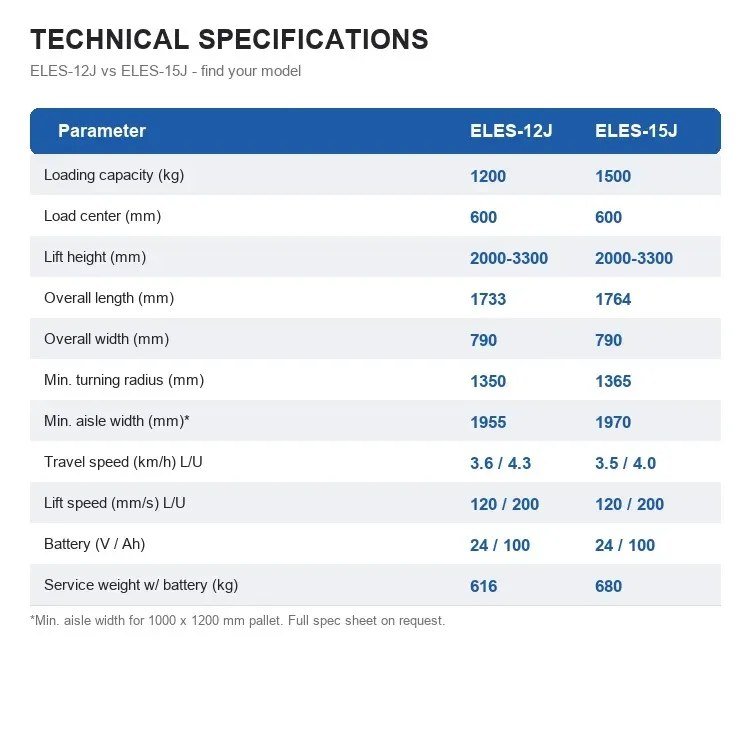
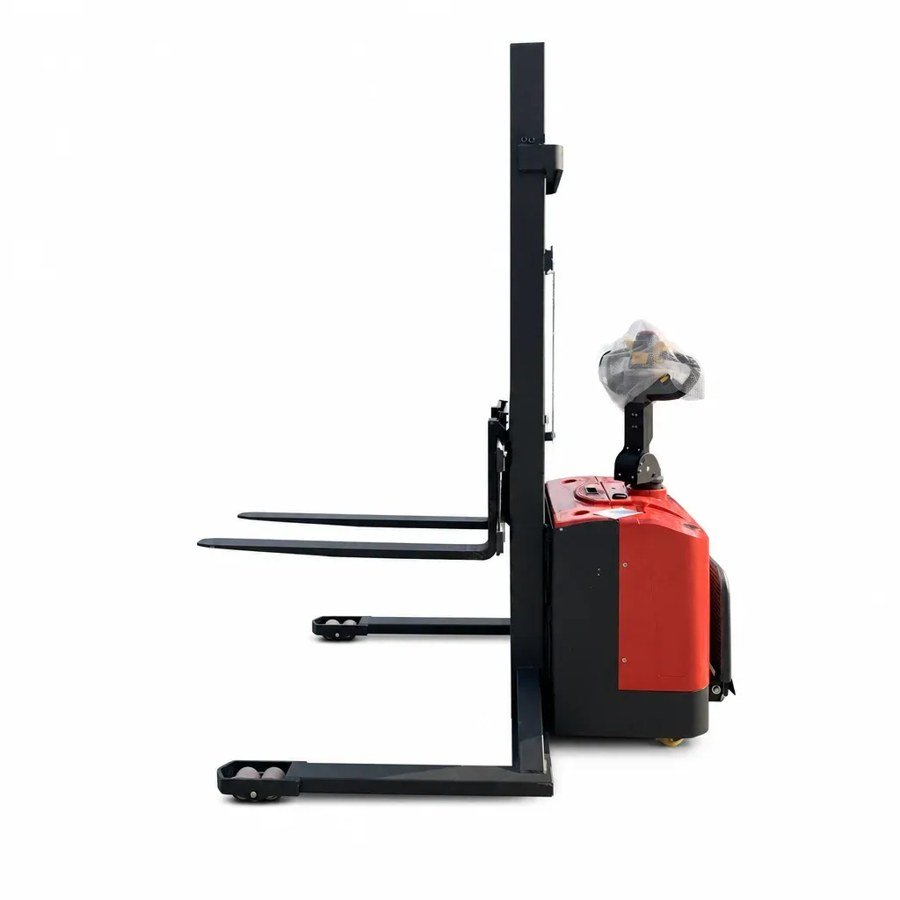
Straddle, fork over and counterbalance stackers compared
Questions people ask
What is the difference between a straddle stacker and a fork over stacker?
On a straddle stacker the support legs run outside the load, so the forks can lift a pallet, stillage or cage with a closed base. On a fork over stacker the legs run under the forks and have to pass inside the pallet, which only works with open bottom pallets.
Can a straddle stacker lift a closed base plastic pallet?
Yes, provided the pallet is narrower than the clearance between the legs. That is the main reason buyers choose the straddle layout, which starts from £1,145 ex VAT at 1.2 to 1.5 t.
Do straddle legs fit inside pallet racking?
No. The legs are wider than the load, so a straddle stacker places pallets at the beam face rather than entering the aperture. For work inside racking apertures, use a counterbalance stacker from £2,750 ex VAT or a forklift.
How wide an aisle does a straddle stacker need?
More than a fork over truck of the same capacity, because the legs sit outside the load. Measure your narrowest aisle and your tightest doorway, and the drawing sent with your written quote confirms the overall width and the clearance between the legs.
Do I need a licence to operate a pedestrian stacker?
There is no driving licence for one, but it is work equipment under PUWER 1998 and lifting equipment under LOLER 1998. Operators need adequate training and the truck needs thorough examination records kept.
How much does a straddle stacker cost?
Guide prices start from £1,145 ex VAT for a 1.2 to 1.5 t walkie straddle stacker, and from £1,530 ex VAT for a 1.5 t wide leg version. Your written quote confirms price, freight, duty, VAT and lead time.