Guide · · Range
Which Electric Pallet Truck Does Your Cash and Carry Actually Need?
For most cash and carry and warehouse floors a 1.5 to 2 t walkie electric pallet truck with a lithium-ion battery is the right buy, from £385 ex VAT. Step up to 3 t for drinks, tiles, bagged goods and yard work, and keep a manual pump truck for short, occasional moves. Lead-acid still makes sense where the truck works one shift and charges overnight in a fixed spot.
What is an electric pallet truck, and does a cash and carry need one?
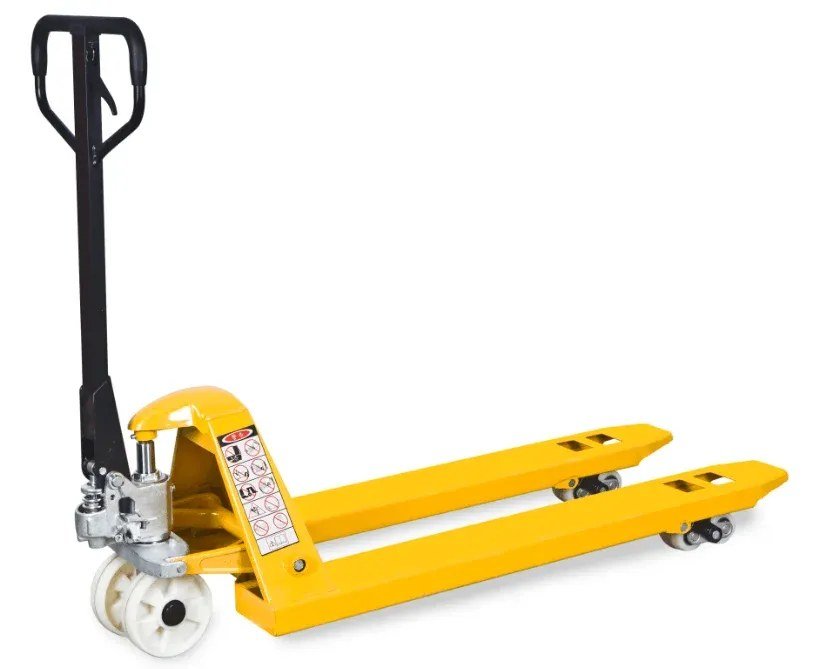
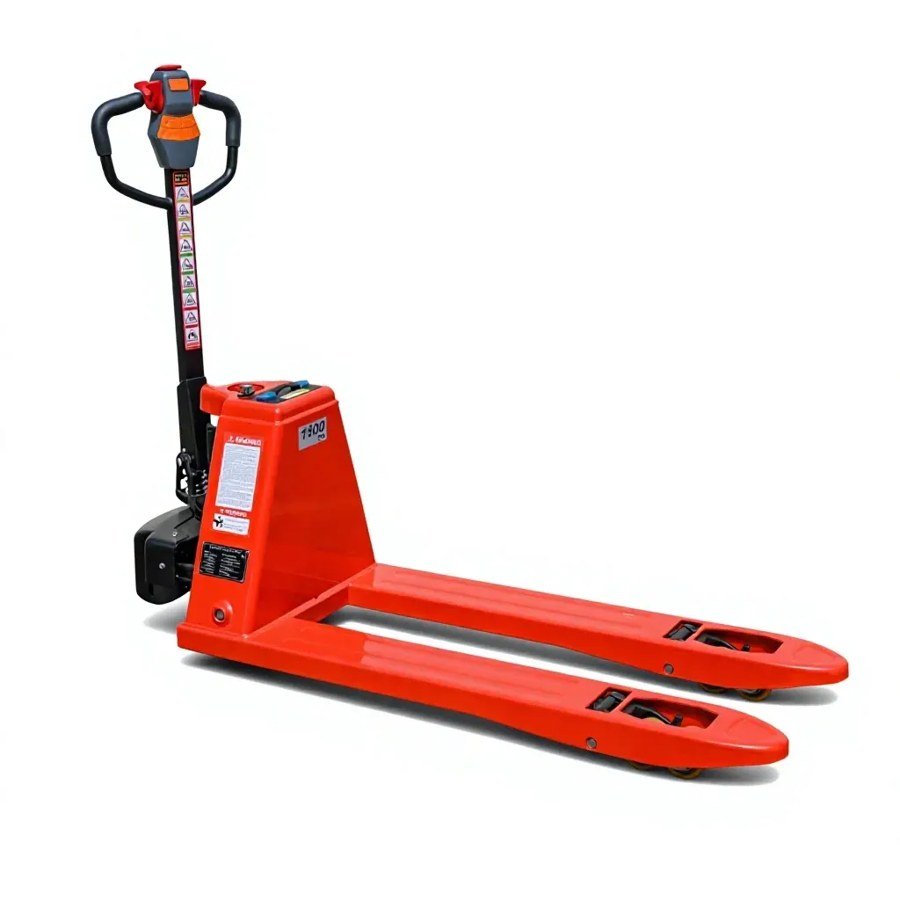
An electric pallet truck, also sold as a powered pallet truck or electric pallet jack, does the two jobs a manual pump truck asks of your staff: it lifts the pallet under power and drives it under power. The operator walks beside a tiller arm and sets the speed with a thumb control. Capacities run from 1.5 t to 3 t, with forks of 1150 to 1220 mm that suit both the 1200 x 1000 mm UK pallet and the 1200 x 800 mm euro pallet.
The trade answer to "do we need one" is three questions back: how many pallets, how far, and how heavy. A few light pallets a day from the dock to the shelf edge, and a hand pallet truck will do. Loaded drinks pallets dragged the length of an aisle, up a ramp or across a yard every shift, and the electric truck pays for itself in speed and fewer strains. Our electric pallet truck range starts at 1.5 t for exactly that job.
Lithium-ion or lead-acid: which battery suits your shift pattern?
Most new walkie trucks ship with a lithium-ion battery. Lithium can be topped up whenever the truck is parked, needs no water, gives off no gas while charging and holds its speed until nearly empty. The onboard charger plugs into a standard socket, so you can charge by the goods-in door during a break rather than in a charging room.
Lead-acid still has a place. It suits a truck that works one shift, charges overnight in a fixed spot and rests. Treat it properly and it lasts: one full charge a day, no half charges, a ventilated area for flooded types and topping up with distilled water. Where it hurts is on multi-shift sites and in the cold, because a battery charged little and often loses capacity, and a truck that runs flat mid-shift stops the aisle.
Rule of thumb: one shift, warm building, fixed charging point, lead-acid is fine. Two shifts, a cold store, or a truck shared between departments, choose lithium-ion.
Semi-electric or full electric: where is the line?
A semi-electric pallet truck drives under power but lifts with a hand pump, exactly like a manual pump truck. It is lighter and simpler, and for a long flat run with a handful of lifts an hour it does everything a full electric truck does. Our 2 t semi-electric pallet truck is a lead-acid unit with 1150 to 1220 mm forks, from £440 ex VAT.
A full electric truck powers both drive and lift. Once an operator lifts and lowers dozens of pallets a shift, the pump handle becomes the bottleneck. Our 1.5 to 2 t walkie electric pallet truck with a lithium-ion battery is the model most cash and carry and 3PL buyers settle on, from £385 ex VAT.
Notice the guide prices: on our list the semi-electric is not the cheaper option, because each partner factory prices its own list. Choose it for the lighter truck and the simpler mechanism, not to save money, and let the written quote settle the figure.
Walkie or ride-on, and 1.5 t, 2 t or 3 t?
A walkie truck, where the operator walks with the tiller, is the right choice for aisles, shop floors, delivery vehicles and any site where runs are short and turns are tight. A ride-on platform truck earns its keep when one operator shuttles pallets from dock to far racking all day; if your runs are that long, tell us the distance and shifts and we will quote one.
On capacity, work from your heaviest regular pallet, not your average. A 1.5 t truck handles ambient grocery, mixed retail and most non-food pallets. A 2 t truck is the safe choice for drinks, tinned goods, oils and the other dense lines a cash and carry sells by the pallet. A 3 t model such as our all-terrain lithium-ion truck, from £370 ex VAT, is for bagged products, tiles, paper and building supplies, and for ramps or a rough yard. A bigger chassis adds weight and length, so do not size up for the sake of it.
Electric pallet truck types compared: capacity, battery and guide price
| Type | Capacity | Battery | Guide price | Best for |
|---|---|---|---|---|
| Manual hand pallet truck | See range | None | See range | Short, occasional moves on flat floors; backup unit; delivery vans |
| Semi-electric walkie | 2 t | Lead-acid | from £440 ex VAT | Long flat runs with few lifts per hour |
| Full electric walkie | 1.5 to 2 t | Lithium-ion | from £385 ex VAT | Cash and carry, supermarket, 3PL, multi-shift sites |
| Full electric all-terrain | 3 t | Lithium-ion | from £370 ex VAT | Dense loads, ramps, yards, cold stores |
| Ride-on platform | Typically 2 t and above | Lithium-ion or lead-acid | On request | Long dock-to-rack runs in large warehouses |
Guide prices are ex VAT, converted from each factory list at a buffered exchange rate; freight, duty, VAT, minimum order and lead time are confirmed on your written quote.
When is a manual pump truck still the right buy?
Do not let anyone talk you out of a hand pallet truck, also called a pump truck or pallet jack, where it fits. It costs a fraction of a powered unit, needs no charging, rides in a van, and any member of staff can use it after a briefing. It is the right buy when moves are short and occasional, the floor is flat, or the truck lives on a delivery vehicle. Keep one as a backup for the day the electric truck is on charge or away for service.
The line is crossed when people pull loaded pallets long distances, up ramps or for most of their shift. That is a manual handling problem an electric truck removes. Browse the hand pallet truck range if a manual unit is the answer, or buy one alongside.
What to check before you buy an electric pallet truck
- Heaviest pallet, not average. Rate the truck above your densest regular load.
- Floor and route. Smooth concrete suits standard wheels; ramps, expansion joints, cold store floors and yards call for the all-terrain chassis.
- Fork size. 1150 mm forks suit most UK and euro pallets; confirm fork width and lowered height against any closed-bottom or plastic pallets.
- Lifts per shift. Few lifts and long runs, semi-electric; many lifts, full electric.
- Battery and charging point. Lithium-ion for opportunity charging and multi-shift work; lead-acid for one shift and a fixed, ventilated spot. Check the charger suits a standard UK socket.
- Training and inspection. PUWER 1998 requires trained operators and a maintained truck. Plan a pre-use check each shift and ask a competent person whether LOLER 1998 thorough examination applies.
- What the quote covers. Freight, duty, VAT, minimum order and lead time are confirmed on your written quote, valid for 30 days. Every truck is inspected before dispatch, with photos and video sent to you. See our warranty and returns page and open a trade account.
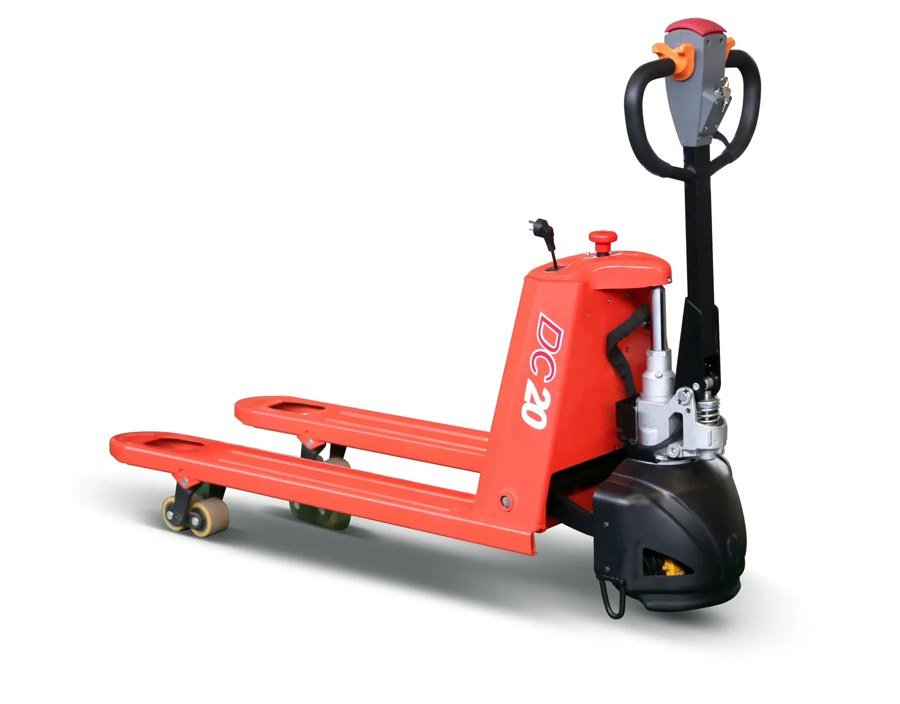
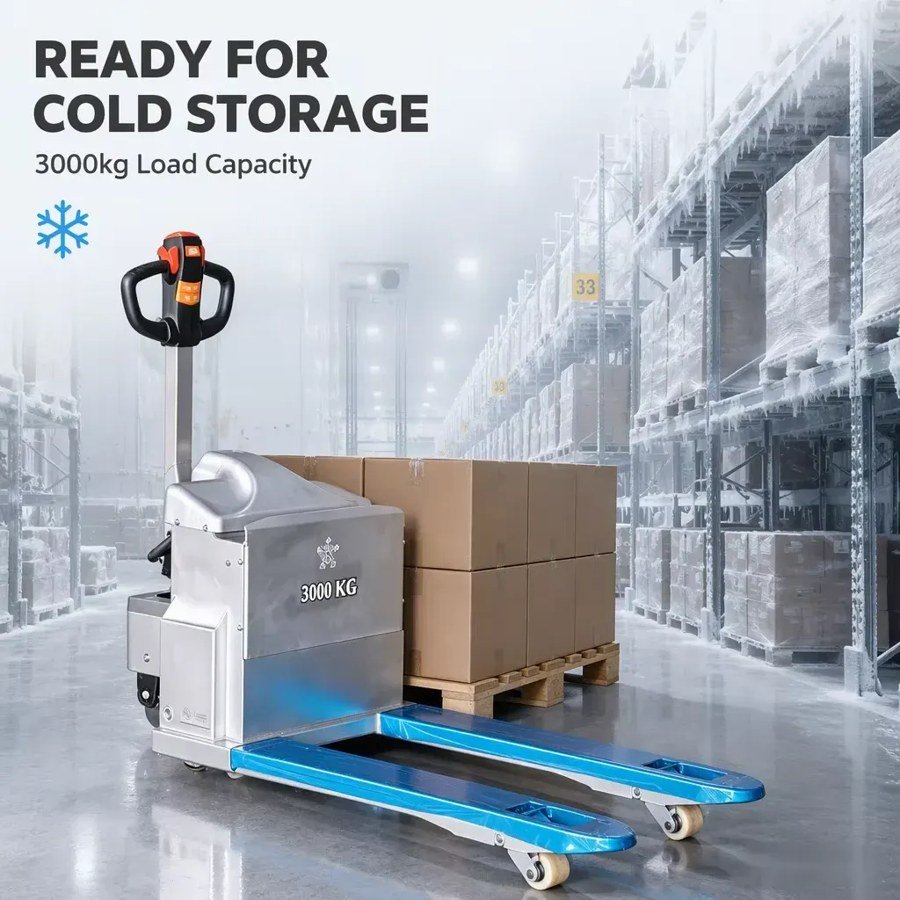
Electric pallet trucks discussed in this guide
Questions people ask
How much does an electric pallet truck cost in the UK?
Guide prices on our range start from £385 ex VAT for a 1.5 to 2 t walkie model with a lithium-ion battery, from £440 ex VAT for a 2 t semi-electric, and from £370 ex VAT for a 3 t all-terrain truck. Freight, duty, VAT and any minimum order are confirmed on a written quote, valid for 30 days.
Is a lithium-ion electric pallet truck better than lead-acid?
For most sites, yes. Lithium-ion can be topped up during breaks, needs no watering and suits multi-shift and cold store work. Lead-acid remains sound for a truck that works one shift and charges overnight in a fixed, ventilated spot.
What is the difference between a semi-electric and a full electric pallet truck?
A semi-electric truck drives under power but lifts with a manual pump. A full electric truck powers both drive and lift. Choose semi-electric for long, flat runs with few lifts, and full electric once operators lift and lower dozens of pallets a shift.
How do you charge an electric pallet truck?
Walkie trucks carry an onboard charger that plugs into a standard socket. Lithium-ion trucks can be charged whenever parked, including short top-ups in breaks. Lead-acid trucks need one full charge each day in a ventilated area and, for flooded batteries, topping up with distilled water.
Can an electric pallet truck go up a ramp or into the yard?
A standard walkie truck is built for smooth, level floors. For loading ramps, yards and uneven concrete choose an all-terrain model with larger wheels, such as our 3 t lithium-ion truck from £370 ex VAT.
Do staff need training to use a walkie electric pallet truck?
Yes. PUWER 1998 requires anyone using work equipment to have received adequate training. HSE's L117 code covers rider-operated lift trucks; for a walkie truck, structured training on that model, recorded in writing, is the normal approach.
Sources: HSE: Provision and Use of Work Equipment Regulations 1998 (PUWER), HSE: Lifting Operations and Lifting Equipment Regulations 1998 (LOLER), HSE L117: Rider-operated lift trucks, operator training and safe use