Comparison · · Shopping Trolleys
Folding shopping trolley: which part folds, and why it matters
A folding shopping trolley means one of two things on a trade quote: a hand trolley whose basket and frame collapse flat for storage, or a supermarket trolley with a folding rear flap so it nests into the one in front. Fold flat models here are 60 L to 100 L and start from £20 ex VAT, while nesting mesh trolleys run 100 L to 270 L from £24 ex VAT, bulk price. Say which mechanism you want when you ask for a written quote on shopping trolleys, because the two are built differently.
What does a folding shopping trolley actually fold?
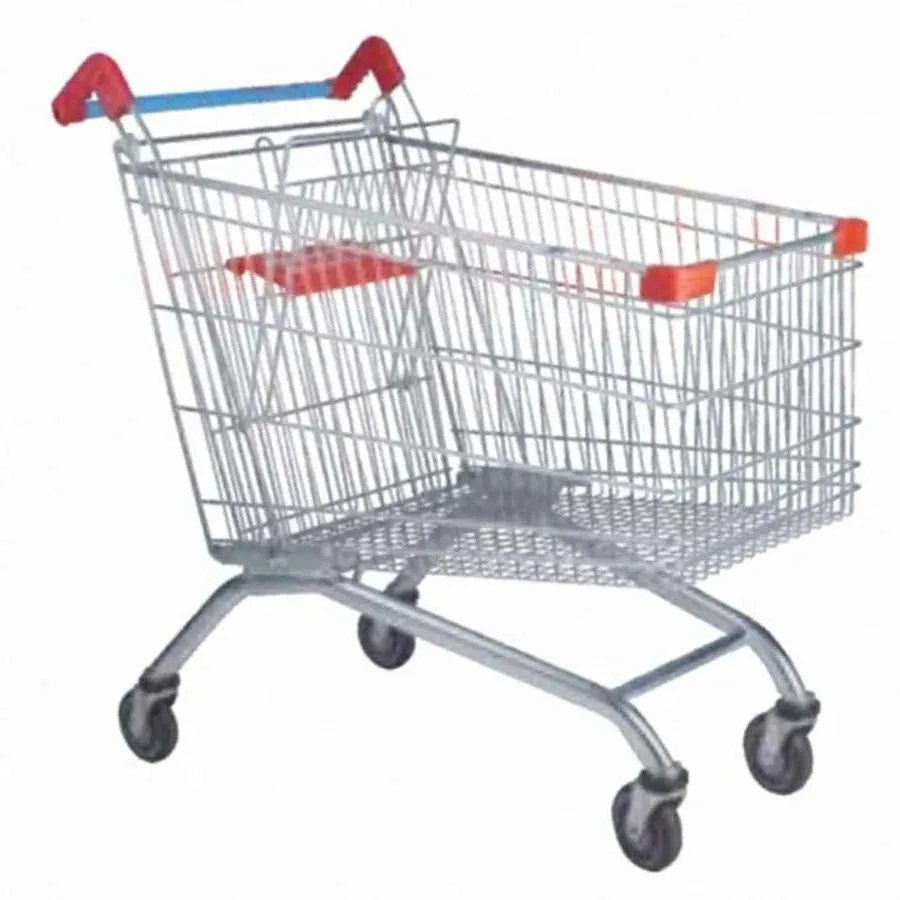
Two very different products are sold under the same words, and buyers get caught out by it every peak season. The first is a fold flat trolley: the basket drops, the handle folds down and the frame collapses so a batch can be stacked against a store room wall out of season. The second is a nesting supermarket trolley, where a hinged rear flap folds inward as the trolley behind pushes into it, so twenty trolleys sit in the floor space of three.
Both are called foldable, collapsible or folding in a specification, and both appear on this range. The Foldable Metallic Supermarket Trolley is a 60 L fold flat unit from £20 ex VAT. The 270 L mesh folding trolley is a full rank trolley from £24 ex VAT, bulk price, running on 127 mm polyurethane castors.
When you send an enquiry, write the word you mean: folds flat for storage, or folds to nest. It is the single detail that most often has to be corrected before a quote can be issued.
Fold flat or nesting: which one suits your store?
Ask what the trolley does for eleven months of the year, not just in the busiest week. A trolley that lives in a rank by the door should nest, full stop. Nesting keeps the rank short, keeps the fire route clear and means staff can run a rank back from the car park in one push rather than one at a time.
A trolley that only comes out for the Christmas run, a market stall, a trade event or a seasonal pop up should fold flat. Twenty fold flat trolleys go behind a store room door. Twenty nesting trolleys need a bay, and in January you are paying for that bay in floor space.
Store type gives you the rest of the answer:
- Convenience store, pharmacy or a small forecourt shop: a 60 L to 100 L trolley, with a shallow rank near the entrance. Many of these stores run baskets instead, so compare against the shopping basket range before you commit.
- Supermarket or grocer: 100 L to 180 L nesting mesh, which is the workhorse size across most UK stores.
- Cash and carry or wholesale depot: 262 L to 270 L, because a trade customer buys in cases and a small basket stops the sale.
Folding shopping trolleys compared: capacity, build and guide price
| Trolley | Capacity | Basket | What it suits | Guide price |
|---|---|---|---|---|
| Foldable metallic supermarket trolley | 60 L | Metal, folds flat | Overflow, events, small shops | from £20 ex VAT |
| 100 L mesh folding trolley | 100 L | Wire mesh | Convenience and symbol stores | from £24 ex VAT, bulk price |
| Folding waterproof 4 wheel steel trolley | 150 L | Steel, waterproof finish | Wet entrances, chilled aisles | from £24 ex VAT, bulk price |
| 270 L mesh folding trolley, 127 mm castors | 270 L | Wire mesh | Cash and carry, hypermarket | from £24 ex VAT, bulk price |
The spread between the smallest and the largest trolley on that table is a few pounds, which surprises most buyers. Capacity is cheap. What moves the price is basket material, finish and castor specification, and those are set on the written quote.
What a folding frame costs you in daily use
Every hinge is a part that can wear, and a fold flat frame has more of them than a fixed one. In a store that puts a trolley through forty shops a day, that matters. In a store room where the same trolley is folded twice a year, it does not. Buy the folding frame for the storage it saves you, not because folding sounds like a feature.
Nesting is different: the rear flap on a supermarket trolley is a single hinge that is designed to be pushed thousands of times, and it is what lets a rank work at all. Nobody runs a supermarket rank without it.
Two practical points either way. First, castors take the punishment, not the basket. Polyurethane castors roll quieter and mark a polished floor less than hard plastic, and a larger castor copes better with a kerb, a ramp lip or a car park drain. Second, a folded trolley still needs its own space in the store room, and a stack that leans is a stack that goes over, so plan a wall or a rack for it rather than a corner.
What to check before you buy
- Which fold. Fold flat for storage, or folding flap to nest. Put it in writing in your enquiry.
- Narrowest aisle and checkout lane. Measure both, then check the trolley passes with room to turn. A 270 L trolley in a 900 mm aisle makes shoppers queue behind each other.
- Nesting depth. Ask how much length each extra trolley adds to the rank, then multiply by the number you are ordering and compare that with the bay you have.
- Castor type and size. Polyurethane for quiet running and polished floors, larger diameter for ramps and outdoor bays.
- Basket material and finish. Zinc plated, galvanised or plastic for wet entrances, plain steel mesh for dry indoor aisles.
- Extras you want built in. Child seat, coin lock, bumper, colour and a printed panel are all specified before the trolley is made, not added afterwards.
- Spares. Agree castors and handles at the same time, so a damaged trolley goes back into service rather than into the yard.
Prices, specification and getting a quote
Guide prices on this range start from £16 ex VAT, bulk price, and the four trolleys above sit between £20 ex VAT and £24 ex VAT, bulk price. Those are guide figures in pounds ex VAT converted from the factory list, which is why a written quote by email is the number you work from: it confirms price, freight, duty, VAT and lead time, and it holds for thirty days. The price guide explains how the figures are built.
Everything is made to order at our partner factories, inspected before dispatch with photos and video sent to you, then delivered anywhere in the UK. The written quote confirms the price for the quantity you need, so tell us the number you want along with capacity, basket, castor and colour. Send the list to our sales team and you get the specification back in writing before anything is made.
Folding shopping trolleys in this guide
 Foldable Metallic Supermarket Trolleyfrom £20 ex VAT
 100L Mesh Folding Shopping Trolleyfrom £24 ex VAT, bulk price
 Folding Waterproof Light 4-wheel Supermarket Steel Shopping Trolleyfrom £24 ex VAT, bulk price270L European Supermarket Mesh Folding 5 in PU castor Shopping Trolleyfrom £24 ex VAT, bulk price
Questions people ask
What is a folding shopping trolley?
It is either a trolley whose basket and frame collapse flat for storage, or a supermarket trolley with a hinged rear flap that folds so trolleys nest inside each other in a rank. Both are described as folding, so state which one you need on your enquiry.
How much does a folding shopping trolley cost?
A 60 L fold flat model starts from £20 ex VAT, and nesting mesh trolleys from 100 L to 270 L start from £24 ex VAT, bulk price. Your written quote confirms the figure for the specification and quantity you ask for.
Do folding trolleys hold less than fixed ones?
Not in this range. The folding mesh models go up to 270 L, which is the same as the largest fixed trolleys we supply. Capacity is set by the basket size you choose, not by whether the frame folds.
Which size should a convenience store order?
Most convenience and symbol stores run 60 L to 100 L, because the trolley has to pass a narrow aisle and a single checkout lane. Measure your narrowest aisle first, then pick the largest trolley that passes it with room to turn.
Can I have our colour and logo on the trolley?
Yes. Colour, a printed handle panel, bumper colour, child seat and coin lock are all specified before the trolley is made, and they are confirmed on the written quote rather than added later.
How long does an order take?
Every trolley is made to order at our partner factories, so the schedule depends on the specification and quantity. The date is confirmed on your written quote, along with price, freight, duty and VAT.