Guide · · Floor Scrubbers & Sweepers
Floor scrubber drying: how soon can staff walk on the aisle again
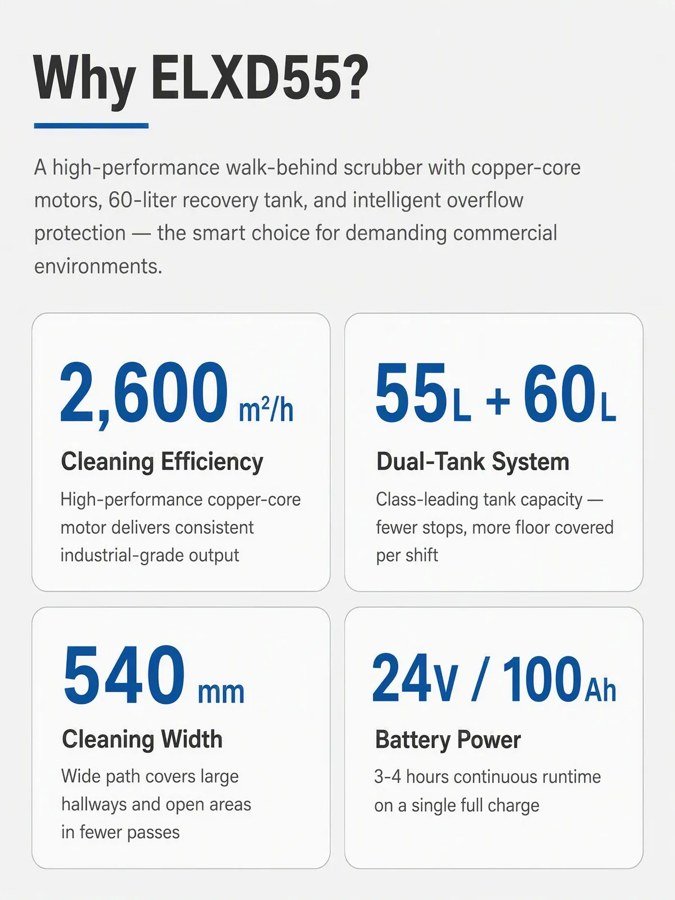
A floor scrubber lays water and detergent, scrubs and then lifts the dirty water back off through a squeegee and vacuum in the same pass, so the strip behind the machine is damp rather than wet and staff can usually walk the aisle straight away. Cleaning widths run from 540 mm to 850 mm, from £930 ex VAT for a walk behind and from £1,415 ex VAT for a ride on scrubber dryer. Whether the floor really comes out dry depends on the squeegee blade, the travel speed and the water flow, all of which you control.
What a floor scrubber does that a mop and bucket cannot
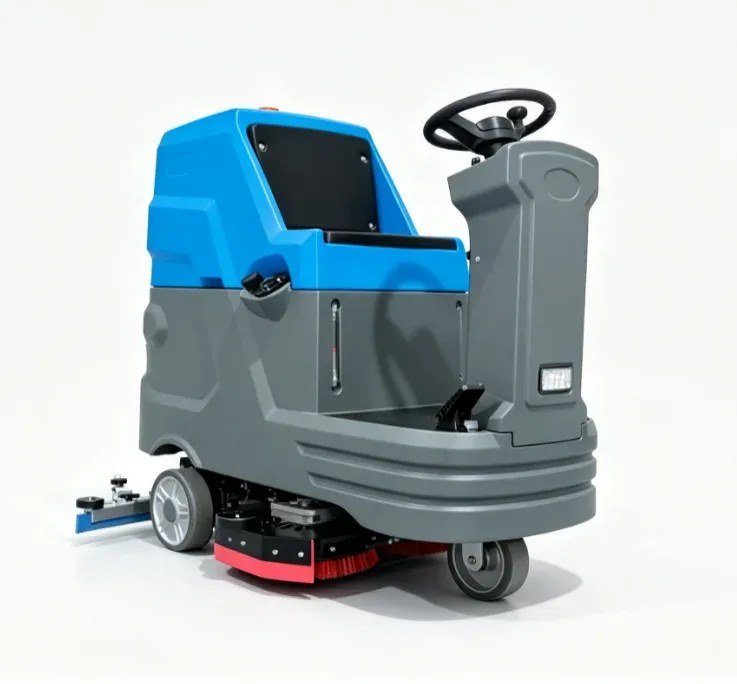
A floor scrubber carries clean water and detergent in one tank, lays it on the floor through a rotating brush or pad, scrubs, then lifts the dirty water straight back off through a rubber squeegee and a vacuum motor into a second tank. All of that happens in one pass, at walking speed.
A mop does half the job. It spreads water, loosens some of the soil and leaves the rest of the water on the floor to evaporate, along with whatever came out of the mop head. That is why a mopped gangway stays wet, needs cones, and often looks greyer by the end of the week: the same water is being moved around rather than taken away.
For a cash and carry, a supermarket back area or a warehouse gangway, the practical difference is time. The dirty water leaves the building in the recovery tank, and the floor is ready for trolleys and foot traffic instead of being closed off while it dries.
How soon can you walk on the floor behind a floor scrubber?
On a machine with the squeegee and vacuum in good order, the floor is damp and touch dry a short distance behind the squeegee, and staff can follow the machine down the aisle. When a floor comes out wet, it is almost always one of four things, and all four are in your hands.
- Squeegee blade condition. A worn, nicked or hardened blade leaves streaks and standing water. Blades are a wear part: turning one over or fitting a fresh one takes a minute and is the first thing to check.
- Travel speed. Drive or push faster than the squeegee can clear and water is left behind, particularly on a heavily soiled floor that needs the brush to work.
- Water flow. Most machines let you turn the flow down. Smooth sealed concrete needs far less water than a profiled or textured floor, and too much water is simply more than the vacuum can lift.
- Turns and edges. A squeegee recovers cleanly in a straight line. Tight turns, bay ends and the strip along racking legs are where water gets left, so plan the route so each run finishes straight.
Suction matters as much as the blade. Keep the recovery tank lid seal clean and the float filter clear: once suction drops, the floor comes out wet even with a new blade fitted.
Floor scrubber sizes, tanks and prices compared
Cleaning width sets how many passes an area takes, and tank size sets how often someone walks to the drain and the tap. These are the machines most often quoted for UK shop floors and warehouses, all from the floor cleaning machine range.
| Machine | Cleaning width | Suits | Guide price |
|---|---|---|---|
| Walk behind, 24 V battery | 540 mm | Shop floors, back areas, aisles with tight turns | from £930 ex VAT |
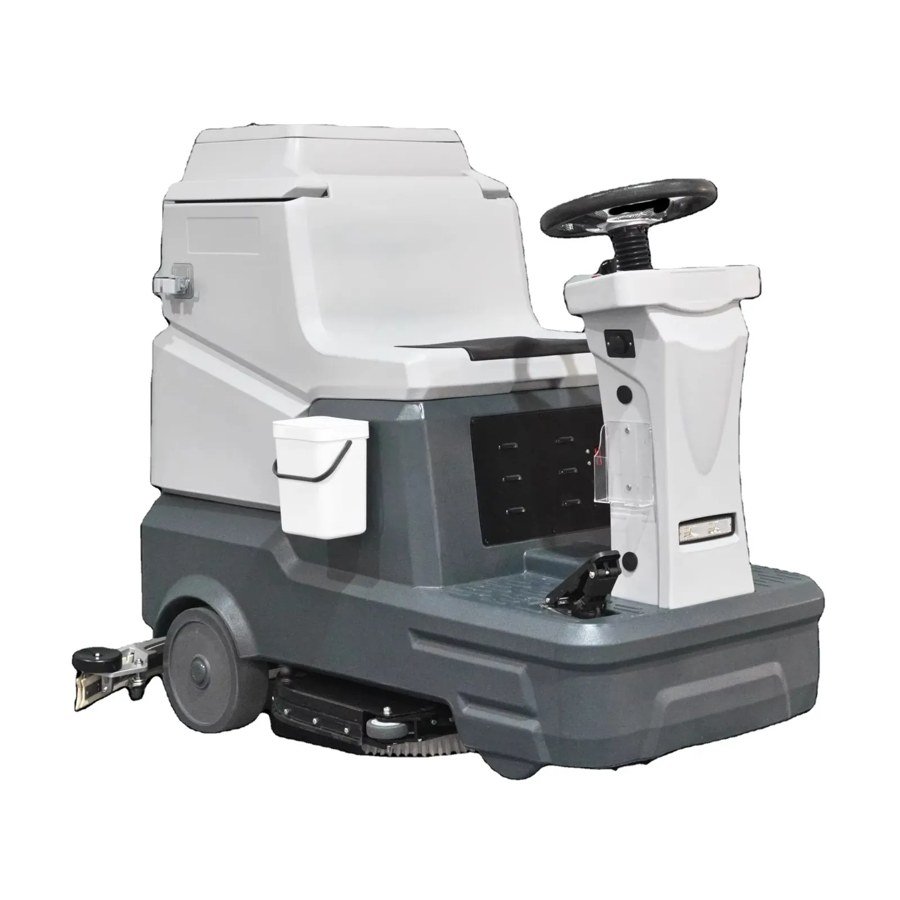
| Ride on scrubber dryer, dual brush | 660 mm | Medium warehouse floors and long gangways | from £1,415 ex VAT |
| Ride on, 120 L tank | 800 mm | Large open floors with the drain some way off | from £1,910 ex VAT |
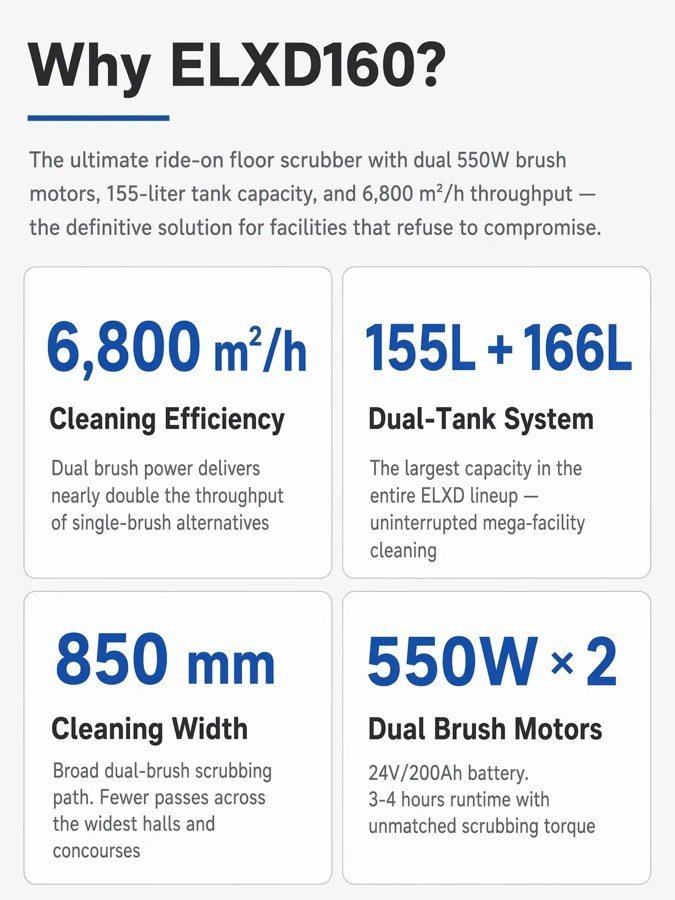
| Ride on, 155 L and 166 L tanks | 850 mm | Distribution floors cleaned every shift | from £2,720 ex VAT |
A 540 mm walk behind scrubber turns inside a shop aisle and stores in a cupboard. Once a single clean takes a walk behind more than an hour, the saving from a ride on is in labour hours rather than machine cost, and the 850 mm ride on with 155 L and 166 L tanks is the one chosen when the floor is cleaned every shift.
Autumn and winter: where the water on your floor comes from
From late October onward most of the water on a trading floor is not from cleaning. It arrives on boots, trolley wheels and forklift tyres, and once the gritting starts it brings a film of salt and grit with it that grinds into the floor finish and turns grey under lights.
Two things follow. First, entrance matting earns its keep: several metres of it takes off more water than any machine can. Second, the pattern changes. A floor that needed one pass in July may need the entrance bay and the first twenty metres done two or three times a day, which argues for a machine light enough to bring out between deliveries rather than one that only runs at night.
Salt is also why recovery matters more in winter. Mopping salty water simply redistributes it and leaves a dull film behind. A scrubber lifts it into the recovery tank and out of the building.
What to check before you buy a floor scrubber
- Width against your narrowest point. Measure the tightest aisle, the shop door and any lift. A 540 mm machine goes where an 850 mm one cannot, and one that will not reach the area it was bought for gets left in the corner.
- Tank litres against the walk to the drain. Count the distance to the nearest tap and gully. A 120 L tank on an 800 mm machine is chosen for exactly this reason on big floors.
- Battery and charging. Decide where the machine will charge and who plugs it in. Lead acid units want a ventilated spot and a routine check of the cells, and a socket near where the machine is parked.
- Squeegee blades and brushes as spares. These are consumables, not faults. Order spare blades and a spare brush or pad driver with the machine so a worn blade never stops the clean.
- Brush pressure for your floor. Sealed concrete, tiles with grout lines and a resin coating all behave differently. Grout lines and textured surfaces want pressure and a slower pass, not more water.
- Noise and timing. If the floor is cleaned while customers are in, keep the route clear of the till area at peak.
- Maintenance duty. Under PUWER 1998 work equipment must be maintained in efficient working order, so set a simple end of shift routine: drain and rinse the recovery tank, check the blade, clear the filter.
If you are weighing a scrubber against a sweeper, the test is what is on the floor. Dust, grit, shrink wrap and cardboard are sweeper work. Spills, tyre marks, sugar and ground in soil are scrubber work. Many sites run one of each, and some pick a dual brush ride on scrubber dryer that handles a loose top layer along with the wash.
What a floor scrubber costs and what the written quote confirms
Walk behind machines start from £930 ex VAT and a dual brush ride on scrubber dryer from £1,415 ex VAT. The 800 mm ride on with a 120 L tank is from £1,910 ex VAT, and the 850 mm ride on from £2,720 ex VAT. Those are guide prices in pounds ex VAT, the same figures you will see across the price guide.
Everything is built to order at our partner factories and inspected before dispatch, with photos and video of your actual machine sent to you, then delivered anywhere in the UK. Price, freight, duty, VAT and lead time are confirmed on your written quote by email, which is valid for 30 days.
Tell us the floor area, the narrowest aisle and whether the machine runs in trading hours, and we will come back with two or three options rather than a catalogue. Send the sizes through and the quote follows by email.
Floor scrubbers discussed in this guide
Questions people ask
Does a floor scrubber leave the floor completely dry?
It leaves the floor damp and touch dry rather than bone dry, and the aisle can normally be walked straight away. If water is standing behind the machine, check the squeegee blade and the vacuum before anything else.
What is the difference between a floor scrubber and a scrubber dryer?
They are the same type of machine. Scrubber dryer is the longer name for a scrubber with a squeegee and vacuum that recovers the water, which is what the machines in this range do.
Can you use a floor scrubber during trading hours?
Yes, and most retail sites do. Because the floor behind the machine is damp rather than wet, you avoid closing the aisle off, though you should still keep the route clear of the busiest spots at peak times.
What cleaning width do I need?
Match it to your narrowest aisle and door, not to the biggest floor. A 540 mm walk behind suits shop floors and back areas, while 800 mm and 850 mm ride ons suit open warehouse floors cleaned every shift.
How much water does a floor scrubber use?
That depends on the flow setting and the floor, which is why the flow is adjustable. Tank capacity is the figure to plan around: a 120 L tank covers a long run before anyone walks to the drain.
Do I still need a sweeper if I have a floor scrubber?
If the floor carries loose grit, dust or cardboard, a sweeper handles it faster and keeps the scrubber brushes cleaner. Floors with mainly spills and ground in soil need the scrubber alone.