Comparison · · Hand Pallet Trucks
Stainless steel pallet truck or galvanised: which one wet work needs
A 304 stainless steel pallet truck starts from £485 ex VAT, while a fully galvanised truck for cold store and damp work starts from £102 ex VAT, bulk price, and a painted truck with galvanised forks from £76 ex VAT. Stainless is the one to buy where the truck is washed down with chemicals or runs in open food areas. Galvanised covers chilled stores, loading bays and yards for a fraction of the money.
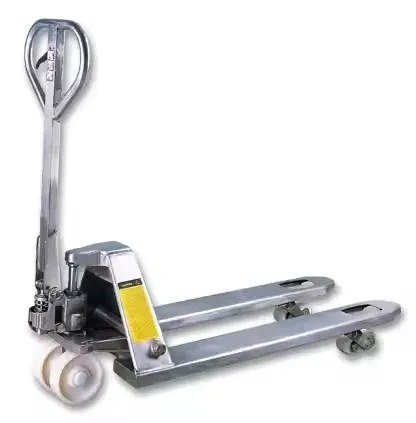
What is a stainless steel pallet truck, and when is galvanised enough?
A hand pallet truck, also called a pump truck or a pallet jack, is normally built from painted mild steel. Paint is perfectly good in a dry warehouse and it fails quickly anywhere wet, because the first scuff on a fork tip opens the steel to water. There are two ways round that. A galvanised truck has the steel zinc coated, so the protection is part of the surface rather than a layer sitting on top of it. A stainless steel pallet truck is made from 304 stainless throughout: frame, forks, handle, pump housing and the visible fixings.
The money is what separates them. A painted truck with galvanised forks starts from £76 ex VAT. A fully galvanised truck built for cold store work starts from £102 ex VAT, bulk price. A 304 stainless truck starts from £485 ex VAT. So the useful question is not which is the better steel. It is how wet, how salty and how often cleaned the job really is.
Where corrosion actually starts on a pump truck
Trucks rarely rust evenly. They rust in four places, and knowing which ones apply to your site tells you which finish to buy.
- Fork tops and the load roller pockets. Water runs off a pallet, sits in the channel of the fork and stays there overnight. This is the first place paint lifts.
- The pump body and ram. A chrome plated ram that is sprayed with a caustic cleaner will pit, and a pitted ram chews the seal, so the truck starts to drop under load. Replacing seals is a small job; replacing the pump is not.
- Welds and the handle yoke. Heat affected steel at a weld corrodes before the plate around it does.
- Wheel bearings. Brine and wash water carry straight into the bearing and the wheel seizes, which then flat spots the tyre.
If your trucks are dying from the forks up, the frame finish is the problem. If they are dying at the wheels and the ram, look at the bearing type and the ram protection as well, because stainless plate on its own will not save a standard bearing.
Stainless steel pallet truck or galvanised: capacities and guide prices compared
Capacity and fork length barely change across the three finishes, so the comparison is genuinely about the environment and the budget.
| Finish | Suits | Capacity | Forks | Guide price |
|---|---|---|---|---|
| Painted frame, galvanised forks | Dry warehouse, cash and carry floor, back of shop | 2 to 3 t | 1150 to 1220 mm | from £76 ex VAT |
| Fully galvanised, cold store build | Chilled and frozen stores, loading bays, damp yards | 2.5 to 3 t | 1150 to 1220 mm | from £102 ex VAT, bulk price |
| 304 stainless steel | Open food handling, wash-down bays, chemical areas | 2 to 2.5 t | 1150 to 1220 mm | from £485 ex VAT |
| 304 stainless steel, heavier duty | As above with 3 t pallets | 2 to 3 t | 1150 to 1220 mm | from £645 ex VAT, bulk price |
Put plainly: a galvanised truck costs a little over one unit of a painted truck, and a stainless truck costs around six of them. Buy the stainless where it is the only thing that will pass, and spend the saving on more galvanised trucks everywhere else.
Food, chilled and wash-down areas: which finish passes
If the truck shares space with unwrapped product, or if it gets cleaned with the same chemicals as the floor, 304 stainless is the grade that is normally specified. It wipes clean, it does not shed coating flakes, and the surface can take a caustic or acidic cleaner without going dull and porous. The 2 to 2.5 t stainless truck from £485 ex VAT is the usual starting point; where 3 t pallets are involved, the heavier build is from £645 ex VAT, bulk price. Both carry the standard 1150 to 1220 mm forks, so they go into the same pallets as the rest of your fleet. The full set sits on the stainless and galvanised pallet truck page.
Chilled and frozen stores are a different problem. There the enemy is condensation on every trip out of the cold and back in, not chemicals, and a galvanised truck handles that well for a fraction of the money. Many sites run galvanised inside the cold store and keep one or two stainless trucks for the open production area, which is usually the most economical way to cover both.
Yards, docks and damp stores: the case for galvanised
Outside, the attack is weather and road salt rather than cleaning chemicals, and zinc copes with that honestly. A galvanised truck used on a loading bay, under a canopy or in an unheated store will outlast a painted one by a wide margin, and when the coating is finally scratched through the zinc around the scratch still protects the steel. Paint does the opposite and creeps under the edge.
Two practical points if the truck lives outdoors. First, specify nylon wheels rather than polyurethane if the surface is rough tarmac or has grit on it, because nylon shrugs off stone chips that tear a softer tyre. Second, ask for the truck to be stored indoors overnight even if it is galvanised: nothing resists standing water for years, and a truck left in a puddle will fail at the bearings long before the frame gives up. Guide prices for the whole hand pallet truck range start at the painted end and rise with the finish rather than the capacity.
What to check before you buy a stainless steel pallet truck
Work through this before you ask for a quote, because these are the points that change the figure or make the truck useless on arrival.
- Is it stainless throughout or stainless clad? Ask what the pump body, the ram and the fixings are made of, not just the forks. A stainless frame on a painted pump is a false economy in a wash-down bay.
- Bearings and wheels. Sealed or stainless bearings are the difference between two years and six in a wet area. Confirm what is fitted.
- Fork length and width. Standard is 1150 mm with 1220 mm available. Check against your own pallets, especially if you run half pallets or stillages.
- Capacity with the load you actually lift. A 2 t rating is plenty for most chilled and food work; move to 2.5 or 3 t only if your pallets really weigh it.
- Low lift height. If you load into shallow dollies or low racking, confirm the lowered fork height rather than assuming the standard figure.
- Cleaning regime. Tell us the chemical and the method, hose, foam or wipe down, because that is what decides between galvanised and 304 stainless more than anything else.
Prices on the site are guide prices in GBP ex VAT. Freight, duty, VAT and timing are confirmed on your written quote, which holds for 30 days. The price guide explains how the figures are built.
Pallet trucks in this comparison
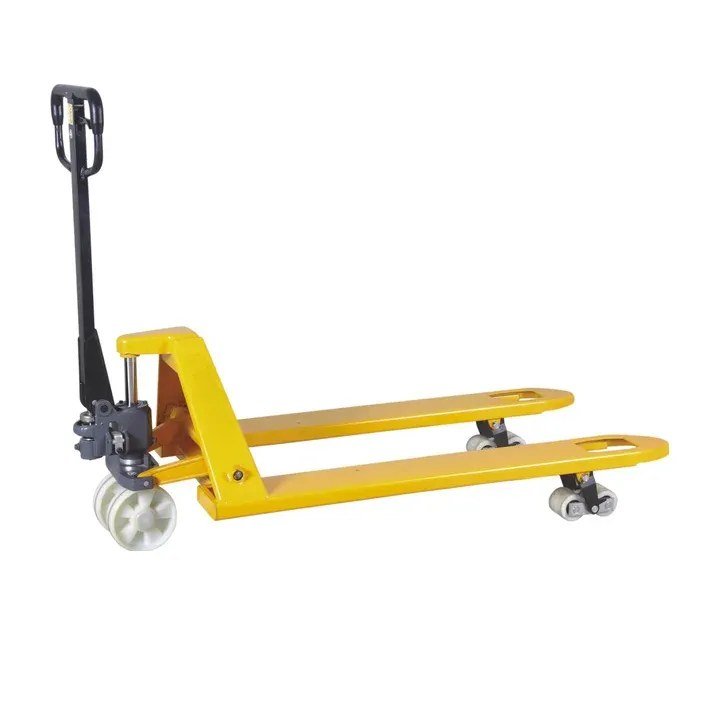 Manual Hand Pallet Truck Galvanised Steel Fork, 2 to 3 tfrom £76 ex VAT
 Cold Storage Hand Pallet Truck, Galvanised, 2.5 to 3 tfrom £102 ex VAT, bulk price304 Stainless Steel Pallet Truck Manual Hydraulic, 2 to 2.5 tfrom £485 ex VAT
 304 Stainless Steel Hand Pallet Truck, 2 to 3 tfrom £645 ex VAT, bulk price
Questions people ask
How much does a stainless steel pallet truck cost?
A 304 stainless truck of 2 to 2.5 t starts from £485 ex VAT, and a 2 to 3 t version starts from £645 ex VAT, bulk price. Both are guide prices; the written quote confirms the delivered figure for your quantity.
Is a galvanised pallet truck good enough for a cold store?
In most chilled and frozen stores, yes. The problem there is condensation rather than cleaning chemicals, and a galvanised cold store truck from £102 ex VAT, bulk price, is built for exactly that duty.
What grade of stainless steel is used?
These trucks are 304 stainless, which is the grade normally specified for food handling and wash-down areas. Confirm on your quote which parts are stainless, since pumps and fixings vary between builds.
Can a stainless truck be washed with normal cleaning chemicals?
Yes for routine caustic and acidic cleaners used at the usual dilution. Rinse and let it drain rather than leaving chemical sitting in the fork channels, and keep the ram clean so the seal is not scored.
Do stainless and galvanised trucks lift the same loads?
Broadly. The stainless models here run 2 to 2.5 t and 2 to 3 t, the galvanised cold store truck 2.5 to 3 t, all on standard 1150 to 1220 mm forks, so they fit the same pallets.
Can I mix finishes across one site?
That is the usual answer. Most buyers keep stainless trucks for the open food or wash-down area and run galvanised or painted trucks everywhere else, which covers both without paying stainless money for the whole fleet.