Guide · · Forklift Attachments
Forklift attachments: clamps, tippers and rotators, and what each one costs
Forklift attachments start from £320 ex VAT for a bale clamp sized for a 1 to 1.8 t truck and run to £4,900 ex VAT for a rotating paper roll clamp. The one figure that decides the purchase is residual capacity: every attachment adds weight ahead of the front axle and pushes the load centre forward, so a 2.5 t truck no longer lifts 2.5 t once it is fitted. Settle the carriage class, the hydraulic services on the truck and the derated capacity before you compare prices.
What do forklift attachments actually change on the truck?
A forklift attachment either replaces the forks or mounts in front of them on the carriage. A clamp grips a bale or a stack of cartons with no pallet underneath. A tipper picks up a bin and empties it into a skip. A positioner slides the forks in and out from the seat so the driver stops getting off to move them by hand. A rotator turns the load through 90 or 180 degrees.
The truck itself does not change. What changes is the work it can take on, and two numbers that most buyers only look at once the equipment has arrived: how much the truck can still lift, and how many hydraulic services it has on the mast. Start with the attachment range and the forklift range together, because the pairing is what has to work, not either part on its own.
Attachments are also work equipment in their own right. The HSE guidance on PUWER 1998 and LOLER 1998 applies to the clamp or tipper exactly as it applies to the truck, which means thorough examination at the stated intervals and an operator who has been trained on that specific attachment, not just on the forklift.
Which attachment suits your load?
Choose by what the load looks like when it arrives, not by what the truck already has fitted.
- Bale or soft pack clamp. Two flat arms that squeeze a compressed bale, a stack of insulation, a mattress or baled recycling. There is no pallet, so nothing to buy, store or return. A unit sized for 1 to 1.8 t trucks starts from £320 ex VAT.
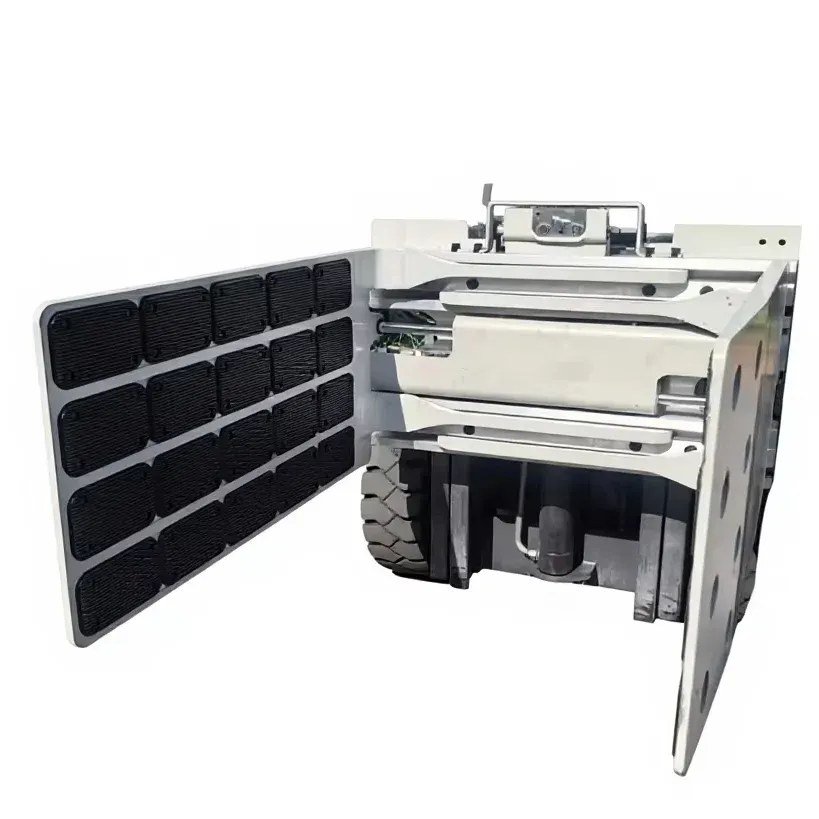
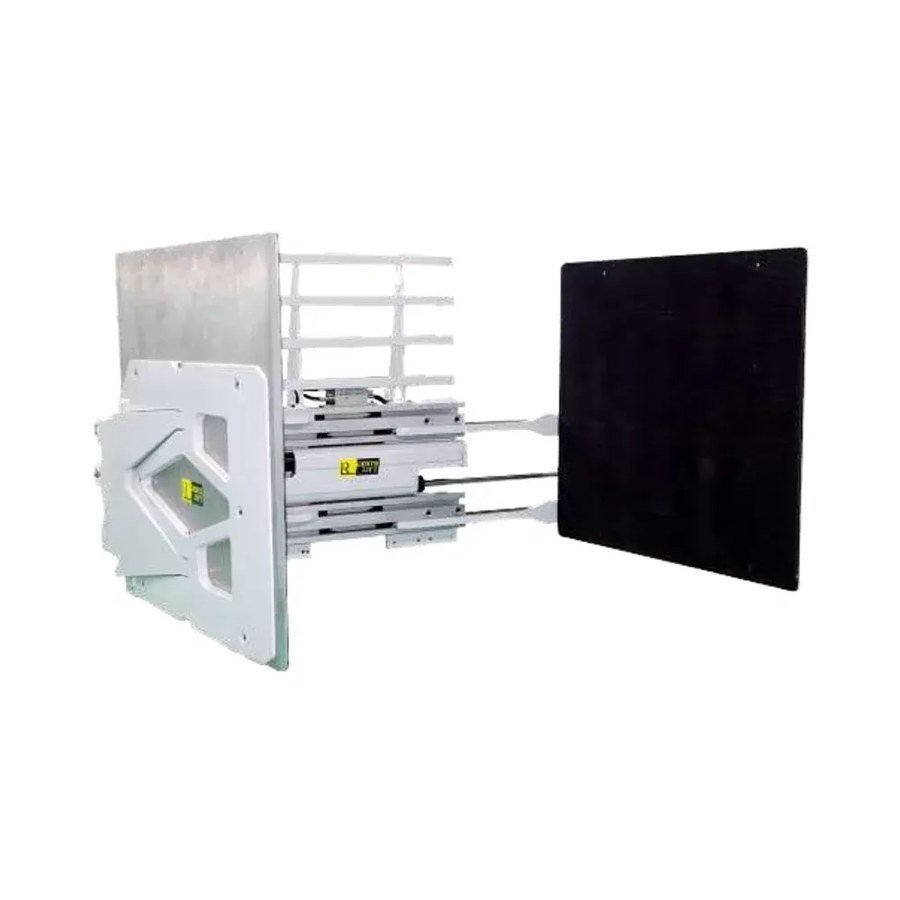
- Carton or appliance clamp. Longer, flatter arms with a wider contact face for boxed goods such as fridges, washing machines and stacked cartons. Ours is offered with a side shifter built in, which lets the driver line up on a lorry bed without shunting the truck, from £1,990 ex VAT for the 2 t class.
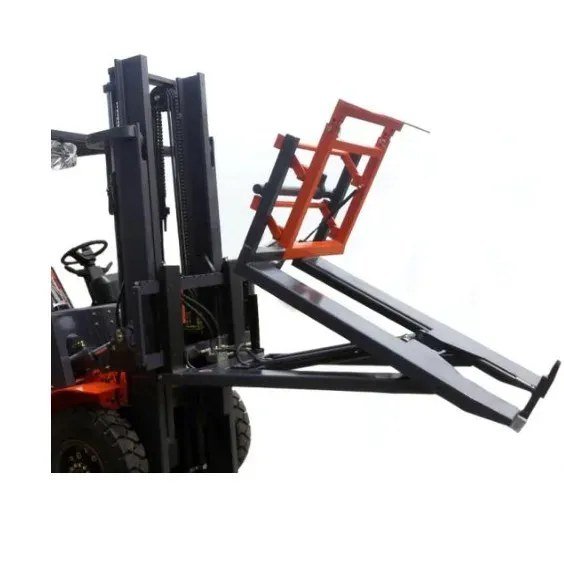
- Bin tipper. A cradle that takes a stillage or a wheeled bin, lifts it and tips it forward over a skip or a hopper. A 1 t version starts from £1,750 ex VAT and removes the manual emptying that produces most of the back injuries in a waste bay.
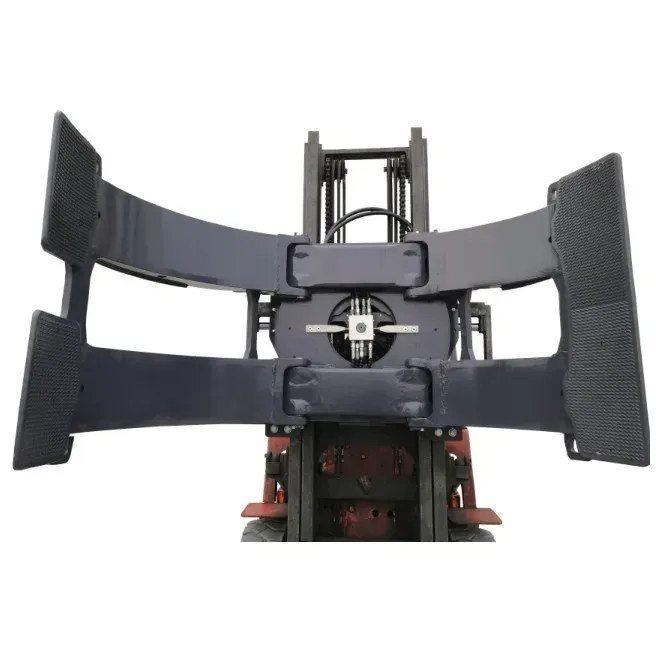
- Paper or drum roll clamp. Curved arms that close around a reel or a drum, usually with rotation so the reel can be set down on end. From £4,900 ex VAT for 1.5 t loads.
- Fork positioner and side shifter. The smallest spend on the list for the time it saves if your pallet sizes vary through the day, because the driver adjusts fork spread from the seat.
Forklift attachments compared: capacity, price and where each one pays
| Attachment | Rated for | Typical work | Guide price |
|---|---|---|---|
| Bale clamp | 1 to 1.8 t trucks | Baled waste, insulation, compressed goods with no pallet | from £320 ex VAT |
| Bin tipper | 1 t | Emptying stillages and wheeled bins into a skip | from £1,750 ex VAT |
| Carton clamp with side shifter | 2 t | Boxed appliances and cartons, loading without pallets | from £1,990 ex VAT |
| Rotating paper roll clamp | 1.5 t | Paper reels, film reels and drums, set down on end | from £4,900 ex VAT |
The pattern in that table is worth saying plainly: price tracks the number of moving functions, not the capacity. A clamp that only opens and closes is a few hundred pounds. Add rotation, a side shifter or a tipping cylinder and you are paying for extra hydraulics, extra hoses and extra valve work on the truck.
How much lifting capacity do you lose?
This is the part that catches buyers out. A forklift is rated at a load centre, normally 500 mm from the fork face. An attachment does two things to that rating. It hangs its own weight on the carriage, which the truck has to counterbalance before it lifts anything. And it pushes the load further forward, because the clamp arms or the tipper cradle sit in front of where the pallet used to sit.
The result is a derated figure, the residual capacity. A truck plated at 2.5 t with bare forks will lift less than 2.5 t with a clamp on it, and how much less depends on the attachment weight, its effective thickness and the load centre of your own goods. There is no rule of thumb worth trusting here. Ask for the residual capacity of the exact truck and attachment pairing in writing, get the truck's data plate amended to show it, and brief the driver on the new figure.
Two practical consequences. First, if you are close to your maximum load today, size the next truck up rather than assuming the attachment is free capacity. Second, an attachment bought for a truck you already own may not suit the truck you buy in two years, so keep the carriage class and hydraulic detail on file.
What to check before you buy forklift attachments
- Carriage class and width. Attachments mount to a standard carriage. Measure the carriage bar height and the width of your truck and send those figures with the enquiry, because a class mismatch means the attachment will not hang on the truck at all.
- Hydraulic services. A clamp needs a third service. A clamp with a side shifter or rotation needs a fourth. Many trucks leave the factory with two. Check what the truck has and, if it needs another, price the valve, the hoses and the fitting at the same time as the attachment.
- Oil flow and pressure. The attachment has a working range. If the truck delivers less flow than that, the clamp closes slowly; if pressure is wrong, grip force is wrong. Send the truck's hydraulic figures with your enquiry.
- Load contact. Arm length and pad face decide whether a bale is gripped or crushed. Give the real dimensions and weight of what you handle, plus whether the goods are shrink wrapped, bare or in printed cartons.
- Visibility. A wide clamp or a tall tipper blocks the driver's view through the mast. Walk the route you will actually drive and decide whether you need a camera or a banksman.
- Inspection and training. Book the attachment into the same thorough examination regime as the truck, and put the driver through attachment specific training before the first shift.
Send those six answers with your enquiry and the quote comes back right first time.
What should the written quote cover?
Prices on the site are guide prices in GBP, ex VAT, at the stated minimum order. Everything is made to order at our partner factories, inspected before dispatch with photos and video sent to you, then delivered anywhere in the UK.
Your written quote is what fixes the commercial detail: unit price, freight, duty, VAT, minimum order and lead time, all confirmed on your written quote and held for 30 days. If you want the attachment and the truck together, ask for both on one quote so the carriage, the hydraulic service and the residual capacity are settled on paper rather than on the loading bay. Send your truck details and load dimensions with the enquiry and we will come back with the pairing that fits.
Forklift attachments in this guide
Questions people ask
How much do forklift attachments cost?
A bale clamp for a 1 to 1.8 t truck starts from £320 ex VAT. A 1 t bin tipper starts from £1,750 ex VAT, a 2 t carton clamp with a side shifter from £1,990 ex VAT and a rotating paper roll clamp from £4,900 ex VAT. Freight, duty and VAT are confirmed on your written quote.
Will an attachment reduce what my forklift can lift?
Yes. The attachment adds weight to the carriage and moves the load centre forward, so the truck's residual capacity is lower than the figure on its original plate. Ask for the residual capacity of your exact truck and attachment pairing in writing and have the data plate updated.
Does my forklift need extra hydraulics for a clamp?
Usually yes. A simple clamp needs a third hydraulic service, and a clamp with rotation or a side shifter needs a fourth. If your truck has only two, budget for the valve, hoses and fitting alongside the attachment.
Do drivers need extra training for a clamp or a tipper?
Yes. Forklift training covers the truck, not every attachment fitted to it. HSE guidance expects attachment specific instruction, so put the driver through it before the first shift and keep the record.
Are forklift attachments covered by LOLER inspections?
Attachments used for lifting are work equipment under PUWER 1998 and lifting accessories under LOLER 1998, so they need thorough examination at the stated intervals. Put the attachment on the same inspection schedule as the truck.
Can I order one attachment or is there a minimum?
The attachments in this guide are listed at a minimum order of one unit or one set. The minimum order that applies to your order is confirmed on your written quote.
Sources: HSE: Lifting Operations and Lifting Equipment Regulations 1998 (LOLER), HSE: Provision and Use of Work Equipment Regulations 1998 (PUWER), HSE L117: Rider-operated lift trucks, operator training and safe use