Guide · · Forklift Attachments
Forklift bin tipper: which capacity to buy and what it costs
A forklift bin tipper costs from £715 ex VAT for a hydraulic frame built for trucks of 1 to 3.5 t, and from £1,750 ex VAT for a 1000 kg fork mounted frame. The figure that decides which one you buy is rated capacity against the weight of a full bin, not the look of it: wet food trim, glass and damp sweepings reach 1000 kg long before the bin is full. Settle the bin dimensions, the fork pockets and the truck's derated capacity before you compare quotes.
What does a forklift bin tipper actually do?
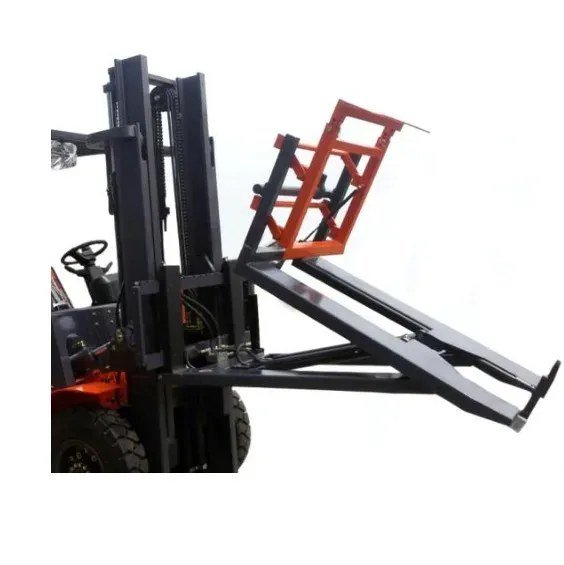
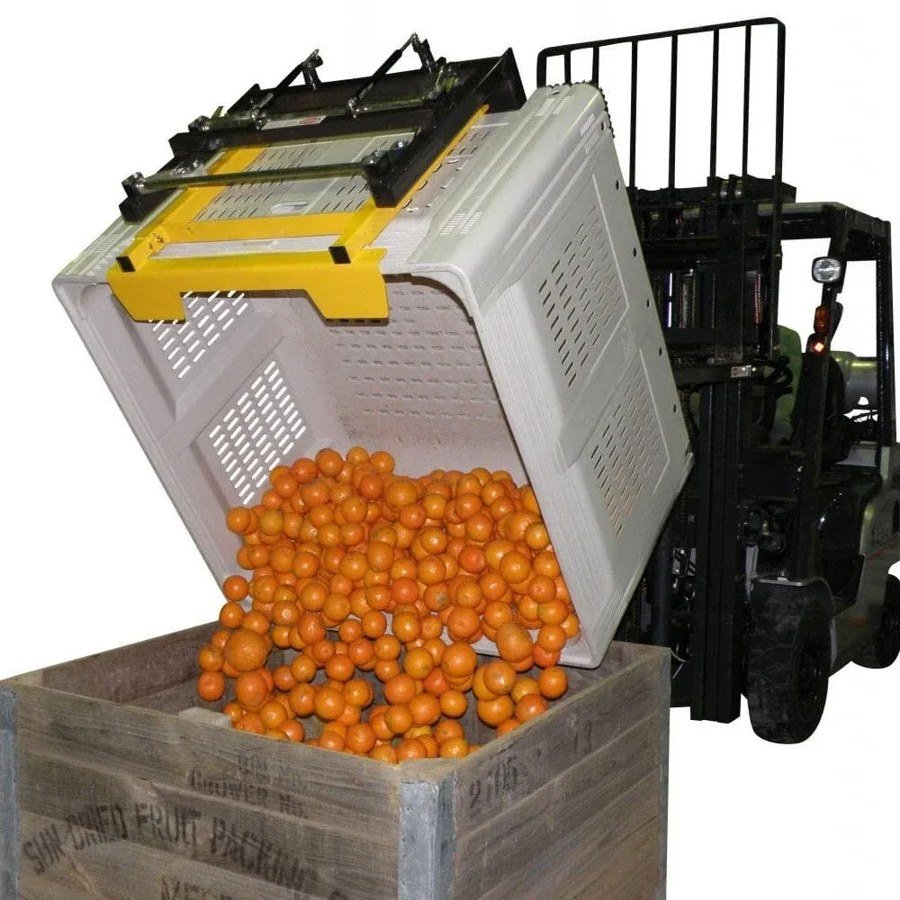
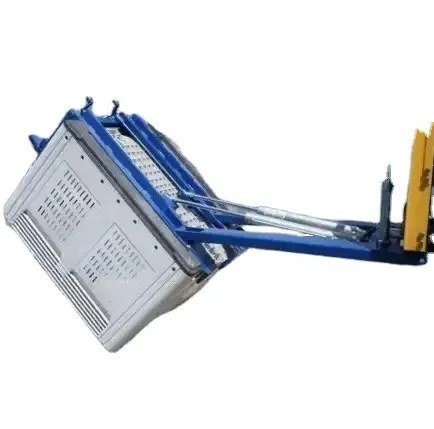
A forklift bin tipper is a steel frame that slides onto the forks and holds a bin, a stillage or loose waste. The driver lifts it over a skip, a hopper or a compactor, releases it, and the frame rotates forward so the contents fall out. The frame comes back to the carry position and the driver reverses away. Nobody climbs on the skip and nobody handles the waste twice.
In a cash and carry, a supermarket back room or a small factory, this replaces two people tipping a wheeled bin by hand at a raised skip edge, which is where the back strains and the spillages come from. It also lifts the discharge point, so you can empty into a tall skip or a hopper on a mezzanine rather than a bin on the floor.
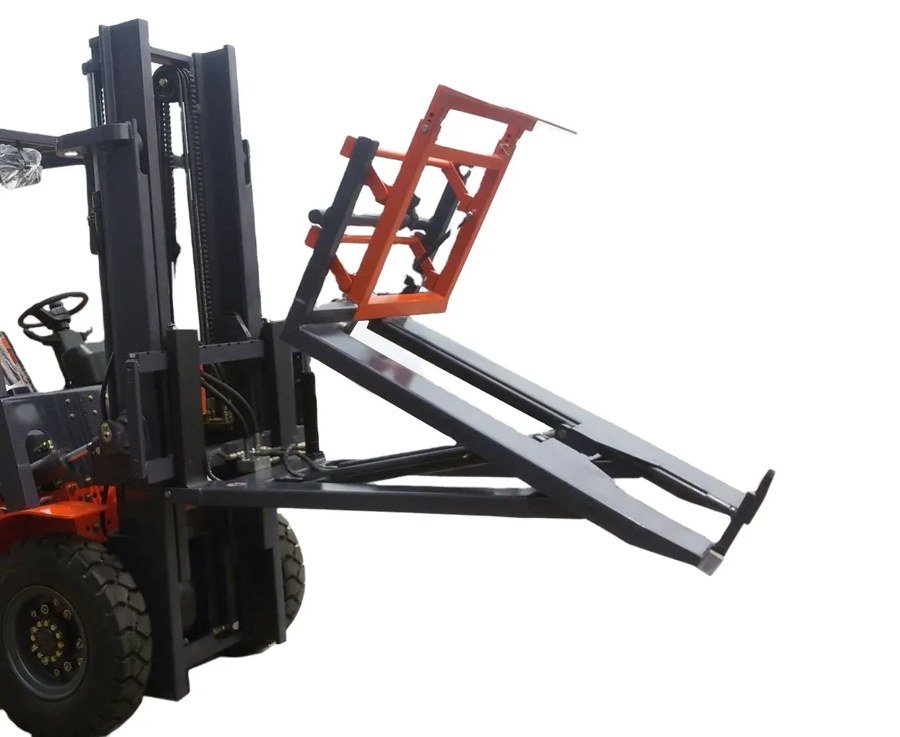
Our hydraulic bin tipper is the entry point at from £715 ex VAT and is built for trucks of 1 to 3.5 t. The rest of the forklift attachments range covers the 1000 kg frames, clamps and positioners.
Which capacity and bin size do you need?
Rated capacity is the weight the frame and its pivot are built to carry and tip over. It says nothing about volume. The frames here are rated at 1 t, which is 1000 kg, and the hydraulic version is specified for trucks from 1 to 3.5 t.
So size from weight, not from how full the bin looks. Dry cardboard and film reach the top of a bin long before they reach the rating, and the volume of the frame is what limits you. Dense waste does the opposite: a bin that looks half full of wet food trim, glass or damp floor sweepings can already be close to 1000 kg. Weigh one typical full bin on a platform scale, write the figure down, and keep clear headroom under the rating.
- Light bulky waste such as cardboard, film and plastic packaging: volume decides, so take the largest frame the truck can carry safely.
- Mixed general waste: a 1000 kg frame is the usual choice and leaves room for a wet week.
- Dense, wet or sharp waste such as food trim, glass, metal offcuts and damp sweepings: weigh it first and stay well inside the rating.
Forklift bin tippers compared: capacity, fit and price
All four are fork mounted, so they go on any truck with forks of the right length and need no work on the carriage.
| Frame | Rated for | Price | Where it fits |
|---|---|---|---|
| Hydraulic bin tipper, heavy duty | Trucks of 1 to 3.5 t | from £715 ex VAT | Sites where one frame has to suit more than one truck, and where the driver wants the tip and the return under control from the seat |
| 1000 kg bin tipper, forks to 1150 mm | 1000 kg | from £1,555 ex VAT | Trucks already running long forks, and deeper bins that need the support |
| 1000 kg fork mounted bin tipper | 1000 kg | from £1,750 ex VAT | The everyday waste run in a warehouse, cash and carry or production unit |
| 1 t bin tipper | 1000 kg | from £1,870 ex VAT | The same rating in a different frame, so compare the internal dimensions against the bins you already run |
The three 1000 kg frames differ in frame size and finish rather than in rating, so the question to ask is not which is strongest but which one your bins drop into. Ask for the internal width, depth and height in writing and measure the bins on your own yard before you choose.
How much lifting capacity do you lose when a tipper is fitted?
Every fork mounted attachment does two things to the truck. It adds its own weight ahead of the front axle, and it pushes the middle of the load further from the fork face. Both cut what the truck may lift. A 2.5 t truck rated at a 500 mm load centre does not lift 2.5 t once a tipper and a full bin sit out in front of the forks, and the shortfall is larger than most buyers expect.
Work it out in this order: the empty weight of the frame, the weight of the full bin, and the distance from the fork face to the middle of the loaded bin. Put those three figures against the capacity plate on the truck. If the sum is close, go up a truck size rather than down a bin size. If you are buying the truck at the same time, the forklift range covers diesel, gas and electric counterbalance trucks and we can quote the pair together.
Two rules sit behind this. PUWER 1998 requires work equipment to be suitable for the job and used within its limits, and HSE guidance L117 covers the training a driver needs for the truck and for the attachments fitted to it. A driver who is signed off on the counterbalance truck still needs familiarisation on the tipper.
What to check before you buy a forklift bin tipper
Six checks settle almost every return and almost every argument on site.
- Fork pockets and fork length. The frame must sit fully on the forks, with the pockets matching your fork width and spread. One of the frames here takes forks up to 1150 mm. Measure your forks before you order.
- A retaining chain or pin. The frame has to be secured to the carriage or the fork heel so it cannot slide off as it tips. Confirm what is supplied.
- Internal bin dimensions. Match them to the bins, stillages or dollies already in use, not to a bin you would have to buy as well.
- How it releases. A mechanical release pulls from the seat, so the driver never leaves the cab. A hydraulic frame tips and returns under control but needs a spare hydraulic service on the truck, so check the truck has one before you choose it.
- Finish and duty. For wet, salty or outdoor work, ask what the frame is coated with and how the pivot is protected. Waste is the dirtiest duty on the yard.
- Plate and paperwork. A capacity plate on the frame, a declaration of conformity and the UKCA or CE marking, plus the weight of the frame itself, which you need for the capacity sum above.
Everything that depends on the factory build, including the dimensions and the finish, is confirmed on your written quote before you commit.
What should the written quote cover?
Ask for one email that puts the whole purchase in writing, so there is nothing to argue about later. It should list the rated capacity, the internal bin dimensions, the fork pocket dimensions and the empty weight of the frame, how it tips and releases, the finish, the documents supplied, the price in GBP ex VAT, freight to your postcode, duty and VAT, and the lead time. Our quotes hold for 30 days.
Everything is made to order at our partner factories and inspected before dispatch, with photos and a short video sent to you, then delivered anywhere in the UK. Guide prices across the ranges are set out on the price guide, and you can send your fork dimensions and a photo of your bins to the sales desk to get the sizing checked before you buy.
Forklift bin tippers in this guide
Questions people ask
How much does a forklift bin tipper cost?
A hydraulic frame for trucks of 1 to 3.5 t starts from £715 ex VAT. Fork mounted 1000 kg frames run from £1,555 ex VAT to £1,870 ex VAT, and the figure for your quantity and your postcode is confirmed on your written quote.
Will a bin tipper reduce what my forklift can lift?
Yes. The frame adds its own weight and moves the centre of the load further from the fork face, so the truck's rated capacity no longer applies. Check the capacity plate against the empty frame weight, the full bin weight and the load centre before you order.
Does my forklift need extra hydraulics for a bin tipper?
Only for a hydraulic frame, which needs a spare hydraulic service and a control on the truck. A frame with a mechanical release needs nothing from the truck and the driver trips it from the seat.
What fork length do I need for a bin tipper?
The forks must carry the frame along its full depth, so short forks are the most common reason a tipper is unsafe. One of the frames listed here takes forks up to 1150 mm. Send us your fork length, width and spread and we will confirm the fit on the quote.
Does a bin tipper come under LOLER inspection?
A fork mounted attachment used to lift a load counts as a lifting accessory, so it is examined alongside the truck under LOLER 1998 and used within PUWER 1998. Keep the capacity plate legible and the examination records with the truck's own paperwork.
Can I order a single bin tipper?
Yes. Any quantity is welcome, from one frame to a set for several sites, and the written quote confirms the price for the quantity you ask for.
Sources: HSE: LOLER 1998 guidance, HSE: PUWER 1998 guidance, HSE L117: Rider operated lift trucks, operator training