Guide · · Shopping Trolleys
How many shopping trolleys your store needs, and which sizes to mix
How many shopping trolleys a store needs comes from one sum: the number of trolley shops in your busiest hour multiplied by the time a trolley is away from the rank. A store with 90 trolley shops in the peak hour, each trolley away for about half an hour, needs roughly 45 trolleys in circulation plus a reserve for the bays and for repairs. New trade shopping trolleys, also called supermarket trolleys or shopping carts, run from 60 L to 270 L and start from £16 ex VAT, bulk price.
How many shopping trolleys does a store need at peak hour?
Work from the busiest hour of your week, not the daily average. Count the customers who leave the tills with a full trolley in that hour, then time a trolley from the moment it is taken at the door to the moment it is pushed back into the rank. Those two numbers give you the fleet, and you can collect both in one Saturday without any special kit.
Say the Saturday peak is 90 trolley shops and the average trolley is away for about half an hour. Ninety shops at half an hour each means roughly 45 trolleys out on the floor at any one moment. Then add the ones standing in the car park bays waiting to be collected, the ones a customer has parked at the kerb, and the few sitting in the back with a damaged castor, and the working fleet is nearer 55 to 60.
Smaller formats use the same sum with smaller numbers. A convenience store where most customers carry a basket may need one short rank at the door and nothing else, while a cash and carry serves fewer customers an hour but each one fills a jumbo trolley with cases. The sum matters more than the shop type, because two stores of the same floor area can be a long way apart on trolley turnover.
Which shopping trolley sizes to mix
Few stores are best served by a single size. A rank of one capacity either leaves top up customers pushing more trolley than they need through a narrow aisle, or leaves a weekly shopper filling a small basket and giving up. Four bands cover almost every UK store:
- 60 L hand trolleys. A basket on wheels for top up shops, kiosks and tight aisles, and a low cost way to get customers off carrying a basket. The European style 60 L hand trolley is from £20 ex VAT.
- 90 L to 130 L. The small supermarket size. It turns in a 1.2 m aisle, nests short and suits stores where the shop is a basket and a half rather than a full week.
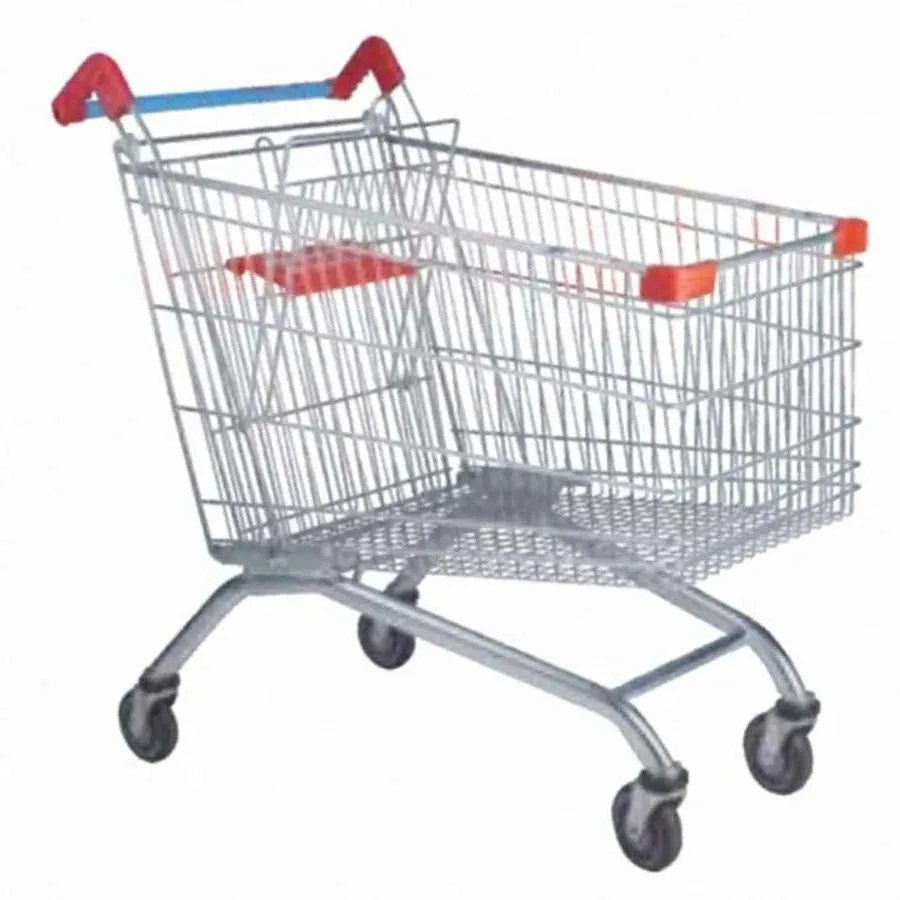
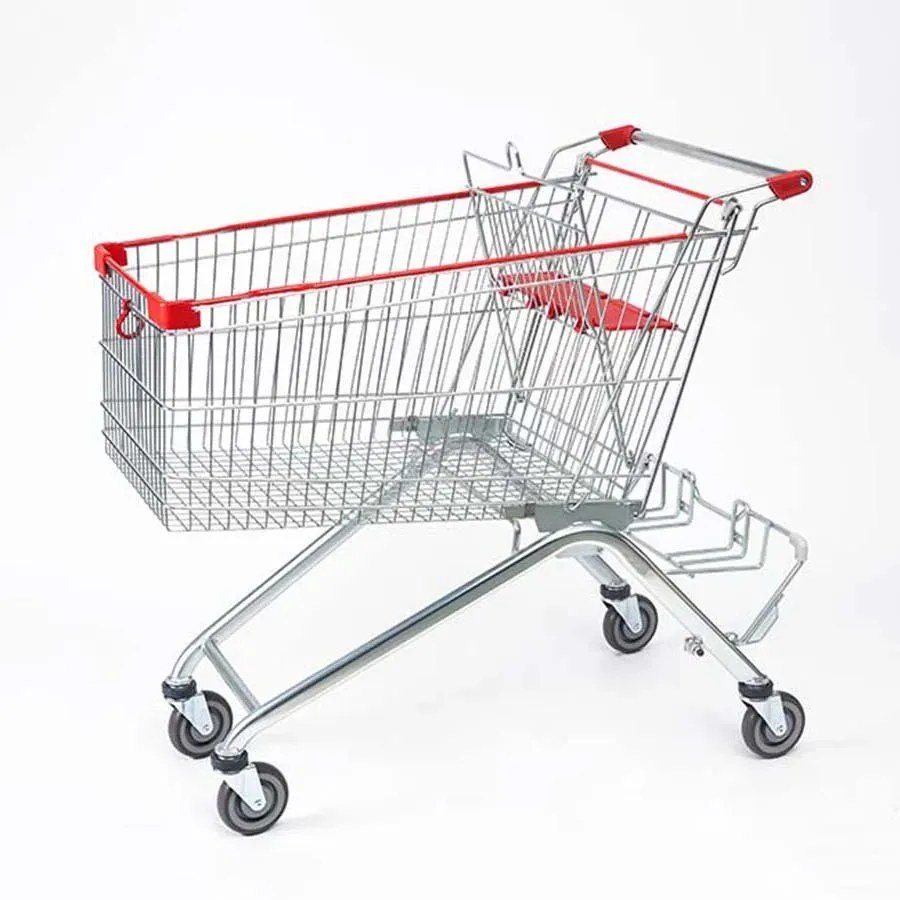
- 150 L to 190 L. The standard weekly shop trolley and the one most buyers mean by a supermarket trolley. The 180 L European style trolley is from £24 ex VAT, bulk price.
- 250 L to 270 L. Jumbo trolleys for cash and carry, wholesale, pet and garden lines, and anywhere customers buy by the case. The 270 L jumbo trolley is from £24 ex VAT, bulk price.
Start the mix from what is actually in the baskets at your tills. Most stores end up with the bulk of the fleet in one middle size, a short rank of 60 L trolleys by the door for quick shops, and a handful of jumbos near the drinks or bulky goods.
Shopping trolley sizes, use and guide price compared
| Capacity | Typical use | Guide price |
|---|---|---|
| 60 L hand trolley | Convenience store, kiosk, top up shop, door rank | from £20 ex VAT |
| 100 L European style | Small supermarket, narrow aisles, half a weekly shop | from £24 ex VAT, bulk price |
| 180 L European style | Standard supermarket weekly shop, the volume size | from £24 ex VAT, bulk price |
| 270 L jumbo | Cash and carry, wholesale, cases and bulky goods | from £24 ex VAT, bulk price |
The capacities above are the basket volumes, not the load the trolley will take. Guide prices are per trolley in GBP ex VAT and the written quote confirms the price for the quantity you want, together with freight and VAT.
Bays, nesting and the floor space a rank needs
Nested trolleys overlap, so a rank is far shorter than the same trolleys end to end, but every extra trolley still adds its nesting pitch to the line. Work out the rank length from the nested pitch rather than the trolley length, and check the dimensions on the product page before you fix the quantity, because a rank that blocks a fire route or a checkout lane will be moved within a week.
Leave room for three things. Pull out room at the front, so a customer can free one trolley without dragging the whole rank. A clear route from the rank to the door that does not cross the till queue. And a level, hard surface, since a rank on a slope needs a bay with a rail to hold it.
Outdoor bays are harder on a trolley than the shop floor. Zinc plated, galvanised and plastic baskets all cope with rain better than a painted finish, and a larger castor copes better with kerbs, gullies and loose grit. If part of the fleet lives outside, say so when you ask for the quote so the finish and the castors are specified for it.
What to check before you buy
- Nested length, not just litres. Two 180 L trolleys from different designs can need very different rank space.
- Basket finish. Zinc plated and galvanised steel for wet entrances and outdoor bays, chrome for a bright shop floor, moulded plastic where the trolleys get washed down.
- Castors. Castor diameter, how many swivel, and whether the tyres are quiet on a tiled floor. A fifth central castor helps a long trolley track straight.
- Child seat and flap. Decide whether you need a folding seat with a strap, and check the flap folds flat so the trolleys still nest.
- Coin lock. Worth it where trolleys walk out of the car park, and it changes the handle, so specify it with the order rather than adding it later.
- Nesting with your existing fleet. A new design will often not nest inside your old trolleys, so either replace a whole rank or plan a separate one.
- Spares. Castors and handles are the parts that wear, so price spare castors at the same time as the trolleys.
Prices, specification and getting a quote
Guide prices across the range start from £16 ex VAT, bulk price, and the mid sizes sit close together, so capacity is rarely what moves the price. Finish, castor type, child seat, coin lock and branding do.
Every trolley is made to order, so basket finish, frame colour, powder coat, handle colour and a printed logo are set on the order rather than picked off a shelf. Prices are guide prices converted from the factory list, and your written quote confirms price, freight, duty and VAT, and stays valid for 30 days.
If the trolleys are fed from a stockroom, it is worth costing the shopping baskets and the stockroom equipment on the same quote, because they ship together and the freight is quoted once.
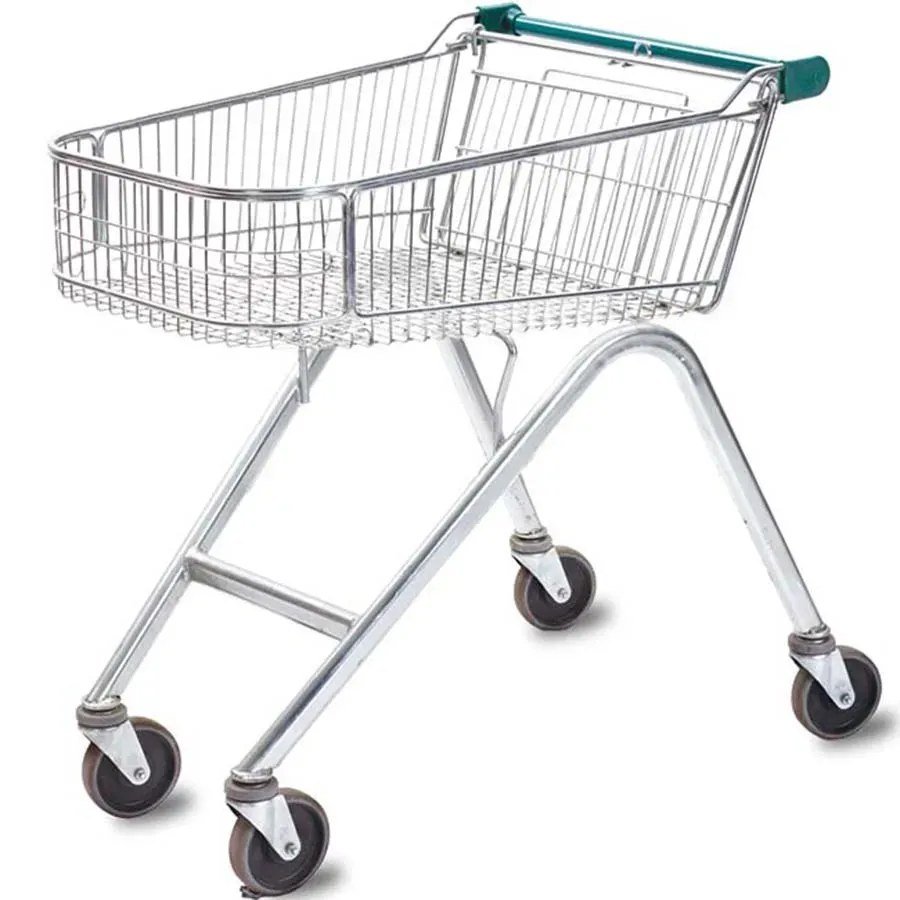
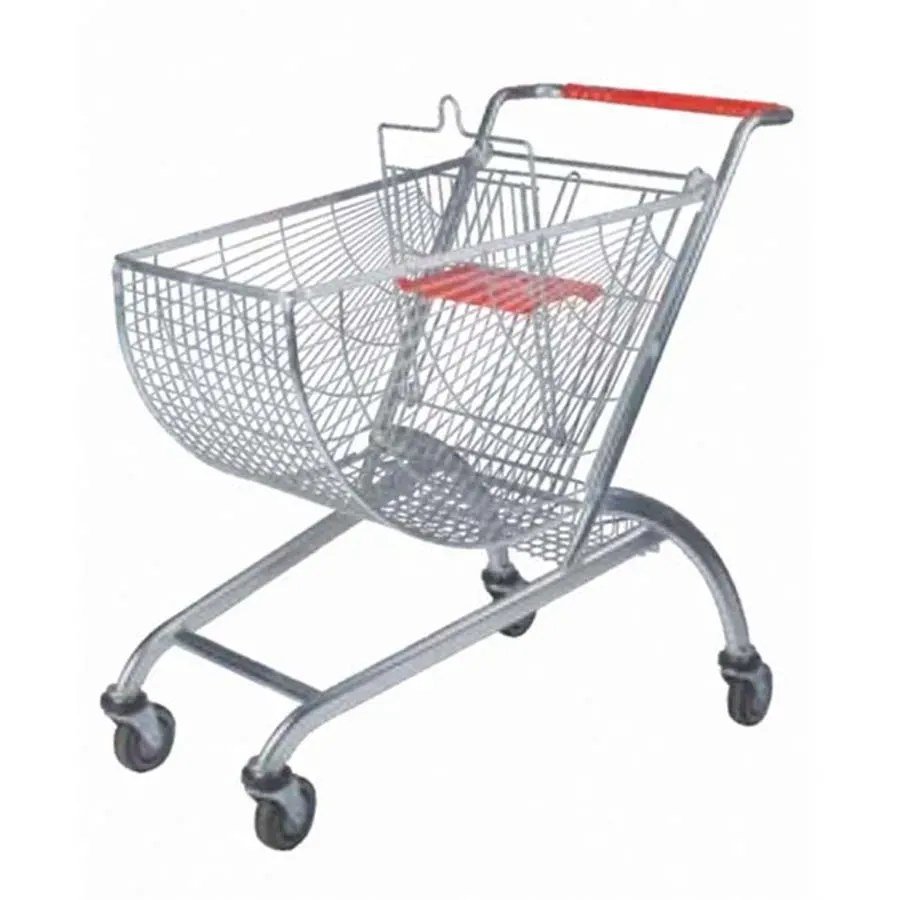
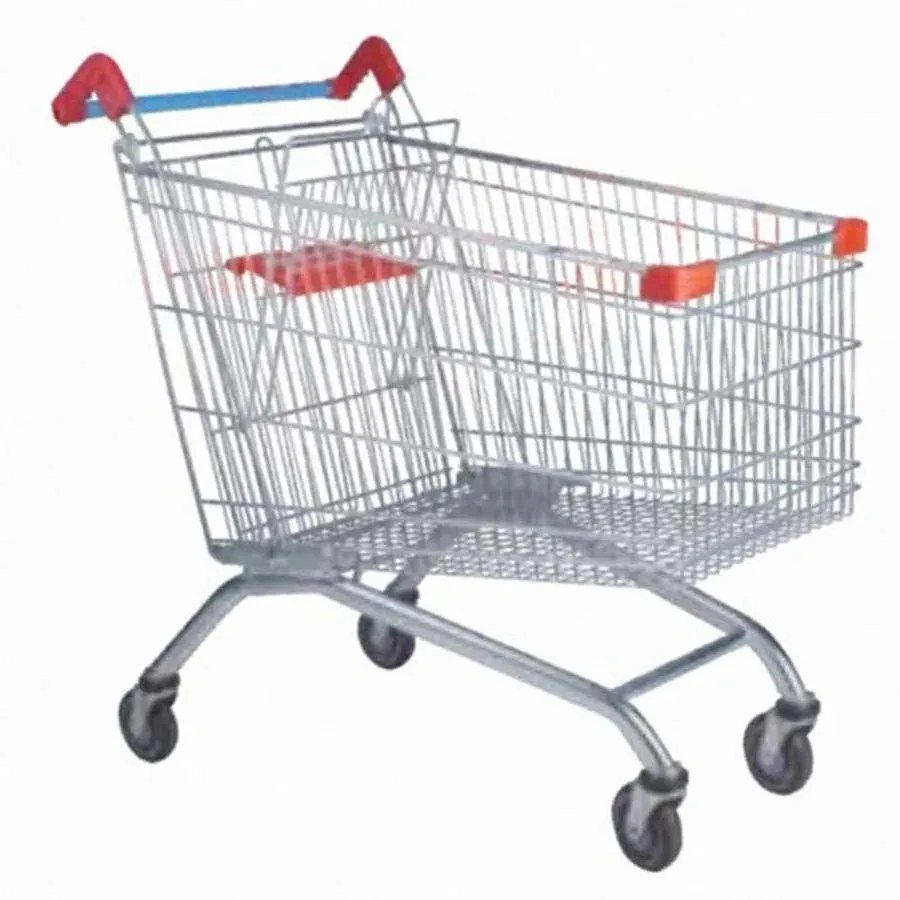
Shopping trolleys in this guide
Questions people ask
How many shopping trolleys does a small supermarket need?
Count the trolley shops in your busiest hour and multiply by the time a trolley is away from the rank, then add a reserve for the bays and for repairs. A store with 40 trolley shops in the peak hour, each trolley away for half an hour, needs about 20 in circulation and nearer 25 in total.
What size shopping trolley is standard in a supermarket?
Between 150 L and 190 L for a weekly shop. A 180 L European style trolley is the common choice, from £24 ex VAT, bulk price.
How much does a shopping trolley cost?
Guide prices start from £16 ex VAT, bulk price, and depend on capacity, basket finish, castors and extras such as a child seat or coin lock. The written quote confirms the price for the quantity you want.
Are plastic or steel baskets better for an outdoor trolley bay?
Both work outdoors. Plastic does not rust and washes down quickly, while zinc plated or galvanised steel flexes less under dense loads and lets the till operator see the whole trolley.
Can we have our own colour and logo on the trolleys?
Yes. Frame colour, powder coat, handle colour and a printed logo are specified on the order because every trolley is made to order, and the finish is confirmed on your written quote.
Will new trolleys nest with the ones we already have?
Often not, because the nesting pitch and basket shape differ by design. It is safer to replace a full rank at a time, or to put the new trolleys in their own rank.