Guide · · Floor Scrubbers & Sweepers
Industrial floor sweeper sizing: width, dustbin and winter yard work
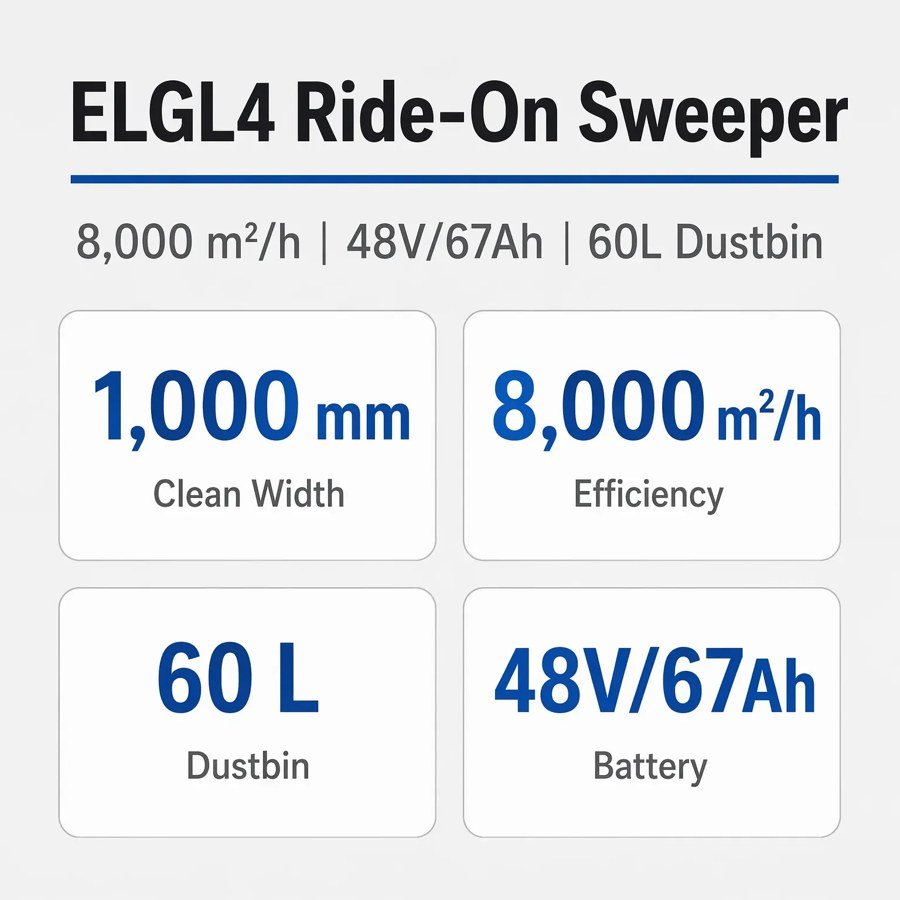
An industrial floor sweeper picks up dry waste: dust, grit, shrink wrap, card, leaves and stone. Ride on machines start at from £1,590 ex VAT for a 1,000 mm sweeping width rated up to 8,000 m² per hour, and run to from £3,660 ex VAT for a 1,900 mm enclosed cabin machine rated up to 13,000 m² per hour. Size it on sweeping width first, then on dustbin volume, because the dustbin is what sends the driver back to the skip.
What an industrial floor sweeper does that a scrubber does not
A sweeper is a dry machine. A rotating main brush throws loose material back into a dustbin, side brushes pull debris in from kerbs, racking legs and wall lines, and a filter holds the dust that the brush kicks up. It deals with the things that actually litter a working floor: pallet splinters, strapping, shrink wrap, card, nuts and bolts, sand, grit and, from October onwards, wet leaves blown in through the shutter doors.
A floor scrubber does a different job. It lays down water and detergent, scrubs the surface and vacuums the dirty water back up, so it removes tyre marks, spillage and ground in soiling from a sealed floor. Run a scrubber over a yard full of grit and you fill the recovery tank with mud and block the squeegee.
The practical rule on a mixed site is simple: sweep first, scrub second, and only scrub the areas that are sealed and indoors. If your floor is concrete, worn, external or covered in dry debris, a sweeper is the machine that changes how the site looks. You can see both types on the floor cleaning machines range.
Sweeping width and dustbin size are the two numbers that decide
Sweeping width is the full path the machine clears in one pass, main brush plus side brushes. It is the number that sets your cleaning rate, and manufacturers quote that rate in square metres per hour at a steady walking or driving speed. A 1,000 mm machine rated up to 8,000 m² per hour will clear a 4,000 m² warehouse in roughly half an hour of uninterrupted running. Real sites are never uninterrupted, so halve the figure for racking, pedestrians and turns and you still have a sensible plan.
Dustbin volume decides how often that run stops. A machine with an 80 litre dustbin sweeping a reasonably clean warehouse floor may only need emptying once a shift. The same machine in a yard that collects leaves, broken pallet wood and packaging will fill in twenty minutes, and every trip to the skip costs you five minutes and goodwill. If the debris is bulky rather than fine, buy the bigger bin, not the wider brush.
- Under 2,000 m² of indoor floor: 1,000 mm width is usually enough.
- 2,000 to 6,000 m², mostly indoors: 1,250 mm to 1,350 mm.
- Large yards, service roads and car parks: 1,350 mm and upwards, with a cabin if the machine works through winter.
Industrial floor sweeper sizes and prices compared
| Sweeping width | Dustbin and tank | Suits | Guide price |
|---|---|---|---|
| 1,000 mm ride on | Compact hopper, hydraulic tipping | Aisles, loading bays and small units, rated up to 8,000 m² per hour | from £1,590 ex VAT |
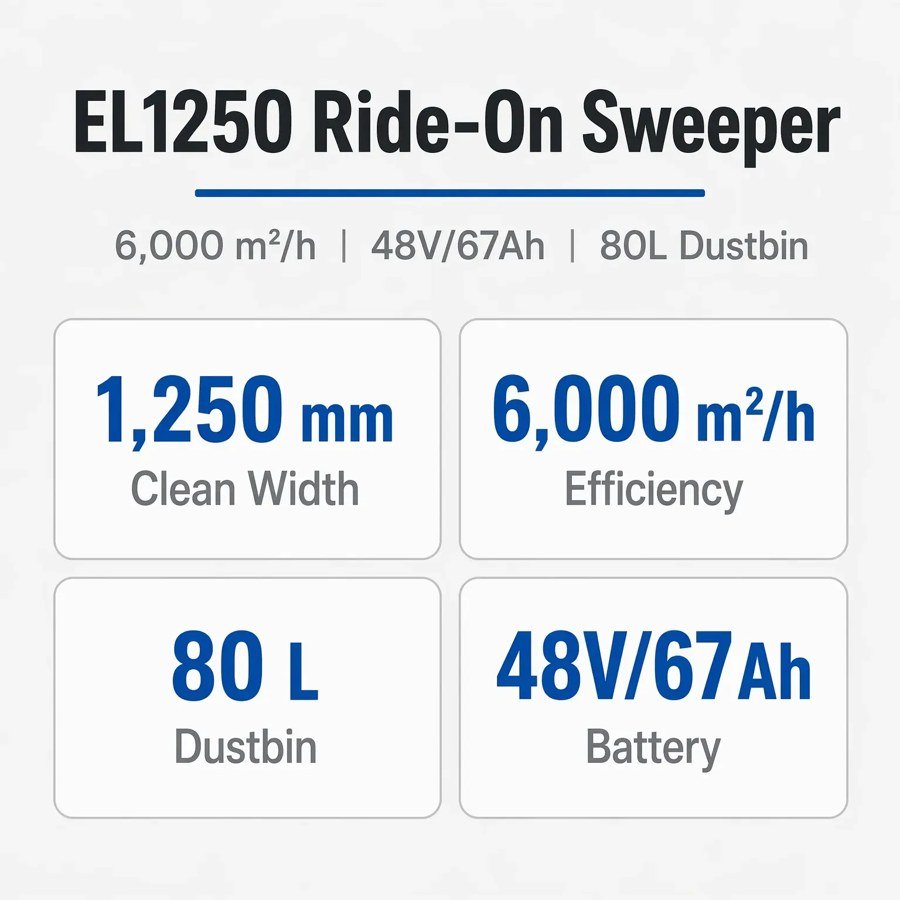
| 1,250 mm ride on | 80 litre dustbin | General warehouse floors and covered yards | from £1,830 ex VAT |
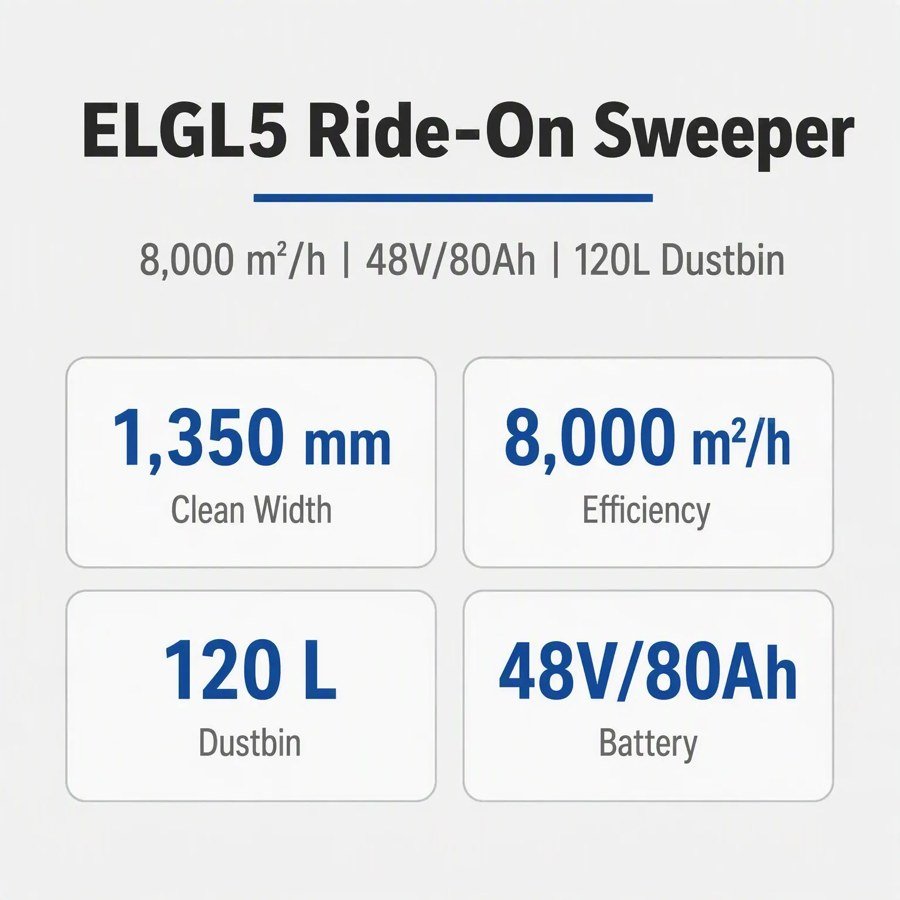
| 1,350 mm ride on | 120 litre dustbin, 100 litre water tank | Dusty floors and mixed indoor and outdoor work | from £2,230 ex VAT |
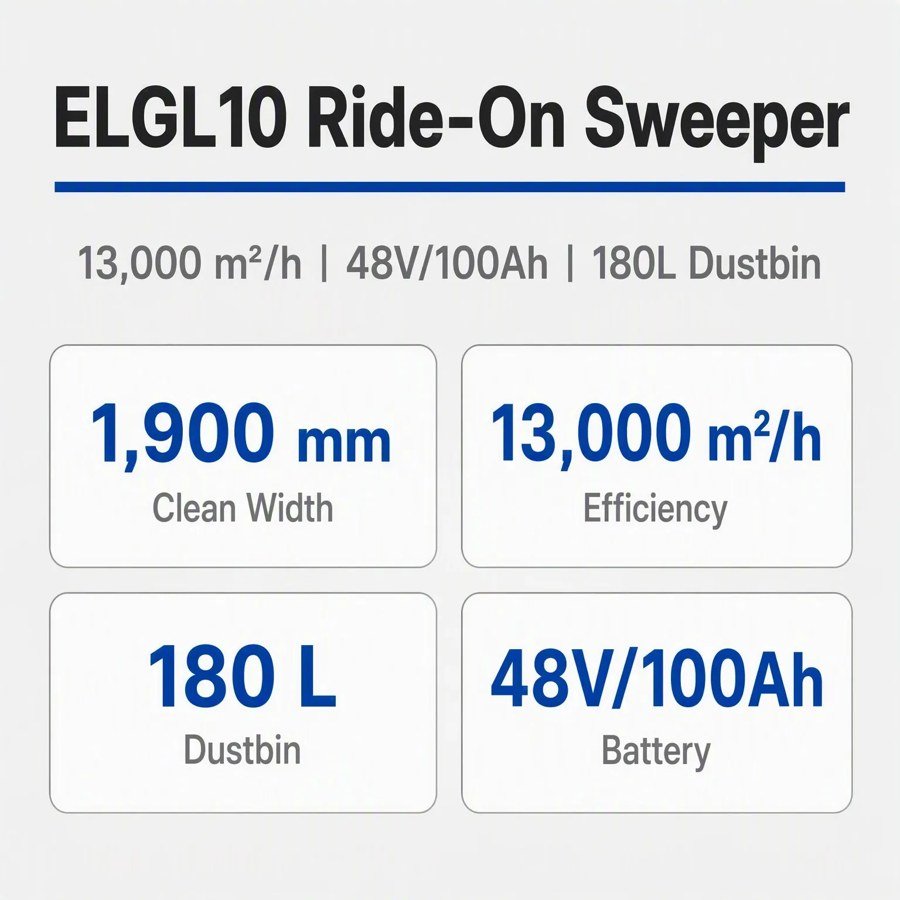
| 1,900 mm enclosed cabin | Large hopper, hydraulic tipping | Open yards and service roads in all weather, rated up to 13,000 m² per hour | from £3,660 ex VAT |
The water tank on the 1,350 mm machine is not for washing. It feeds a spray that damps the debris before the brush touches it, which is what keeps a cloud of dust off your racking and out of the filter. On a dry concrete yard in summer, or on a flour or feed floor, it is the difference between a clean machine and a daily filter clean.
Autumn and winter: yards, grit and the case for a cabin
From October the debris on a UK site changes. Leaves blow into loading bays and turn to a slick mat when it rains, gritting lorries leave salt and stone across service roads, and the shutter doors stay open long enough for all of it to reach the first two bays of racking. A yard that needed sweeping weekly in July needs it daily by November, and a wet leaf mat on a ramp or a dock approach is a slip and a skid waiting to happen.
That is the argument for an enclosed cabin machine at from £3,660 ex VAT if the sweeping is genuinely outdoors. The operator stays dry, which means the yard still gets swept on the morning it is raining sideways, and the 1,900 mm width covers a large yard quickly enough that it fits inside one shift. If the work is mostly indoors with an occasional yard pass, an open ride on machine such as the 1,350 mm model at from £2,230 ex VAT is the better buy, and the money saved covers a spare set of brushes.
What to check before you buy a floor sweeper
- Measure the narrowest point. A wide machine that cannot turn at the end of an aisle or pass a dock plate is dead money. Check doorway widths, ramp gradients and the turning circle together.
- Match the brush to the surface. Nylon brushes suit smooth sealed concrete indoors. Harder mixed bristle suits rough external concrete and tarmac. Ask for the brush type on the quote and price a spare set at the same time.
- Check battery runtime against your shift, not against the spec. A machine that runs three hours is fine for a 2,000 m² unit and short of the mark for a yard that takes four. Ask what charging the machine needs and where it will live.
- Look at how the dustbin empties. Hydraulic high tipping straight into a skip saves a manual lift every time. A hopper that has to be dragged out and carried does not.
- Plan the filter clean. A blocked filter turns a dust free machine into a dust spreader. Find out whether the shake is manual or electric and how the filter is removed.
- Confirm access for the delivery vehicle. These machines arrive on a pallet or crated and need a forklift or a tail lift. Say what you have when you ask for the quote, and the arrangements are confirmed on your written quote.
What it costs and what the written quote confirms
Ride on sweeping starts at from £1,590 ex VAT for the compact 1,000 mm machine, which is the usual starting point for a single unit or a cash and carry shop floor. The 1,250 mm machine with an 80 litre dustbin sits at from £1,830 ex VAT and covers most general warehouse work. Above that you are buying width and bin volume rather than a different kind of machine.
Every figure on the site is a guide price in pounds ex VAT. A written quote by email confirms the price for the quantity you want, the brush specification, freight to your postcode, duty, VAT and lead time, and it stays valid for 30 days. Machines are made to order at our partner factories and inspected before dispatch, with photos and video sent to you. If you want to compare the sweeper against a scrubber for the same floor, send both floor areas and we will price the pair. Guide pricing for every range is on the price guide.
Ride on industrial floor sweepers discussed in this guide
Questions people ask
What is the difference between an industrial floor sweeper and a floor scrubber?
A sweeper collects dry debris such as dust, grit, card and leaves into a dustbin. A scrubber applies water and detergent, scrubs the floor and vacuums the dirty water back up. Sites with a yard and a warehouse usually need both jobs covered.
What sweeping width do I need for a 5,000 m² warehouse?
A 1,250 mm to 1,350 mm ride on machine suits that area, allowing for racking and turns. A 1,000 mm machine rated up to 8,000 m² per hour will do it, but it will take longer and stop more often to empty.
Can a floor sweeper be used outside on a yard?
Yes, and that is where most of the debris is. For regular outdoor work through autumn and winter, an enclosed cabin machine keeps the operator dry so the yard still gets swept in bad weather.
How much is an industrial floor sweeper?
Ride on machines on this site start at from £1,590 ex VAT for a 1,000 mm sweeping width and run to from £3,660 ex VAT for a 1,900 mm enclosed cabin. Your written quote confirms the price for the quantity and specification you need.
How often does the dustbin need emptying?
It depends on the debris, not the floor area. An 80 litre dustbin on a tidy warehouse floor may last a shift, while the same bin in a yard full of leaves and packaging can fill in under half an hour.
Do you supply spare brushes and filters?
Yes, brushes and filters are quoted alongside the machine. Ask for a spare set on the same written quote so the pricing and freight are confirmed together.