Guide · · Warehouse Step Ladders & Ladder Trolleys
Mobile safety steps: how many sets, and where they stand in the aisle
Most sites need one set of mobile safety steps for every pick zone that holds stock above shoulder height, plus one at goods in, because a picker who has to walk three aisles to fetch steps will climb the racking instead. Prices run from £40 ex VAT for a two step stainless ladder trolley to £96 ex VAT, bulk price for a six step rolling platform, and most of the 24 models in the range are rated 500 kg. Count the zones first, then choose the height.
How many sets of mobile safety steps does one site need?
Count the places where stock sits above shoulder height, not the floor area. A cash and carry with six pick zones and a goods in bay has seven places where somebody will want steps during a shift. The honest test is walking distance: if fetching the steps takes longer than the job at the top shelf, the steps stay parked and the picker puts a boot on the bottom beam of the racking instead.
Three counts cover most orders. One set for each pick zone or aisle run that holds stock out of reach. One at goods in or the back door, where cases are checked and put away. One more where two shifts overlap, because a set in use at six in the morning is no use to the team coming on at two in the afternoon.
A small shop or stock room is different. A single light set that lives in a named corner covers a shop floor of a few hundred square metres, as long as staff can move it with one hand and will actually put it back. The entry point in the ladder truck range is from £40 ex VAT, so the count is usually settled by where the steps will live rather than by the budget.
What each type costs, and which job it takes
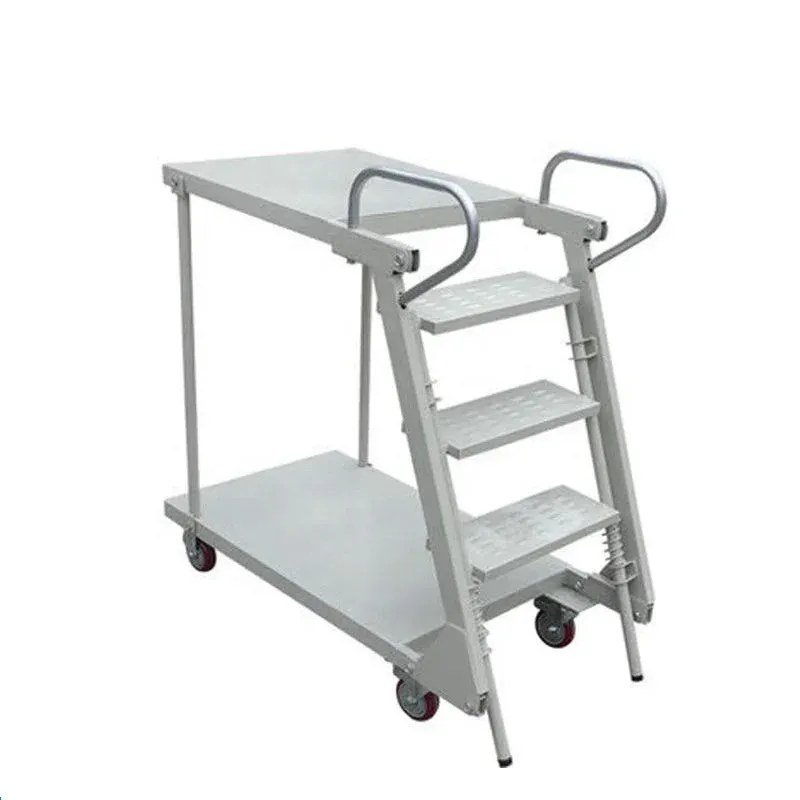
Four shapes cover nearly all restocking work. A ladder trolley is two treads on castors that the picker pushes along with them. A platform ladder truck on two wheels tilts and pulls like a sack truck, so one person can take it the length of an aisle. A guardrail platform gives a flat standing area with a rail all round for work that takes minutes rather than seconds. A six step rolling platform reaches the top shelf in a high bay.
| Type | Steps | Frame and rating | Where it belongs | Price |
|---|---|---|---|---|
| Stainless ladder trolley | 2 | Stainless steel | Shop floor, chilled rooms and food areas | from £40 ex VAT |
| Two wheel platform ladder truck | Platform | Steel, 500 kg | Long aisle runs, moved by one person | from £47 ex VAT, bulk price |
| Guardrail platform set | Platform | Steel with a full rail | Goods in and stock rooms, minutes at height | from £68 ex VAT, bulk price |
| Six step rolling platform | 6 | Steel, 500 kg | Top shelf and high bay picking | from £96 ex VAT, bulk price |
These are guide prices in GBP ex VAT. Freight, VAT and lead time are confirmed on your written quote.
Where the steps stand between jobs
Every set needs a named home inside the zone it serves, marked on the floor and wide enough that the base fits without anybody shuffling it. Steps left in a gangway get pushed aside by whoever trips over them, and by the end of the week nobody knows which aisle they went down. A painted bay at the end of an aisle run, or a gap kept clear against a rack upright, is enough.
Keep the parking bay out of fire exit routes and clear of the turning circle of a pallet truck. Two things decide whether staff respect it: how far it is from the work, and whether the brakes hold when the set is parked on a slope at the loading bay. Spray a zone number on the frame if sets wander between departments, because steps that belong to everybody belong to nobody.
Busy weeks and new starters: what the 500 kg rating covers
Autumn and winter bring longer restocking rounds and extra hands who have never used your kit. Most sets in the range are rated 500 kg, and that figure covers the person, their boots, their tools and whatever they carry up. It is a working limit for everything on the steps at once, not a shelf capacity and not a licence to send two people up together.
Brief new starters on three points before the first shift: both hands free going up, one person on the steps at a time, brakes on before the first tread. If the job needs both arms at the top, the stock should ride on a trolley from the warehouse trolley range and go up in stages, or the picker needs a platform with a full rail so there is something to lean against.
What to check before you buy mobile safety steps
- Platform height against your top shelf. Work to the shelf lip, not the ceiling, and allow for the case the picker has to lift over it.
- Base footprint against the narrowest aisle it will stand in, with a pallet truck still able to pass.
- Tread depth and an anti slip surface, which matter more than the number of treads once a round lasts an hour.
- A handrail or full guardrail on anything a picker stands on above about a metre.
- Castors with brakes, or spring castors that drop onto feet under the weight of the user, so nothing rolls mid job.
- Whether it folds. Folding or two wheel sets suit a tight stock room, fixed platforms suit a bay that is always theirs.
- Frame finish. Stainless steel earns its money in chilled rooms, wash down areas and food handling; painted steel is fine everywhere else.
- Who will move it. If the set lives in one aisle, weight hardly matters; if it crosses the building twice a shift, pick a two wheel model.
Keeping a set in service once it arrives
PUWER 1998 expects work equipment to be suitable for the job, maintained and inspected, and steps are work equipment like anything else on the floor. Decide before delivery who does the quick pre use look over and who records the periodic check, because a set nobody owns is a set nobody reports.
The pre use look takes under a minute: treads clean and dry, no cracked welds or splayed feet, rail and platform fixings tight, castors free of shrink wrap and banding, brakes gripping. Anything bent, cracked or missing takes the set out of use until it is repaired, and a label on the frame saying who to tell is worth more than a poster in the canteen. Ordering a spare set for a busy zone keeps a damaged one from being used anyway.
Mobile safety steps in this guide
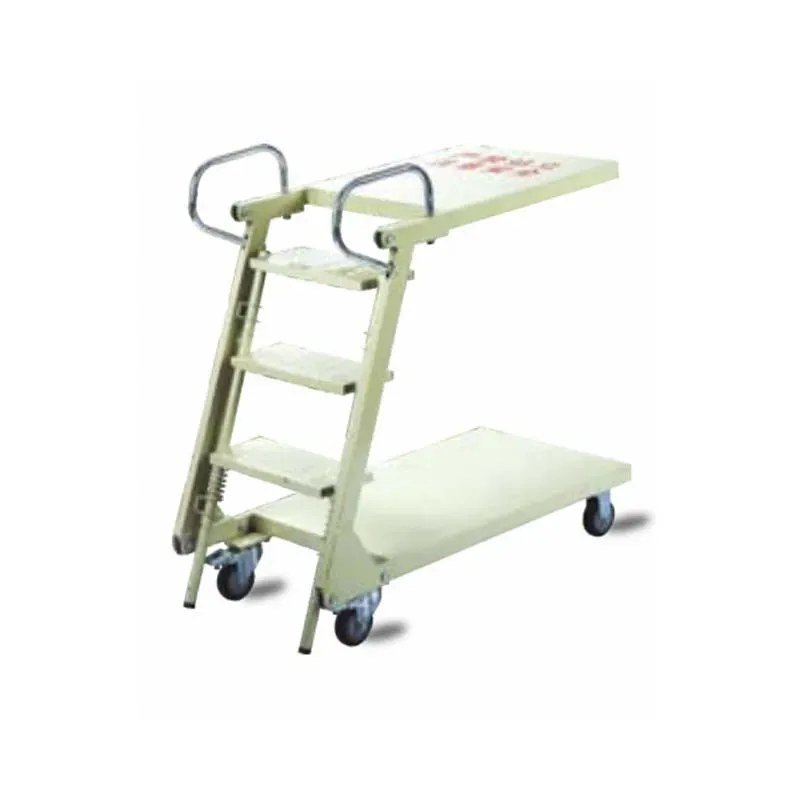 Two-Step Stainless Steel Ladder Trolleyfrom £40 ex VAT
 Warehouse Climbing 2 Wheeled Movable Large Steel Platform Ladder Truckfrom £47 ex VAT, bulk priceHeavy Industry Grade Safety Guardrail Moveable Warehouse Platform Ladder Truckfrom £68 ex VAT, bulk price
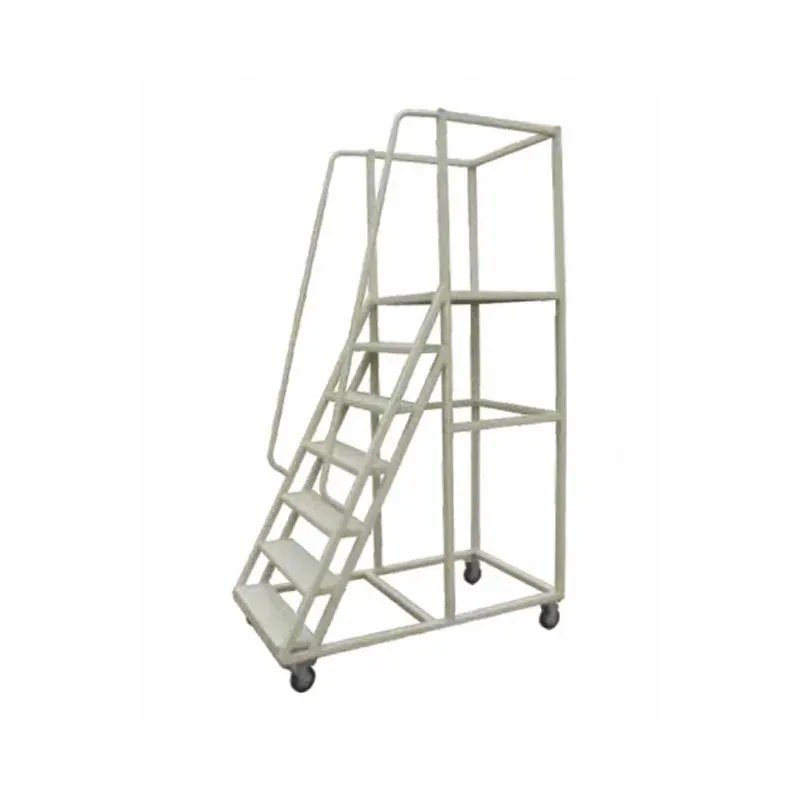 Rolling Heavy Duty Steel 6 Steps Platform Ladderfrom £96 ex VAT, bulk price
Questions people ask
How many sets of mobile safety steps does a warehouse need?
One for each pick zone that holds stock above shoulder height, plus one at goods in, covers most sites. Add a set where shifts overlap so the incoming team is not waiting on kit that is already in use.
What load are mobile safety steps rated to carry?
Most mobile sets in this range are rated 500 kg, with lighter shop floor models in the range too. The rating covers the user and everything they carry up together, so read it as a working limit rather than a shelf capacity.
How much do mobile safety steps cost?
A two step stainless ladder trolley is from £40 ex VAT and a six step rolling platform is from £96 ex VAT, bulk price. Your written quote confirms the price for the quantity you need, along with freight, VAT and lead time.
Do mobile safety steps need a guardrail?
Any set a picker stands on above roughly a metre is easier to work from with a rail, and a full guardrail is sensible where somebody spends minutes at height rather than seconds. Two tread trolleys for quick reaches generally do not need one.
Can one person move a platform set on their own?
Two wheel models are built for it: they tilt back and pull along like a sack truck. Four castor platforms roll easily on a smooth floor but are awkward over a threshold, so keep those in the zone they serve.
Do mobile safety steps have to be inspected?
They are work equipment under PUWER 1998, so they should be suitable for the job, maintained and checked. A quick pre use look by the user plus a recorded periodic inspection by a named person is the usual arrangement.
Sources: HSE guidance on PUWER 1998