Guide · · Range
Which platform trolley to buy for a cash and carry or warehouse
For most cash and carry and warehouse work a 300 kg steel flat trolley from £32 ex VAT is the right starting point. Move up to a 500 kg platform trolley from £68 ex VAT for part-pallet loads on goods-in, and down to a 200 kg model from £28 ex VAT for light replenishment and customer use. Minimum orders run from 10 to 50 units, confirmed on your written quote.
What is a platform trolley and which jobs is it for?
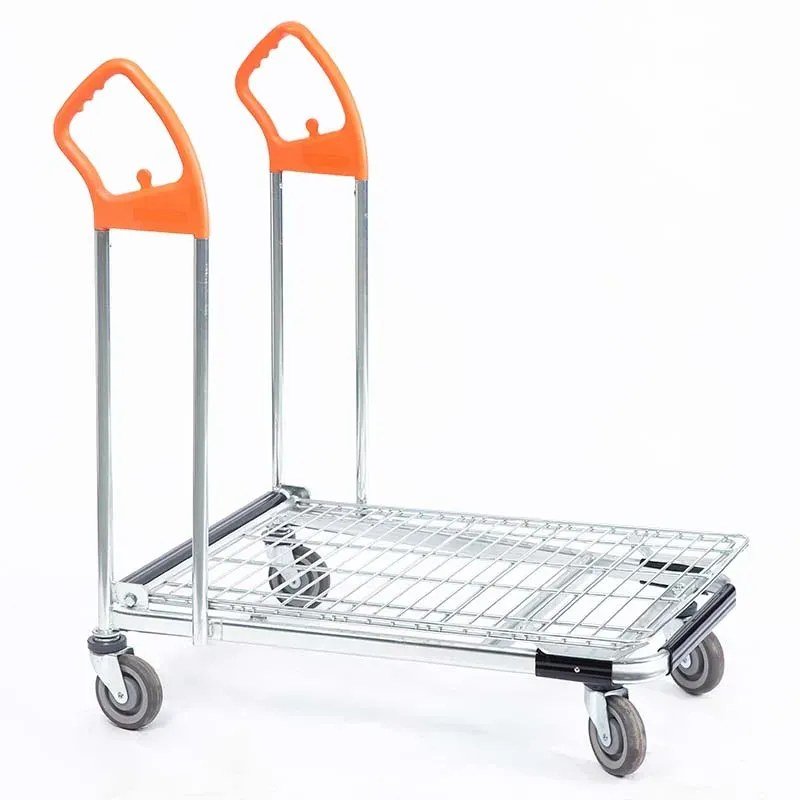
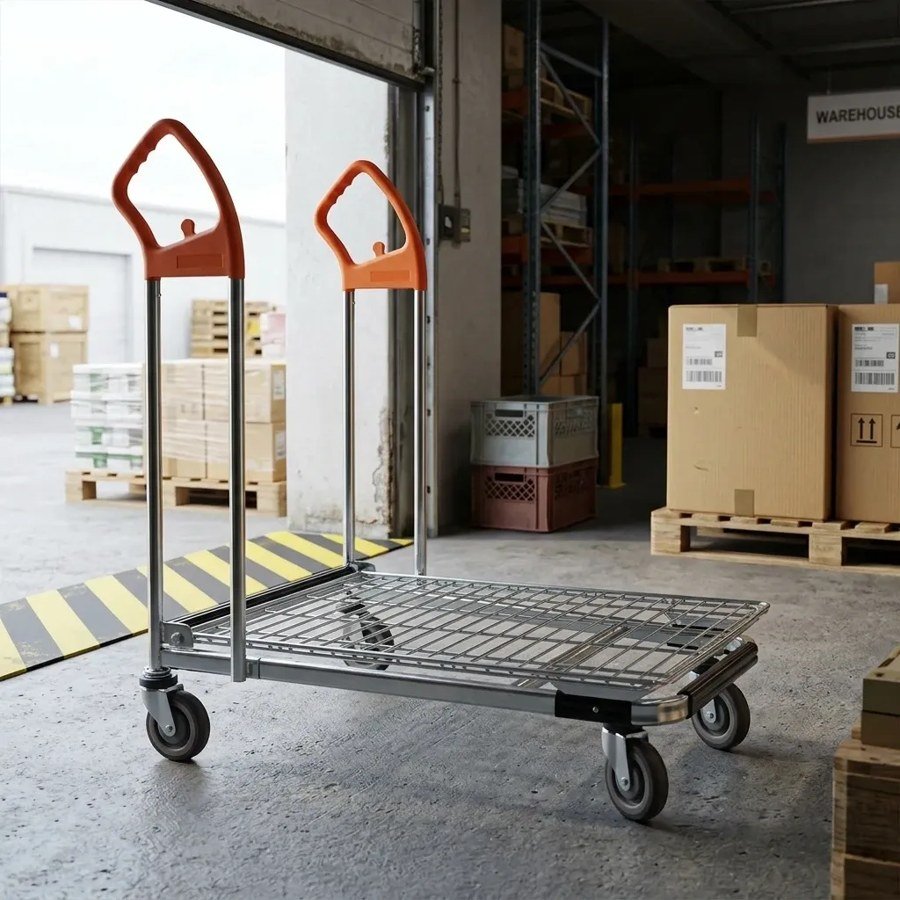
A platform trolley is a flat steel deck on four castors with a push handle at one end. It is also sold as a flat trolley, flatbed trolley, warehouse trolley or logistic cart, and in a cash and carry it is what customers load their boxes onto. The models in this guide are rated from 200 kg to 500 kg per trolley.
Three jobs put a platform trolley to work: goods-in, where a pallet is broken down at the door and moved to the aisle; replenishment, where staff run stock from the back store to the shelf; and customer use, where a trade customer pushes a full load to the checkout and out to the van. Each job wants a slightly different trolley, which is why the warehouse trolley range covers plain decks, mesh-sided carts, two-tier picking carts and folding models.
Which platform trolley capacity do you need: 200 kg, 300 kg or 500 kg?
Match the rating to the heaviest load that will realistically go on the deck, not the average one. Twenty cases of twelve 500 ml drinks weigh about 120 kg before a single tin is added, and a cash and carry customer keeps stacking as long as the deck has room.
- 200 kg: light replenishment, back-of-store runs and customer trolleys where loads are mixed grocery. The Heavy Duty Warehouse Trolley 200 kg is from £28 ex VAT at trade quantities (minimum order applies), with a 10 unit minimum, so a single branch can order.
- 300 kg: the all-rounder. A 300 kg steel flat trolley handles most aisle replenishment and the heavier customer loads. The Warehouse Heavy Duty Steel Flat Trolley is from £32 ex VAT, 50 unit minimum.
- 500 kg: goods-in and yard work, where a trolley takes a part-pallet of tinned goods, flour, oil or drinks. The Heavy Duty Platform Trolley is rated to 500 kg and is from £68 ex VAT, 50 unit minimum.
Rule of thumb: if the trolley will ever carry what a pallet truck normally carries, buy the 500 kg model. A 300 kg trolley run at 500 kg bends the deck and eats castors.
Comparison: rated load, guide price and minimum order
Guide prices below are per unit, ex VAT, at trade quantities (minimum order applies). Freight, duty, VAT and lead time are confirmed on your written quote.
| Model | Rated load | Deck type | Best for | Guide price | Minimum order |
|---|---|---|---|---|---|
| Heavy Duty Warehouse Trolley 200 kg | 200 kg | Flat deck, push handle | Replenishment, customer use | from £28 ex VAT | 10 units |
| Warehouse Heavy Duty Steel Flat Trolley | 300 kg | Steel flat deck | Aisle work, heavier customer loads | from £32 ex VAT | 50 units |
| Heavy Duty Stainless Steel Mesh 2 Layer Folding Cart | 300 kg | Two-tier mesh, folds flat | Order picking, chilled and wash-down areas | from £36 ex VAT | 50 units |
| Heavy Duty Platform Trolley | 500 kg | Heavy steel platform | Goods-in, part-pallet loads | from £68 ex VAT | 50 units |
Deck size, mesh sides or two-tier: which layout suits each job?
Deck size decides what fits and where the trolley can go. A deck close to a Euro pallet footprint (1,200 x 800 mm) lets goods-in staff slide a part-pallet straight across, but it will not turn in a tight grocery aisle. A shorter deck is easier for customers to steer and park.
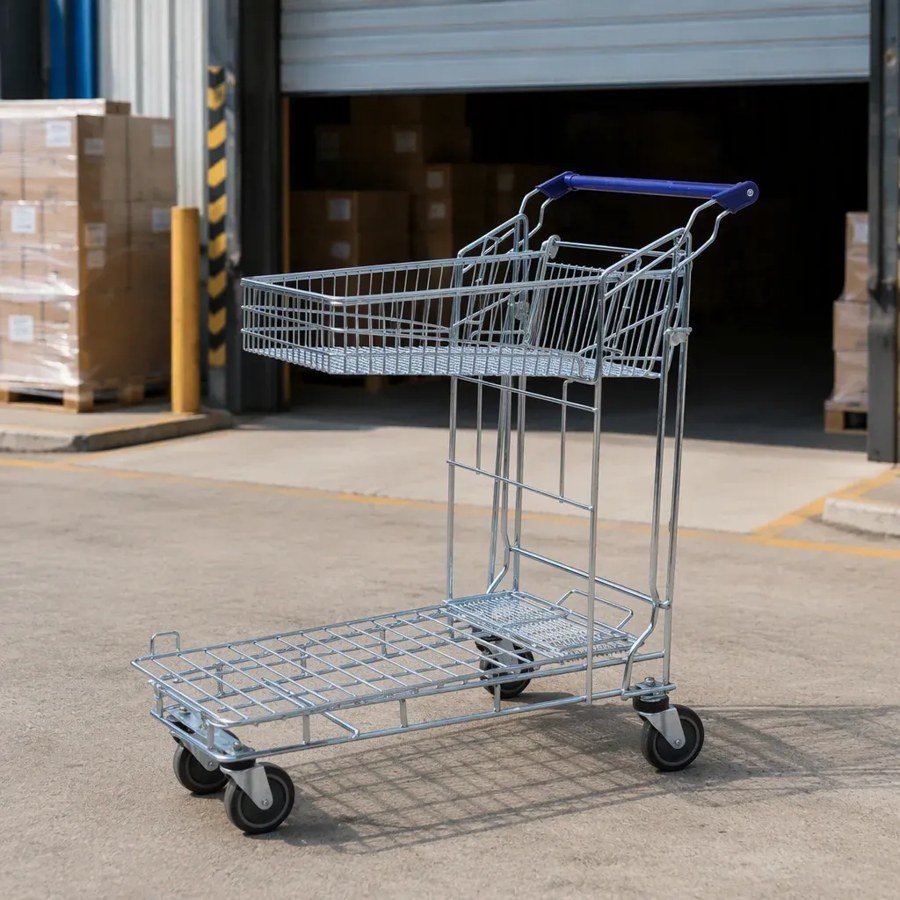
Sides matter as much as the deck. A plain flat trolley takes boxes and cases of any shape and unloads from any side. Mesh sides, fixed or folding, stop loose items sliding off and let customers stack higher, which is why many cash and carries put mesh-sided carts on the shop floor and keep flat decks in the back.
A two-tier picking cart such as the Heavy Duty Stainless Steel Mesh 2 Layer Folding Cart, rated to 300 kg and from £36 ex VAT, gives a picker two levels so small orders stay separate and nothing is crushed underneath. Stainless steel also suits chilled rooms and wash-down areas where a painted deck would rust.
Which castors should a warehouse trolley have?
Castors fail first and are the part most buyers forget to specify. Four decisions:
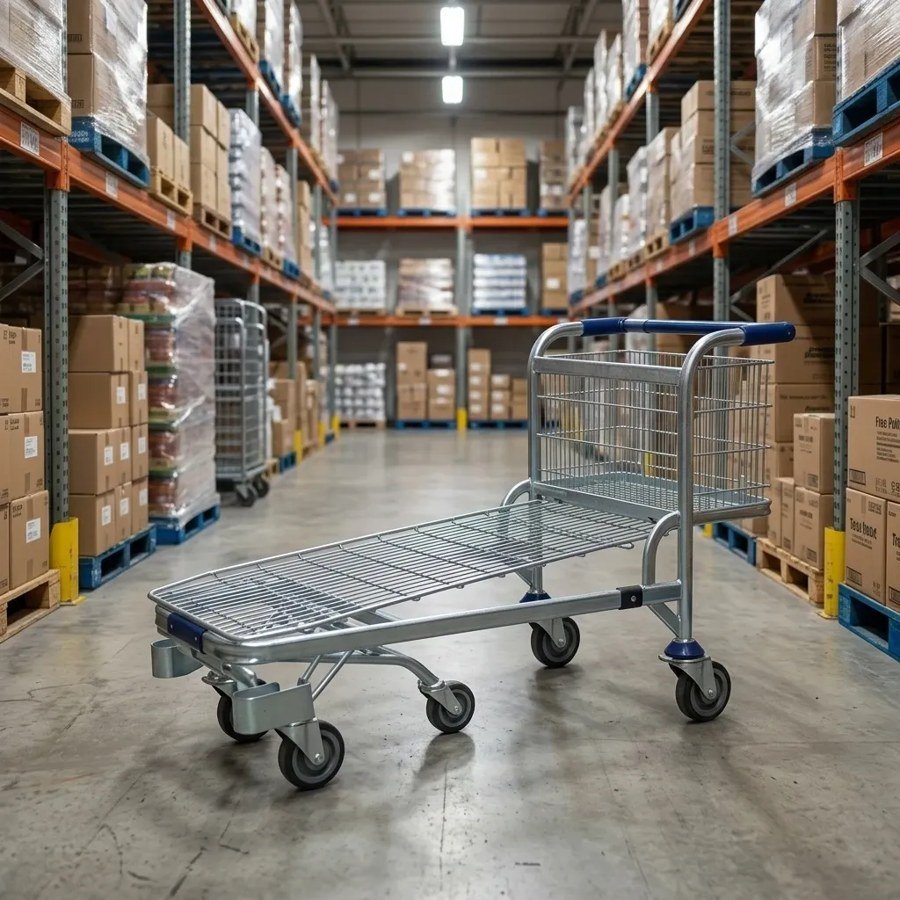
- Layout. Two fixed and two swivel castors track straight down a long aisle and still turn at the end. Four swivel castors turn on the spot but wander under a heavy load and are harder to control on a ramp. Some heavy decks use a five-wheel layout with a central fixed wheel so the trolley pivots on its middle.
- Wheel material. Grey rubber is quiet but can mark. Polyurethane is quiet, non-marking and the usual choice for supermarket and warehouse floors. Nylon rolls easiest under a 500 kg load but is loud on concrete and hard on tiles.
- Diameter. A bigger wheel rolls over expansion joints and dock plates more easily and needs less push effort under load.
- Brakes. Any trolley that customers load on a sloping car park, or that waits at a goods-in door, should have at least one braked castor.
Are folding trolleys worth it?
A folding trolley has a handle that drops flat onto the deck, or mesh sides that collapse, so it stores in a fraction of the space. That suits a cash and carry holding spare trolleys for weekend peaks or a small factory with one delivery a day.
The trade-off is joints. Every hinge and locking pin is a wear point, and a folding handle is rarely as stiff as a welded one. For a trolley that runs all day at 300 kg or 500 kg, buy welded. For a trolley used a few times a day and stored the rest of the time, folding is fine, and the two-tier folding picking cart is from £36 ex VAT.
What to check before you buy a platform trolley
- Rated load in kg, and whether the rating assumes an evenly spread load.
- Deck dimensions in mm and handle height. Measure your aisles, lift and checkout lane first.
- Deck surface: plain steel, anti-slip coating, mesh or plastic top. Produce and wet areas need drainage, so choose mesh or a ribbed deck.
- Finish: powder-coated steel for dry stores, zinc plated or galvanised for chilled areas and yards, stainless steel where you wash down.
- Castor spec: material, diameter, fixed or swivel, brakes, and whether spares are available.
- Minimum order and price breaks. The trolleys in this guide have minimums of 10 or 50 units; see the minimum order page and ask on your quote if you need a different quantity.
- Inspection before dispatch. Every order is made at our partner factories and inspected before it leaves, with photos and video sent to you. Freight, duty and lead time are confirmed on your written quote.
A platform trolley used by your staff is work equipment under PUWER 1998, so you are expected to keep it in good repair: check castors, welds and handles on a set schedule and take damaged trolleys out of use. Trade customers can open a trade account for repeat orders, and the warranty and returns page sets out what is covered.
Platform trolleys and picking carts in this guide

Questions people ask
What is the difference between a platform trolley and a flat trolley?
Nothing in practice. Platform trolley, flat trolley, flatbed trolley and warehouse trolley all describe a flat deck on four castors with a push handle. Picking cart usually means the version with mesh sides or a second tier.
How much does a platform trolley cost?
On our range a 200 kg warehouse trolley is from £28 ex VAT, a 300 kg steel flat trolley from £32 ex VAT and a 500 kg platform trolley from £68 ex VAT, at trade quantities (minimum order applies). A written quote confirms price, freight, duty and VAT.
What is the minimum order for warehouse trolleys?
It depends on the model: 10 units for the 200 kg warehouse trolley, and 50 units for the 300 kg flat trolley, the two-tier folding cart and the 500 kg platform trolley. The minimum is confirmed on your written quote.
Which castors are best for a supermarket or cash and carry floor?
Polyurethane wheels on a two fixed, two swivel layout, with at least one brake. They are quiet, non-marking and roll well under load. Choose nylon for yard work or rough concrete.
Can customers use a 500 kg platform trolley in a cash and carry?
Yes, but a fully loaded 500 kg trolley is hard for one person to stop on a ramp, so fit brakes and keep customer trolleys to loads they can control. Many cash and carries give customers 200 kg or 300 kg trolleys and keep the 500 kg decks for goods-in.
Can I order a sample before the full quantity?
Ask when you request your quote. Every order is made at our partner factories and inspected with photos and video before dispatch; samples, quantities and price breaks are confirmed on your written quote.
Sources: HSE, Provision and Use of Work Equipment Regulations 1998 (PUWER)