Comparison · · Electric Pallet Trucks
Ride On Pallet Truck or Walkie: When Does Riding Pay?
A ride on pallet truck is worth the step up once one operator moves pallets over long runs for most of a shift: ours start from £1,590 ex VAT for a 2 to 3 t stand-on rider, against £390 ex VAT for a pedestrian electric truck. Capacity is the same 2 t to 3 t either way, so you are buying distance and shift length, not lift height. Under roughly 25 m per run, a walkie truck from £605 ex VAT usually does the job for less money.
What is a ride on pallet truck, and which floors need one?
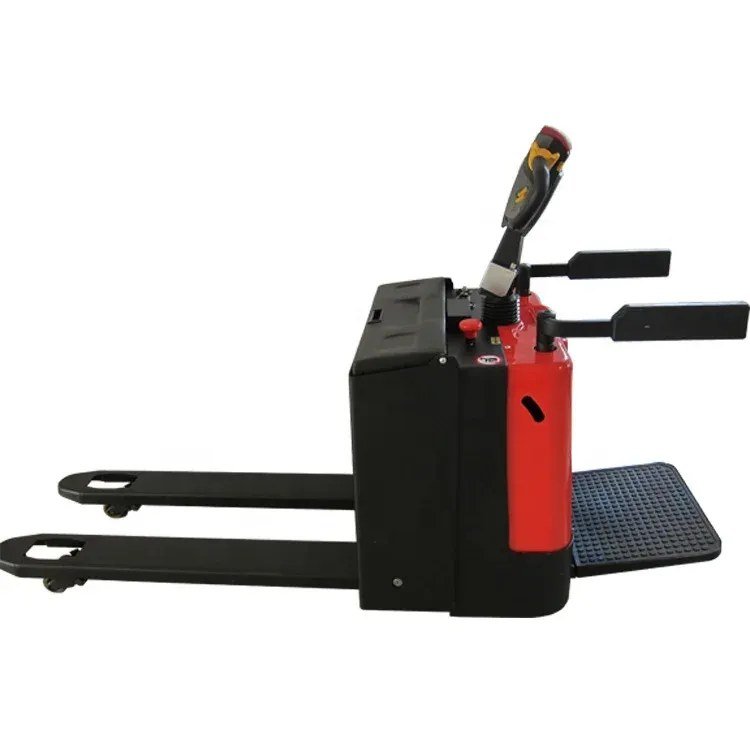
A ride on pallet truck is a powered low lift truck that carries the operator as well as the load. The forks raise just enough to clear the floor, so the job is moving pallets from A to B, not stacking them. The only real difference from a pedestrian model, also called a walkie electric pallet truck or an electric pallet jack, is that the operator stops walking: a stand-on truck adds a fold-away platform and a backrest, while a seated version adds a seat and a steering wheel.
Capacity sits in the same bracket either way. Across our electric pallet trucks the ratings run 1.5 t, 2 t, 2.5 t and 3 t, with forks of 1150 to 1220 mm to suit standard and euro pallets. So riding does not buy you more lift. It buys distance, and it buys the back half of a long shift.
That makes the decision a floor plan question rather than a load question. If pallets cross a 20 m cash and carry floor, a pedestrian truck is enough. If they run the length of a 3PL warehouse, out to a trailer bay and back again all day, the operator spends most of the shift on their feet, and a rider starts to pay for itself in trips completed.
How far do your pallets actually travel in a shift?
Do the arithmetic on your own layout before you look at prices. A pedestrian truck travels at about walking pace, roughly 5 km/h, so a 60 m round trip between the bay and the racking takes around 45 seconds of travel on its own, before the operator positions the forks or waits for a door. Thirty of those trips in a shift is about 22 minutes of walking, five or six days a week, and that is the part a rider removes.
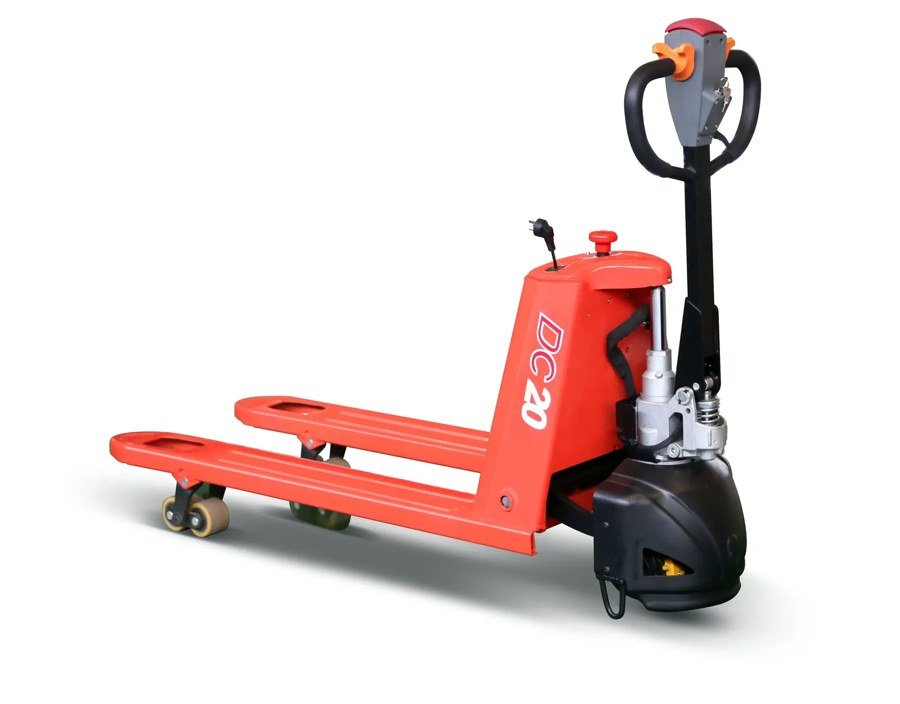
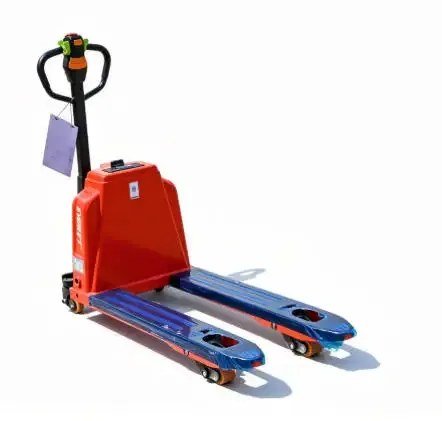
- Short runs, under about 25 m: a pedestrian truck such as the 1.5 to 2 t walkie electric pallet truck from £605 ex VAT.
- Medium runs across a wholesale floor, 40 pallets or more a shift: a stand-on rider, where the operator steps on and off often.
- Long runs, trailer and container work, or two shifts a day: a seated rider, where the operator stays aboard for long spells.
Count the dead time as well as the distance. Goods-in queues, a yard crossing between units and a long chill room all add trips that look small on paper and fill a shift in practice.
Stand-on or seated: which rider suits your aisles?
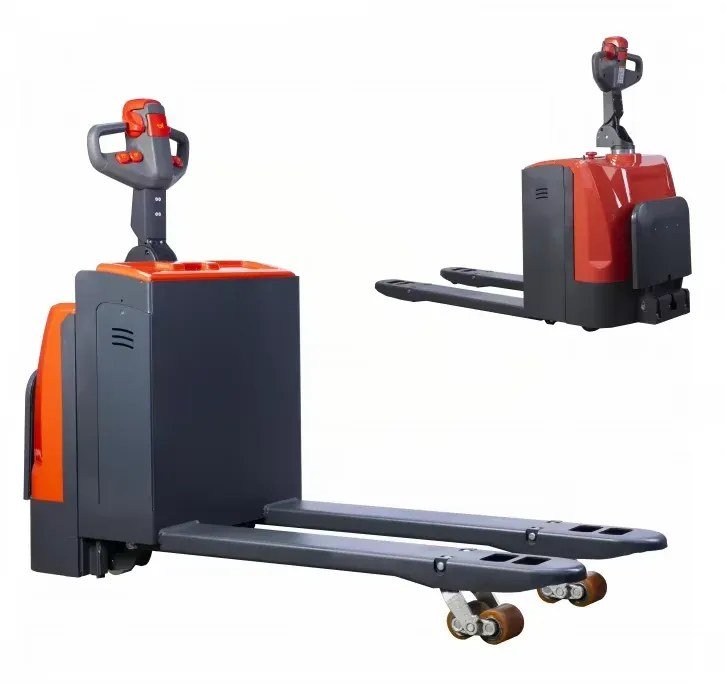
A stand-on truck keeps the operator on a sprung platform with the tiller to hand, and the platform folds up when the aisle narrows or the truck has to be walked into a tight corner. That flexibility is why the stand-on format suits mixed work: picking runs, bay loading and the odd awkward manoeuvre between pallet stacks. Our 2 to 3 t stand-on electric pallet truck starts from £1,990 ex VAT.
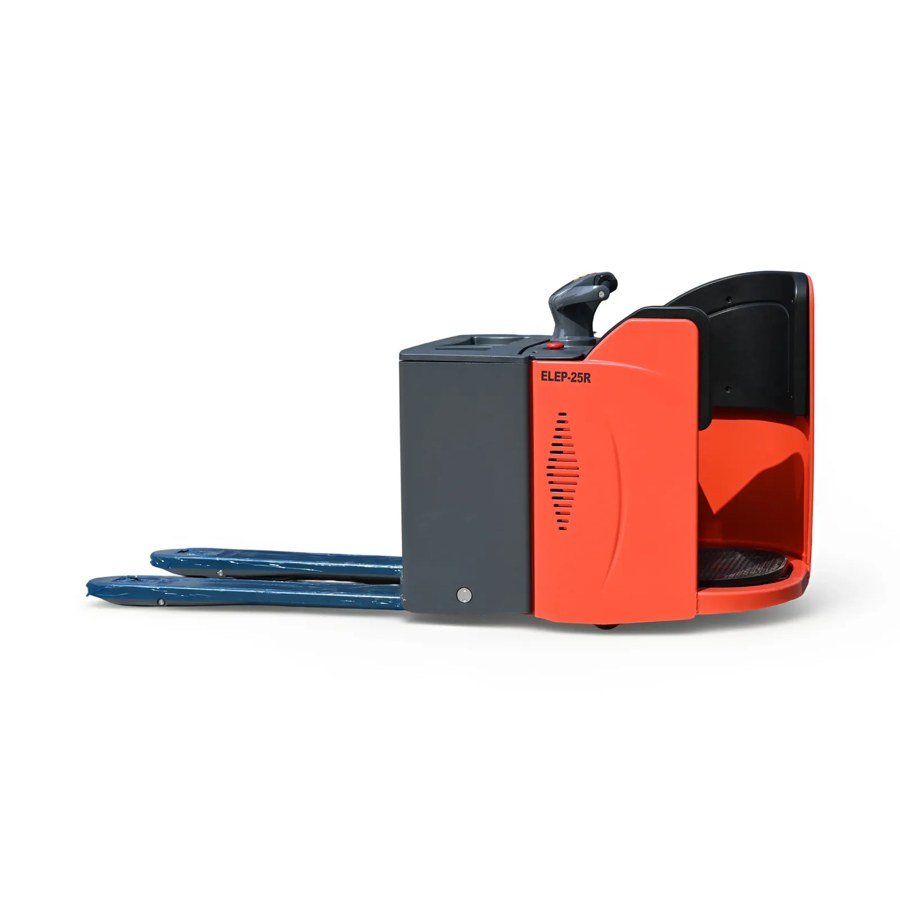
A seated model, such as the 2 to 2.5 t ride on pallet truck from £3,590 ex VAT, is built for sustained distance: the operator sits, steers and rarely dismounts. It needs more room to turn and more headroom at the bay, so check your aisle widths and door heights first.
Wheels matter more than buyers expect. Polyurethane wheels run quietly and mark less on smooth sealed concrete, which suits retail and food floors. Rougher yard surfaces, broken tarmac and drainage channels call for a wider wheel base and a tougher tyre, and that is a separate conversation from the platform choice.
Walkie, stand-on and ride on pallet truck prices compared
| Format | Capacity | Operator position | Best suited to | Guide price |
|---|---|---|---|---|
| Walkie pedestrian truck | 1.5 to 2 t | Walking behind the tiller | Runs under about 25 m, shop and bay work | from £605 ex VAT |
| Electric rider, fold-down platform | 2 to 3 t | Standing, platform folds away | Mixed picking and loading, frequent stops | from £1,590 ex VAT |
| Heavy duty stand-on | 2 to 3 t | Standing on a sprung platform | Long warehouse runs, heavier pallets | from £1,990 ex VAT |
| Seated ride-on | 2 to 2.5 t | Seated with a steering wheel | Trailer and container work, two shift days | from £3,590 ex VAT |
Guide prices are ex VAT and per unit. A written quote by email confirms the price for your quantity, the specification, freight and VAT, and it is valid for 30 days. Lead time is confirmed on your written quote as well, so plan any peak season order against that date rather than an assumption.
Where a pedestrian electric truck is still the right buy
Plenty of floors never justify a rider. A cash and carry that moves 20 pallets a day from a single bay to the shop floor gets the same lifting job done with a walkie truck at a third of the outlay, and the truck fits through doors a rider cannot. Smaller retail units and bakery or butchery back rooms are the same story: the constraint is space, not distance.
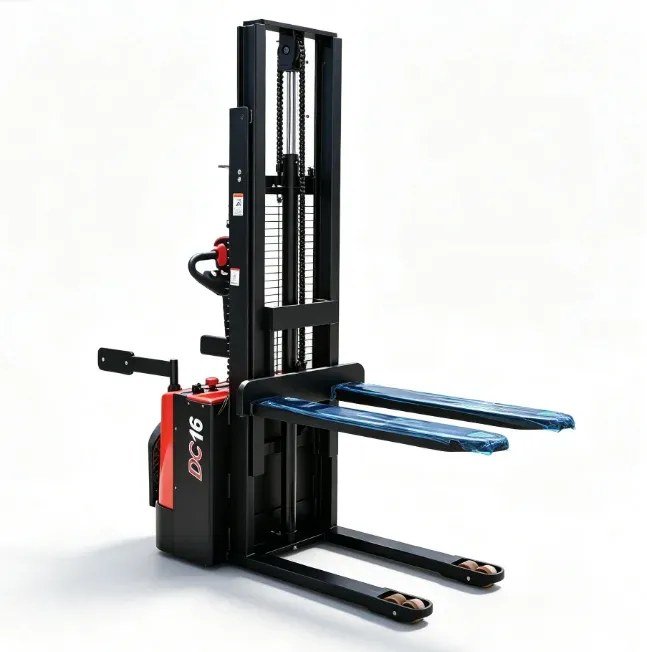
Two trucks often beat one big one. A walkie on the shop floor and a rider in the warehouse keeps both operators working through a delivery, rather than one truck shuttling between jobs while pallets stand in the aisle. If stacking into racking is also on the list, that is a different machine again: look at our electric stackers, because no low lift pallet truck of any format will put a pallet on a beam.
What to check before you buy a ride on pallet truck
Go through these before you ask for a quote, because they decide the specification more than the price does.
- Narrowest aisle and tightest turn. Measure the worst point on the route, not the main run. A stand-on with a folding platform forgives a tight corner that a seated truck will not.
- Floor and gradient. Note any ramp, kerb or yard crossing and the surface condition. Smooth concrete suits polyurethane wheels; rough ground needs a wider wheel base.
- Shift pattern and charging point. Decide where the truck will charge and whether it works one shift or two, then match the battery to that rather than to the headline capacity.
- Pallet type and fork length. Check whether 1150 mm or 1220 mm forks suit your pallets, and whether any load overhangs.
- Operator training. Rider-operated lift trucks come under HSE L117 guidance on operator training and safe use, so count the training alongside the purchase.
- Inspection and upkeep. Under PUWER 1998 the truck needs maintaining in safe working order and the operator needs a daily visual check, so agree who does that and when.
Our price guide shows how guide prices are set, and every truck is inspected before dispatch with photos and video sent to you.
Walkie, stand-on and ride on pallet trucks to compare
Questions people ask
How much does a ride on pallet truck cost in the UK?
A 2 to 3 t electric rider pallet truck starts from £1,590 ex VAT, a heavy duty stand-on from £1,990 ex VAT and a seated ride-on from £3,590 ex VAT. A written quote confirms the price for your quantity and specification.
What is the difference between a stand-on and a seated ride on pallet truck?
A stand-on truck has a fold-away platform and a tiller, so the operator can step off and walk the truck through a tight spot. A seated model has a seat and a steering wheel and is built for long runs where the operator stays aboard.
Do operators need training for a ride on pallet truck?
Yes. Rider-operated lift trucks fall under HSE L117 guidance on operator training and safe use, which applies whether the operator stands on a platform or sits. Pedestrian walkie trucks still need instruction and supervision.
How much aisle width does a rider pallet truck need?
More than a pedestrian truck, because the operator and the platform or seat sit behind the load. Measure the tightest turn on the route and send those figures with your enquiry so the specification is matched to it.
Can a ride on pallet truck work outdoors or in a cold store?
Some formats can, with the right wheels, a wider wheel base and a battery suited to low temperatures. Say in your enquiry whether the truck crosses a yard, a ramp or a freezer, because it changes the model and the price.
Can a ride on pallet truck lift a pallet into racking?
No. Every pallet truck, ridden or walked, is a low lift machine that raises the forks just clear of the floor. For racking you need a pallet stacker or a forklift.
Sources: HSE L117: Rider-operated lift trucks, operator training and safe use, HSE guidance on PUWER 1998