Guide · · Manual & Semi-Electric Pallet Stackers
Self loading stacker: getting the pallet off the van without a forklift
A self loading stacker is a compact 500 kg machine that travels with the delivery, comes off at the drop and lifts the pallet to between 1100 mm and 1600 mm, from £1,005 ex VAT. The semi electric version keeps the hand push and powers the lift, at £1,155 ex VAT for a 1100 mm van model, while a full electric lithium machine powers the travel as well, from £1,005 ex VAT. If the pallet never leaves your own floor, a manual hand stacker at £445 ex VAT does the same lift for less.
What a self loading stacker actually does
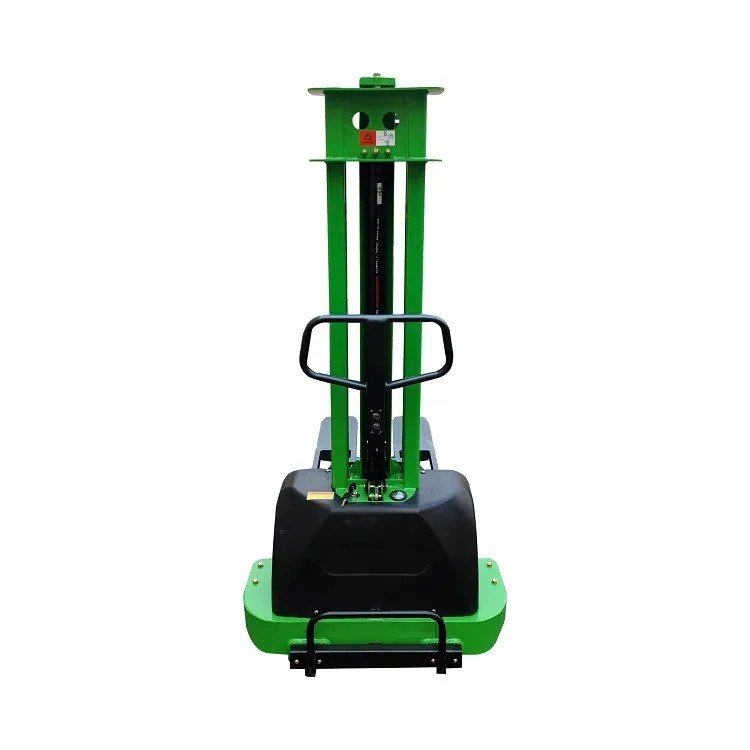
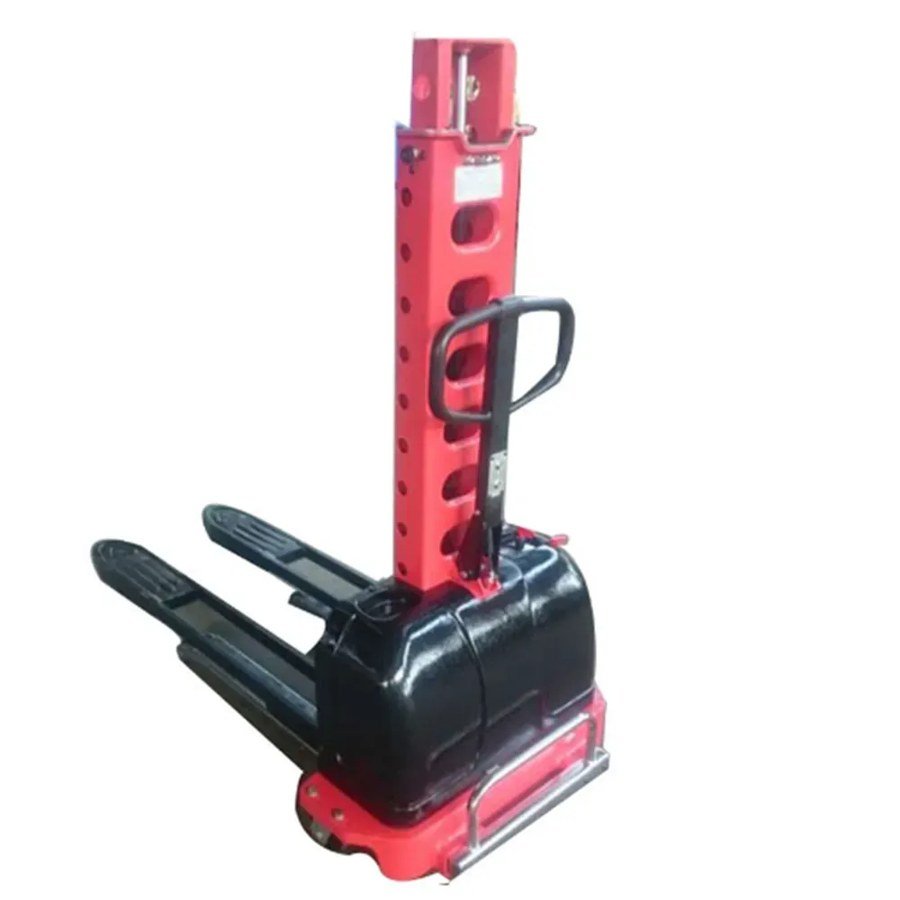
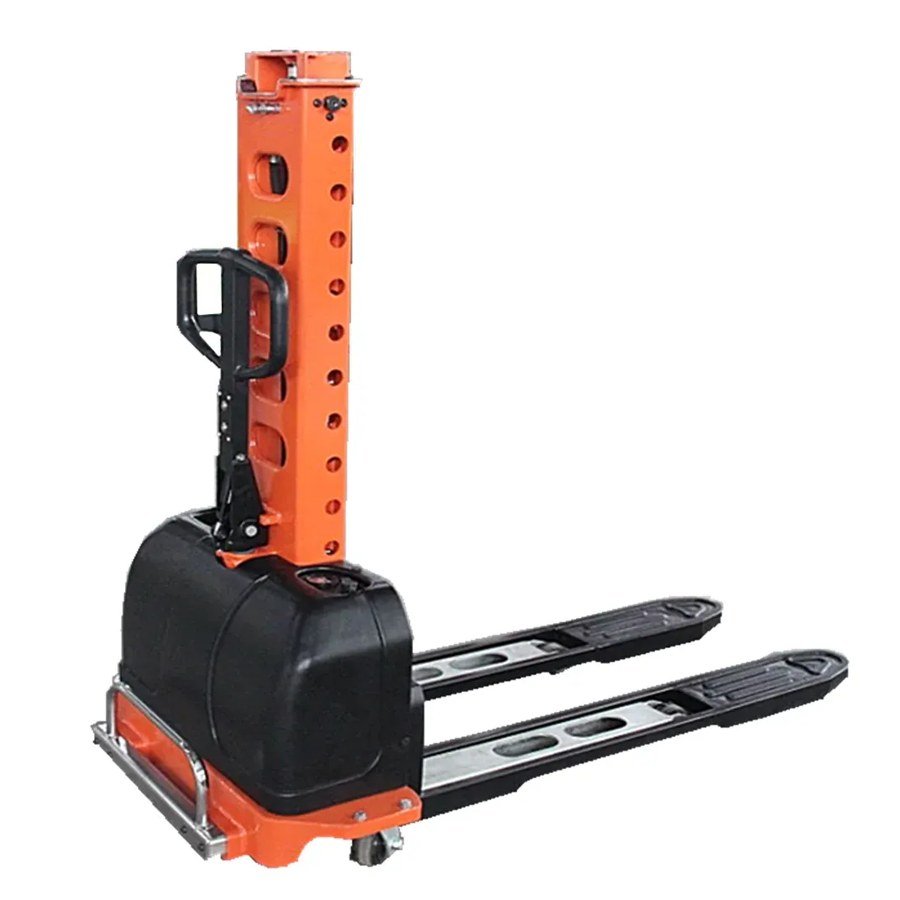
A self loading stacker, also called a self lifting stacker, a mini stacker or a van stacker, is a compact stacker built around one job: getting a loaded pallet up and down where there is no forklift and no dock. Capacity in this family starts at 500 kg and the mast lifts to 1100, 1300, 1500 or 1600 mm, so the pallet goes onto a bench, a counter, a van floor or a bottom beam rather than into high racking.
It sits between two machines most buyers already own. A pump truck moves a pallet along a flat floor but never raises it. A full size pallet stacker lifts higher and carries more, but it is heavier and wider than anything you want to work with inside a van body. The self loading machines are the narrow, light end of that range, and several of them weigh little enough to go out on a delivery round and come back.
Where a van sized machine earns its place
Three jobs come up again and again on the phone. The first is multi drop delivery to customers with no handling equipment: a cash and carry or a wholesaler drops a full pallet at a corner shop, a salon or a site office, and the driver needs to get it off the vehicle and inside without a second pair of hands. The second is goods in at a small unit that takes one or two pallets a week, where a forklift and the training behind it cannot be justified. The third is maintenance and installation work, where a crate has to be lifted onto a bench or a plinth at the customer's premises.
In all three the machine does nothing for most of the day, which is why capacity and lift height matter more than speed. A 500 kg self loading van stacker with 1100 mm lift at £1,155 ex VAT covers a standard pallet of tinned goods, cases of drinks or boxed parts. If your pallets regularly run heavier than 500 kg, move up a class rather than buying on price: a lift that is working at the top of its rating all day is the one that gives trouble.
Self loading stacker, manual or full electric: the numbers side by side
Four machines from the range, with the figures a buyer actually compares. Guide prices are in GBP ex VAT and the written quote confirms the price for your quantity.
| Machine | Capacity | Lift | Lift and push | Guide price |
|---|---|---|---|---|
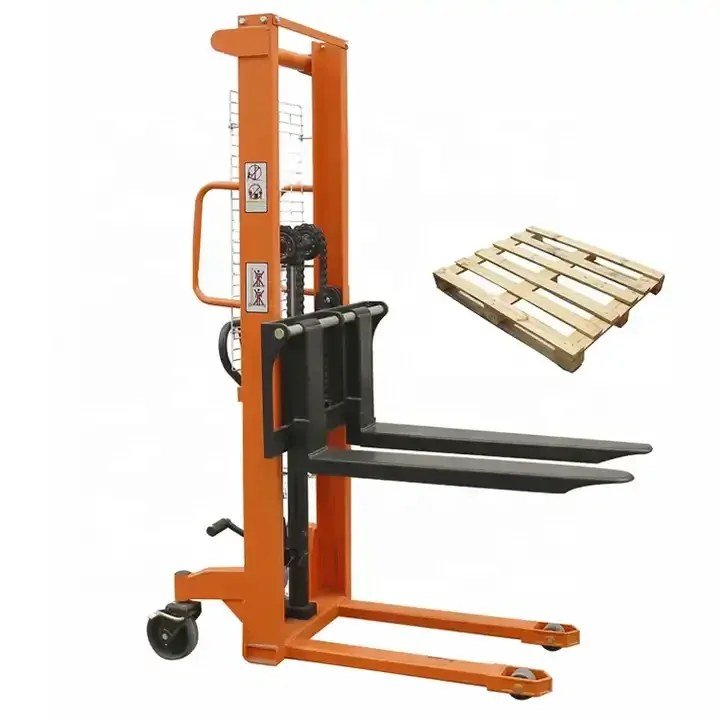
| Manual hand stacker, single mast | 0.5 to 1.5 t | Single mast, height on the product page | Hand pump, hand push | from £445 ex VAT |
| Self lifting mini stacker | 500 kg | 1100, 1300, 1500 or 1600 mm | Powered lift, hand push | from £1,005 ex VAT |
| Self loading van stacker, 1100 mm | 500 kg | 1100 mm, forks 1150 mm | Powered lift, hand push | from £1,155 ex VAT |
| Full electric self lifting stacker, lithium | 0.5 to 1.5 t | 1500 or 1600 mm | Powered lift and travel | from £1,005 ex VAT |
The pattern is the one you would expect. Hand pumping is free to buy and slow to use, a powered mast costs more and pays back once the forks go up repeatedly, and powered travel is worth it when the machine has to move a loaded pallet any real distance or across a slope rather than lift it on the spot.
Will it fit the van, the doorway and the payload?
This is where orders go wrong, and all of it can be settled with a tape measure before you commit.
- Internal height and width of the load space, and the rear door aperture: the stacker has to go in with the mast upright or lie down safely, and still leave room for the pallets.
- Vehicle payload: the weight of the machine plus the heaviest pallet has to sit inside what the van is plated for, with the driver and anything else already on board.
- How it gets on and off: a tail lift platform rated for the combined weight, or a ramp. If the vehicle has neither, price a loading ramp at the same time rather than after the first awkward drop.
- The ground at the far end: these machines run on small wheels and want a firm, level surface. Gravel, soft tarmac and steep kerb ramps are the usual complaint.
- The customer's doorway: measure the narrowest point on the route in, not just the front door, and check the leg width of the stacker against it.
Weight and overall dimensions for each model are on its product page, and anything you need confirming for a specific vehicle goes on your written quote.
What to check before you buy a self loading stacker
- Capacity against your heaviest pallet, with headroom rather than a figure you meet exactly.
- Fork length against your pallets: 1150 mm forks suit a standard 1200 mm pallet, shorter forks suit half pallets and stillages.
- Leg clearance: closed bottom pallets and some plastic pallets need the forks to enter without the legs fouling, so check the pallet you actually receive.
- Lift height against the target, measured to the top of the load, not the top of the forks.
- Battery and charging: a lead acid pack wants one long charge in a ventilated bay, lithium takes shorter top up charges, and both need a socket where the machine is parked.
- Who will use it: lifting equipment is covered by the PUWER 1998 and LOLER 1998 regulations, which means trained users, an in service inspection regime and a thorough examination at the intervals your duty holder sets.
- Spares: wheels, seals and chargers are the parts that wear, so check they are available for the model before you commit.
If after all that the pallet never actually leaves your own floor, buy the cheaper machine. A manual hand stacker at £445 ex VAT lifts the same 0.5 to 1.5 t, and a pump truck from the hand pallet truck range is enough when nothing needs to go up at all.
What it costs and what your written quote confirms
Across the range, a self lifting mini stacker starts at £1,005 ex VAT, a 1100 mm van model at £1,155 ex VAT, and a full electric lithium machine at £1,005 ex VAT. Manual stackers in the same range start at £445 ex VAT. Those are guide prices in GBP ex VAT, shown the same way on the price guide.
Everything is made to order at our partner factories, inspected before dispatch with photos and video sent to you, then delivered anywhere in the UK. Your written quote by email confirms the price for the quantity you want, freight, duty, VAT and lead time, and it stands for 30 days. Send the pallet weight, the lift height you need and the vehicle it has to travel in to sales@londonpallettrucks.co.uk or call 020 3576 6910, and we will come back with the models that fit. We supply business customers only.
Self loading and manual stackers from the range
Questions people ask
What is a self loading stacker?
It is a compact pallet stacker, 500 kg class, built so it can travel with a delivery and lift the pallet at the far end where there is no forklift. Lift heights run from 1100 mm to 1600 mm.
How much does a self loading stacker cost?
A self lifting mini stacker starts at £1,005 ex VAT and a 1100 mm van model at £1,155 ex VAT. Your written quote confirms the price for the quantity you want.
How high does a self loading stacker lift?
The common heights in this family are 1100, 1300, 1500 and 1600 mm. That covers a bench, a counter, a van floor and a bottom beam, but not high racking, which needs a full size stacker or a forklift.
Will a self loading stacker fit in a van?
Measure the internal height of the load space and the rear door aperture, then check the vehicle payload against the machine weight plus the heaviest pallet. Weight and dimensions for each model are on its product page.
What is the difference between a self loading stacker and a pump truck?
A pump truck raises a pallet just clear of the floor so it can be moved, while a stacker raises it to working or storage height. If nothing needs to go up, a pump truck is the cheaper and simpler machine.
Does a self loading stacker need a thorough examination?
It is lifting equipment, so LOLER 1998 and PUWER 1998 apply: trained users, routine checks and a thorough examination at the intervals your duty holder sets. The HSE guidance linked below sets out what that involves.
Sources: HSE: Lifting Operations and Lifting Equipment Regulations 1998 (LOLER), HSE: Provision and Use of Work Equipment Regulations 1998 (PUWER)