Comparison · · Manual & Semi-Electric Pallet Stackers
Stacker truck batteries: lithium, lead acid or none at all
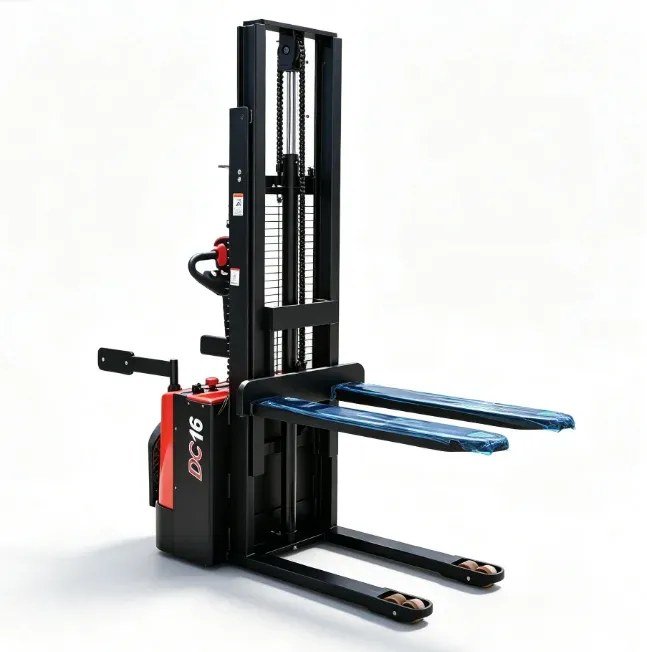
A semi electric stacker truck lifts on a battery and is still pushed by hand, so the pack only works when the forks move: a 1 t machine lifting to 3.5 m starts at from £640 ex VAT. Lead acid is the cheaper pack to buy and wants one full charge in a ventilated bay, while lithium takes short top up charges during breaks and needs no watering, from £845 ex VAT for a 500 to 1,000 kg narrow leg model. If your forks go up fewer than a dozen times a shift, a manual hand stacker at from £445 ex VAT is still the sensible buy.
What the battery on a semi electric stacker actually does
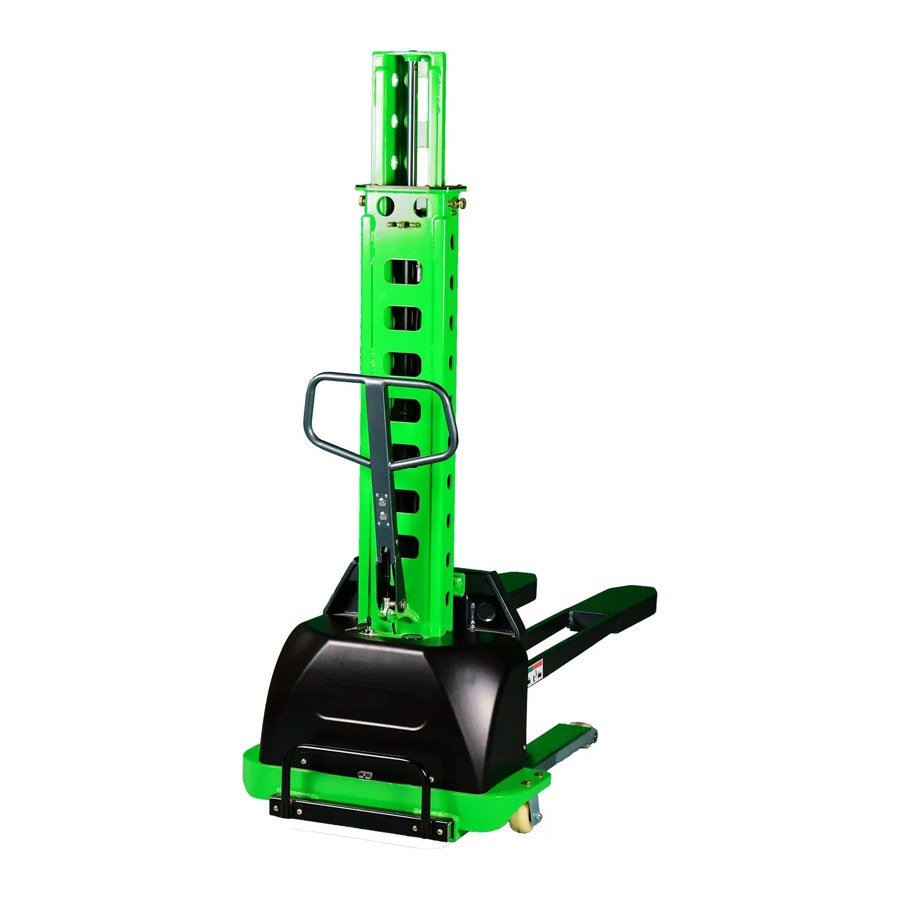
A semi electric machine splits the work in two. You push it and steer it by hand, exactly as you would a pump truck, and a small battery with an electric pump does the lifting. Nothing drives the wheels, so the operator sets the pace and the battery only draws current while the forks are going up. That is why these packs are modest and why a day of light stacking fits inside one charge.
A full electric machine adds traction: the battery drives as well as lifts, the pack gets bigger and the charging question gets more serious. Those models sit in the electric stacker range. This guide covers the lift only machines in the manual and semi electric stacker range, where the battery decision is cheaper to get right.
Two chemistries appear on the spec sheets. Lead acid is the traditional traction battery, filled with acid and plates. Lithium ion is a sealed pack with a management board inside it. Both lift the same pallet to the same height. What differs is how they want to be charged, where they can be charged, and what they ask of you afterwards.
Lithium or lead acid on a stacker truck: what changes day to day
Charging habits are the real difference. A lead acid pack wants one long, uninterrupted charge, normally at the end of the shift, and it does not enjoy being pulled off the charger half way through: twenty minutes snatched at tea break, day after day, shortens its life. A lithium pack is the opposite, because short top up charges between jobs are normal use, so a machine on a split shift can be kept going without a second battery.
Maintenance is the second difference. Lead acid cells lose water as they charge and need topping up with distilled water on a schedule, so somebody has to own that job and actually do it. A sealed lithium pack has no cells to top up and no electrolyte to check.
Where the machine charges matters just as much. A lead acid battery gives off gas while it charges, so it belongs in a ventilated bay, away from open food, stock and anything that sparks. A lithium pack is usually charged where the truck stands, which suits a shop floor or a unit with no battery bay. Follow the charging instructions supplied with the machine either way.
- Weight: lead acid is heavier for the same stored energy, which adds mass to a machine pushed by hand.
- Cold: both chemistries give less in an unheated unit or a chilled store, and lithium packs often restrict charging near freezing.
- Replacement: a lead acid battery is a simple swap, while a lithium pack is a specified part, so note it for later.
- Price to buy: lead acid is the cheaper pack at the same capacity, and lithium asks for that money back in shift flexibility.
Stacker truck power options and prices compared
| Power | Suits | Watch for | Guide price |
|---|---|---|---|
| Manual pump, no battery | A few pallets a shift, cold or remote corners, back up for a battery machine | Every lift is pumped by hand, so height costs effort | from £445 ex VAT |
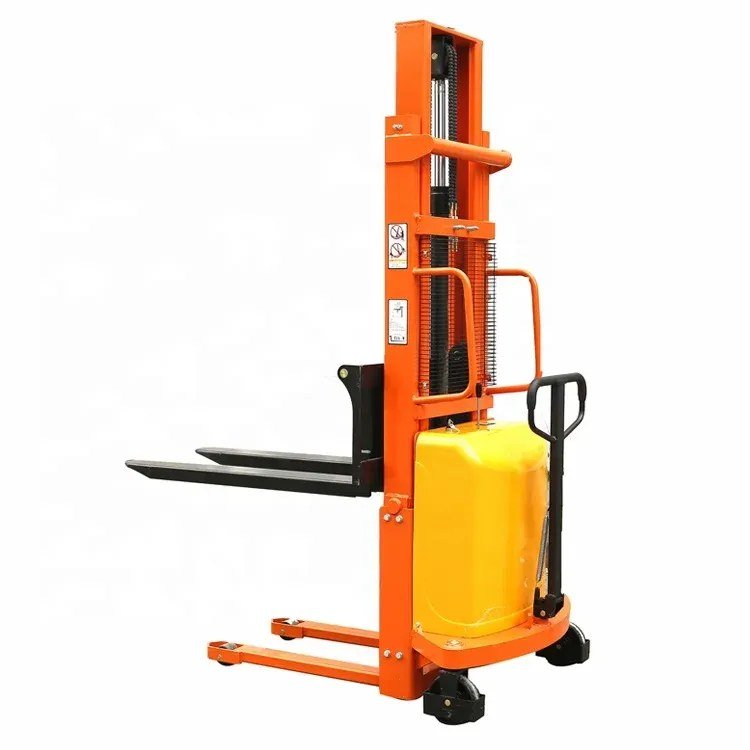
| Semi electric, 1 t to 3.5 m | Steady single shift stacking into racking beams | Check headroom at full lift and the leg width against your pallets | from £640 ex VAT |
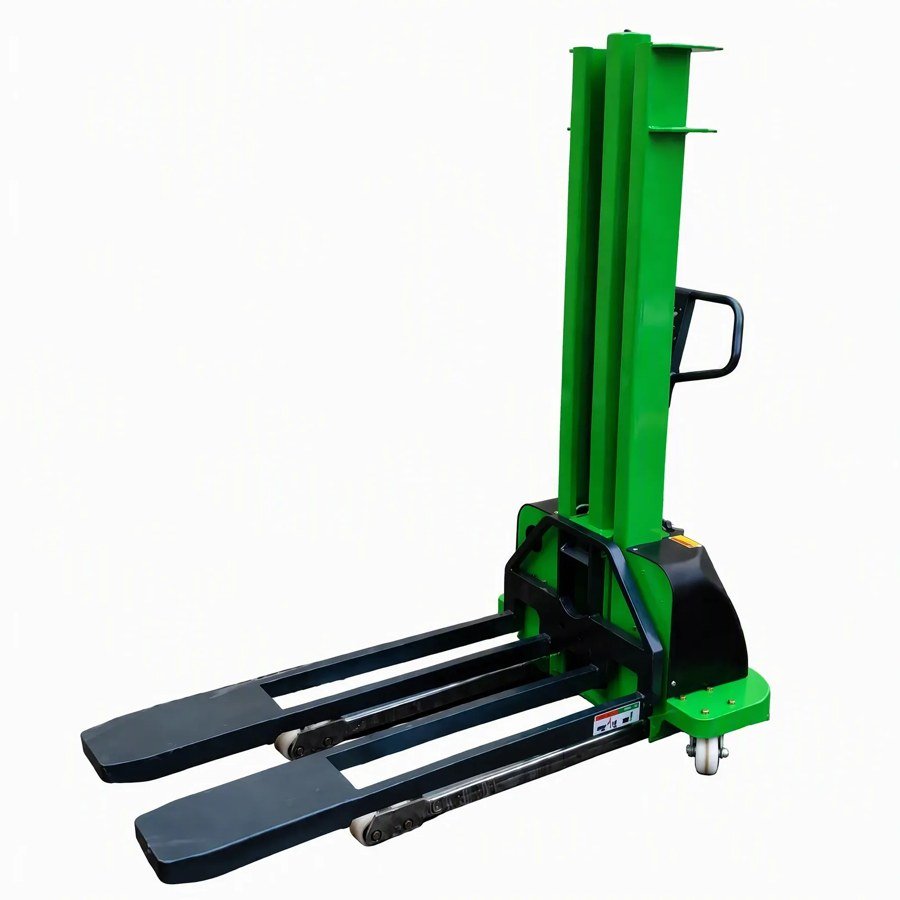
| Semi electric, lithium, 500 to 1,000 kg narrow legs | Split shifts, retail and food areas, sites with no battery bay | Narrow legs need a clear floor, and capacity is lower than a 1 t machine | from £845 ex VAT |
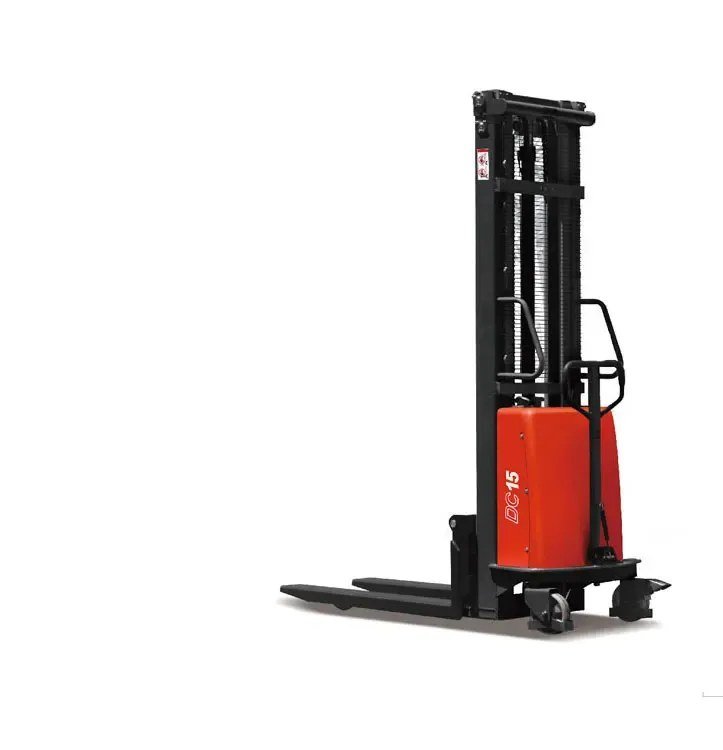
| Semi electric, lead acid, 1 t | One shift a day with a charging bay and somebody to maintain the cells | Wants a full overnight charge and topping up with distilled water | from £1,035 ex VAT |
| Semi electric, 1 to 2 t, 4.5 m mast with adjustable forks | Top beams, mezzanine edges and mixed pallet sizes | Capacity at full height is below the plate figure, so ask for the load chart | from £1,170 ex VAT |
Read the rows across, not down the price column. The lithium machine at from £845 ex VAT is a 500 to 1,000 kg narrow leg truck, while the lead acid machine at from £1,035 ex VAT is a full 1 t pallet stacker, so the gap between them is capacity and chassis, not chemistry. Compare capacity, lift height and leg type first, then pick the battery that fits how the site runs.
When a manual hand stacker still beats a battery
Count the lifts, not the pallets. If the forks go up fewer than a dozen times in a shift, a manual machine such as a single mast hand stacker rated 0.5 to 1.5 t at from £445 ex VAT does the job with nothing to charge and nothing to flatten. Pumping a pallet to 1.6 m takes a minute of honest effort. Doing it forty times a day does not.
A manual stacker also earns its place as the back up. When the battery machine is on charge, the hand stacker still works, and a goods in bay that cannot lift a pallet stops the whole delivery.
The point where a battery pays is easy to feel on site: when the operator plans their route around the pumping, when lifts to 2 m become routine, or when more than one person shares the machine across a long day. That is the moment to move to a semi electric model such as the 1 t lead acid pallet stacker at from £1,035 ex VAT, or to lithium if the charging has to happen in short bursts.
What to check before you buy a stacker truck
- Count the lifts a shift. Fewer than a dozen and manual is enough. All day, or shared between operators, and you are buying a battery.
- Find the charging point now. Lead acid needs a ventilated spot it can sit in overnight, while lithium can usually charge where the truck parks.
- Check the charger supplied. Ask what voltage it is, whether it is on board or separate, and which plug it comes with. That is confirmed on your written quote.
- Read capacity at height, not on the badge. A 1 t rating is rarely the figure at full lift, so ask for the load chart on the taller masts.
- Measure the legs against the pallets. Narrow or straddle legs decide whether the truck can reach a closed bottom pallet or a stillage at all.
- Plan the examinations. A stacker lifts loads, so it needs a thorough examination at least every 12 months under LOLER 1998 and a pre use check under PUWER 1998, plus trained operators.
- Price the wear parts with the truck. Load wheels, seals, relays, switches and chargers are quoted as spare parts, and asking for them with the machine saves a second freight charge later.
What it costs and what your written quote confirms
Manual stacking starts at from £445 ex VAT. A 1 t semi electric walkie stacker lifting to 3.5 m is from £640 ex VAT, a lithium narrow leg machine rated 500 to 1,000 kg is from £845 ex VAT, and a 1 t lead acid pallet stacker is from £1,035 ex VAT. The tall mast models with adjustable forks reach from £1,170 ex VAT for 1 to 2 t to 4.5 m.
Every figure on the site is a guide price in pounds ex VAT. A written quote by email confirms the price for the quantity you want, the battery and charger specification, freight to your postcode, duty, VAT and lead time, and it stays valid for 30 days. Machines are made to order at our partner factories and inspected before dispatch, with photos and video sent to you. Send the pallet type, the top beam height and the number of lifts a shift, and we will quote the manual and the battery option side by side. Guide pricing for every range is on the price guide.
Semi electric and manual stackers in this guide
Questions people ask
Is lithium or lead acid better on a semi electric stacker?
Lead acid is cheaper to buy and suits one shift a day with an overnight charge in a ventilated bay. Lithium suits split shifts and sites with no battery bay, because it takes short top up charges and needs no watering.
How much is a semi electric stacker truck?
A 1 t machine lifting to 3.5 m starts at from £640 ex VAT and a 1 t lead acid pallet stacker is from £1,035 ex VAT. Your written quote confirms the price for the quantity and specification you need.
Can I charge a stacker battery from a normal socket?
Most semi electric machines are supplied with a charger for a standard single phase socket, either on board or separate. The charger supplied and its plug are confirmed on your written quote.
What happens if the battery goes flat mid shift?
On a semi electric machine the forks stop rising but the truck still pushes, so a load can be moved clear of the aisle. A manual stacker has nothing to flatten, which is why many sites keep one as back up.
Does a pallet stacker need a thorough examination?
Yes. A stacker is lifting equipment, so under LOLER 1998 it needs a thorough examination at least every 12 months, alongside pre use checks under PUWER 1998 and trained operators.
Can the battery or charger be replaced later?
Yes. Batteries, chargers, relays, switches and load wheels are quoted as spare parts, so note the specification from your original quote and we can price the replacement against it.
Sources: HSE: LOLER 1998 guidance, HSE: PUWER 1998 guidance, HSE L117: rider operated lift trucks, operator training