Comparison · · Warehouse & Platform Trolleys
Stainless steel trolley or zinc plated: which finish lasts in your building
A zinc plated steel mesh warehouse trolley costs from £37 ex VAT. A stainless steel trolley of a similar size, with two mesh shelves rated at 300 kg, costs from £44 ex VAT, bulk price. Paint and zinc plating protect the steel from the outside, so they fail where the coating is damaged, while stainless resists corrosion through the metal itself, which is what you are paying the difference for in wet, chilled or washdown areas.
What does a stainless steel trolley give you that a painted one does not?
A painted or powder coated trolley is mild steel with a layer on top. That layer is what keeps water off the metal, and it works well until something knocks it. A dropped case, a forklift tyre, a scraped doorway or a shelf edge used as a lever puts a chip in it, and from that point the steel underneath is exposed. Rust then creeps sideways under the paint, which is why a trolley can look sound from a metre away and be soft at the corners when you pick it up.
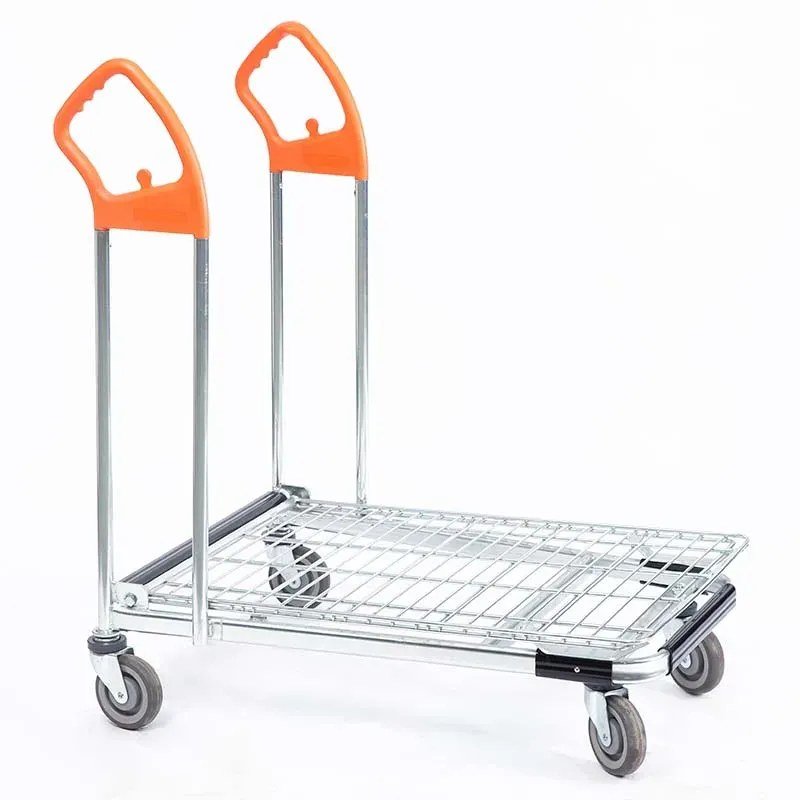
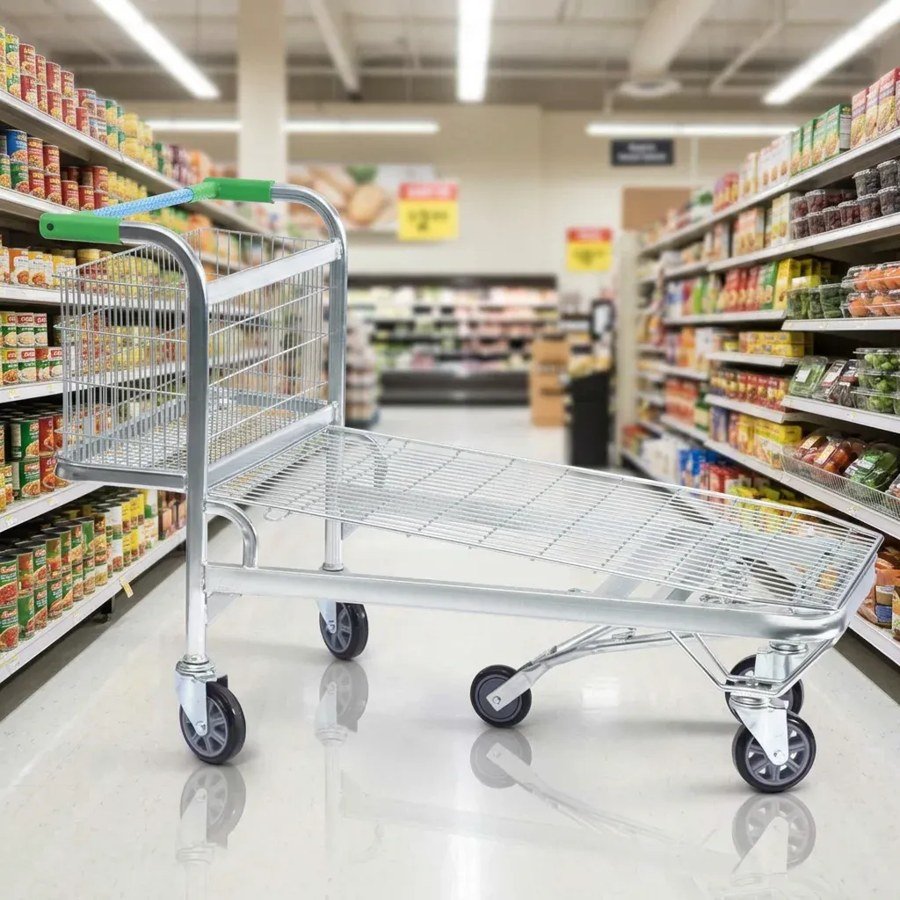
Zinc plating works differently. The zinc layer corrodes in preference to the steel beneath it, so a light scratch does not immediately become a rust spot. It is a better choice than paint in a damp back room, and it is not a big premium: a zinc plated steel mesh warehouse cart is from £37 ex VAT.
A stainless steel trolley is not coated at all. The corrosion resistance is in the alloy, through the full thickness of the metal, so a scratch is cosmetic rather than the start of a problem. A stainless steel two layer folding mesh cart rated at 300 kg is from £44 ex VAT, bulk price. On a trolley that gets hosed down several times a week, that is usually the cheaper decision over a few years, because you are not replacing frames that have rusted at the welds.
Zinc plated, painted steel, stainless or plastic shelves: how the four options differ
- Painted or powder coated steel. The lowest cost and perfectly sound in a dry building. Expect touch up work on corners and castor plates, and keep it away from standing water.
- Zinc plated steel. The usual middle ground for warehouse and cash and carry work. It tolerates damp air, condensation and the odd wet wheel far better than paint, and it does not need repainting.
- Stainless steel. For washdown, chilled and food handling areas. It takes detergents and daily cleaning without the finish breaking down, and it stays presentable in front of customers.
- Steel frame with plastic shelves. A useful halfway house. The shelves themselves cannot rust, they wipe clean quickly, and spills do not sit in a mesh pattern. The frame still needs the right finish for the room it works in.
Capacity and finish are separate decisions. You can have a 300 kg shelf in any of these, so size the trolley for the load first, then choose the finish for the room. The whole warehouse trolley range is listed with rated loads on each page.
Comparison: trolley finish, where it suits and guide price
| Finish | How it resists rust | Cleaning it will take | Guide price in this range |
|---|---|---|---|
| Painted or powder coated steel | Coating only, chips are the weak point | Dry wipe, occasional damp cloth | from £37 ex VAT |
| Zinc plated steel | Zinc layer corrodes before the steel does | Damp wipe, occasional wet clean | from £37 ex VAT |
| Stainless steel | Resistance is in the alloy, not a coating | Daily washdown and detergent | from £44 ex VAT, bulk price |
| Steel frame, plastic shelves | Shelves do not rust, frame as above | Shelves wipe or lift out to wash | from £44 ex VAT, bulk price |
Those are guide prices in GBP ex VAT for comparison. The figure for the quantity you actually want, with freight, duty and VAT, is confirmed on your written quote.
Which finish suits a cash and carry, a chilled room or a dry warehouse?
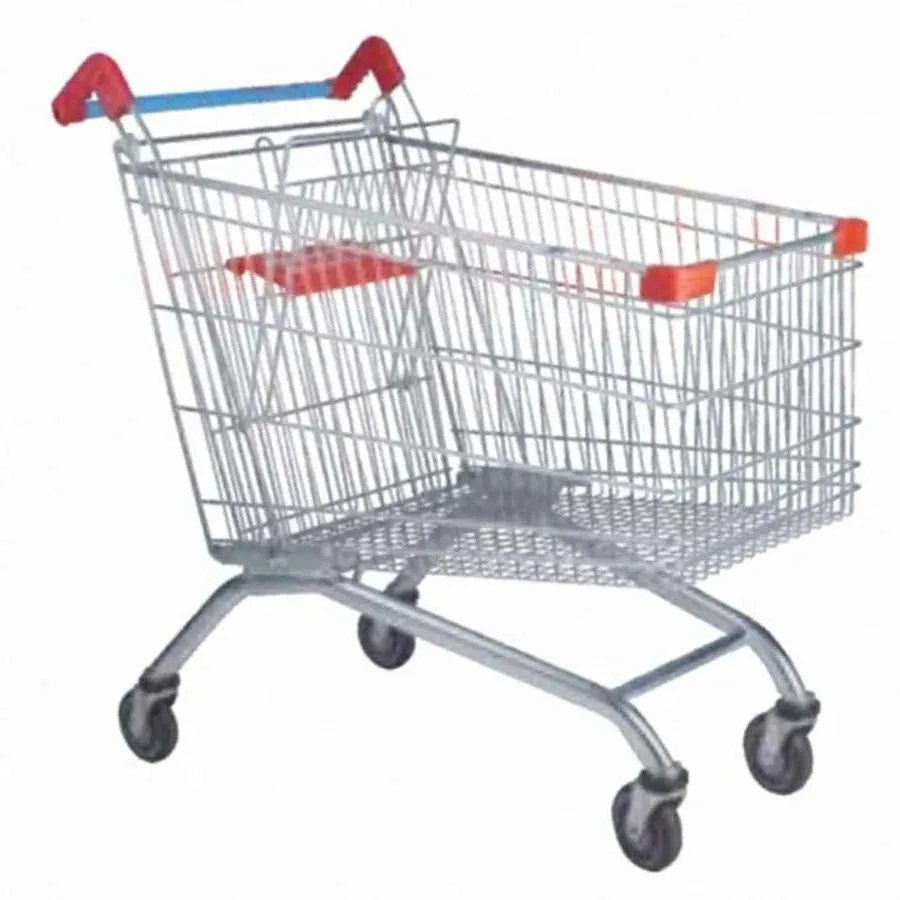
Dry warehouse and general distribution. Zinc plated steel is the sensible default. Floors are swept rather than washed, the air is dry, and the money is better spent on rated load and castors than on alloy. A 200 kg four castor warehouse trolley at from £37 ex VAT covers most back of house moves.
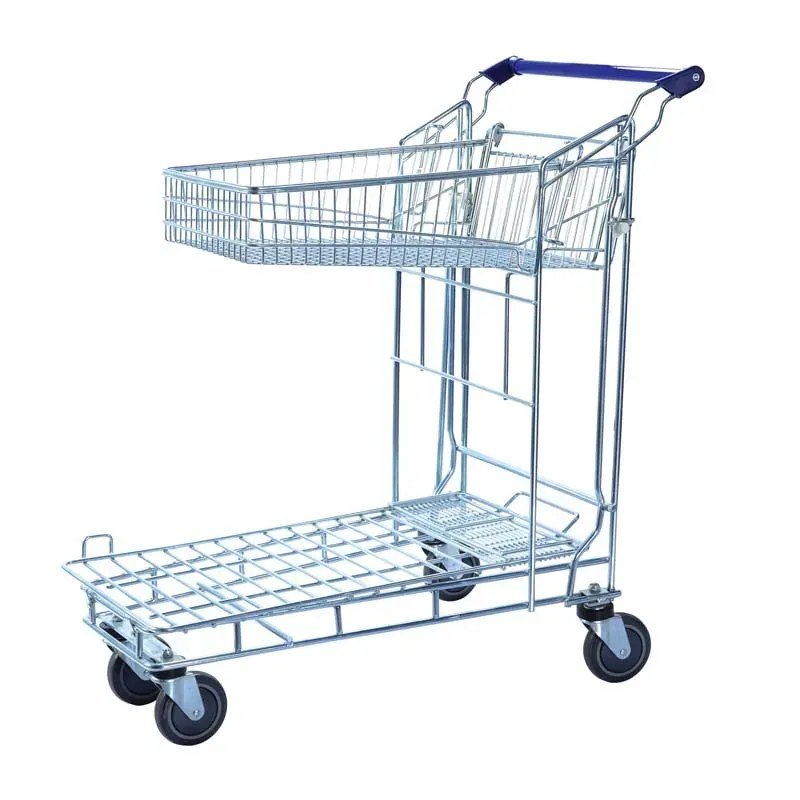
Cash and carry and wholesale aisles. Trolleys are in front of customers all day and take knocks from pallets and cages. Zinc plating holds its appearance longer than paint, and mesh sides stop cases sliding off at the turns. If the same trolleys do order picking, look at the picking trolley patterns with two or three tiers.
Chilled rooms, food prep and produce. This is where a stainless steel trolley is worth the difference. Condensation forms on anything coming out of a chiller, ice melts on shelves, and cleaning is a daily routine rather than an occasional job. Coated trolleys in these rooms tend to fail at the welds and the castor plates first.
Bakery, butchery and anywhere with detergents. Stainless again, or at minimum plastic shelves on a stainless or zinc plated frame, so that cleaning chemicals are not sitting on bare painted steel every evening.
Where trolleys actually start to rust, and how to slow it down
Finish is only half the story. In practice the same few places go first, whatever you buy:
- Castor plates and stems. They sit closest to wet floors and take the most impact. Check them when trolleys come back from a wash area.
- Welds and joints. Water sits in the seams. On a coated trolley these are the points where the coating is thinnest.
- Shelf edges and corners. Cases are dragged over them, which is exactly how a coating gets opened up.
- Anywhere the trolley is parked. A trolley left standing in a puddle overnight ages faster than one used twice as hard on a dry floor.
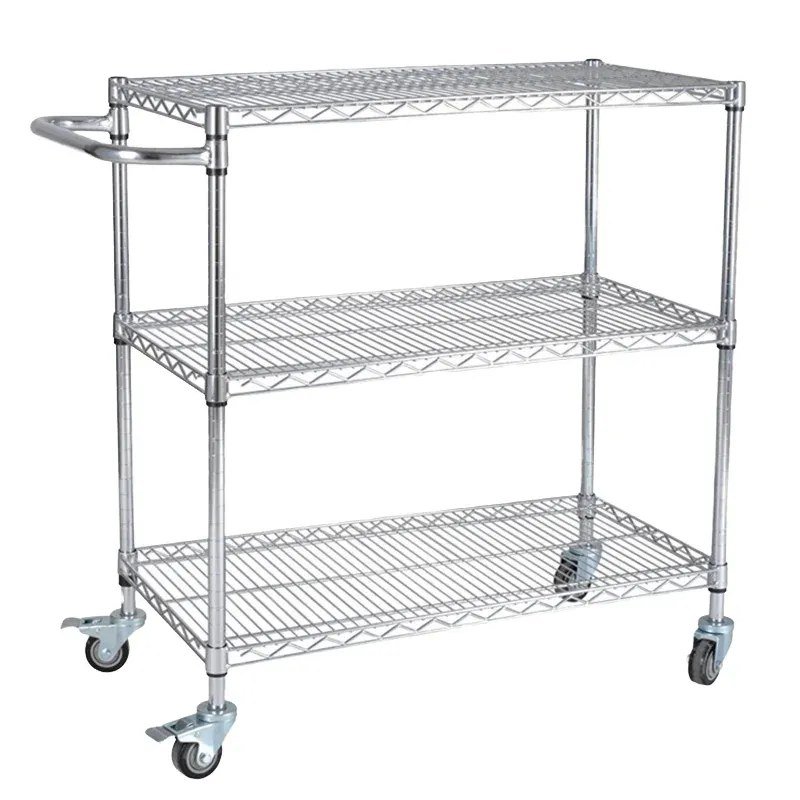
Two habits make more difference than the finish itself: park trolleys off wet floors, and keep loads off the deck where water can pool. A three tier wire shelf trolley at from £48 ex VAT, bulk price does the second job by design, because stock sits on open shelves that drain and dry instead of on a flat tray.
What to check before you buy a warehouse trolley
- Rated load against your heaviest run, not your average one. Rated loads in this range run from 60 kg up to 500 kg per trolley.
- The cleaning routine the trolley will meet. If it will be washed down, specify stainless or plastic shelves now rather than replacing frames later.
- Shelf clearance. Measure your tallest case and the height a picker can load comfortably before you choose two tiers or three.
- Castors and brakes. Check wheel size against your floor joints and ramps, and decide whether you need brakes on two wheels for sloped bays.
- Door, aisle and lift widths, including the turn at the end of an aisle, which is where an over long trolley is found out.
- Folding or fixed. Folding patterns stack back into a corner between peaks; fixed frames are stiffer under repeated heavy loads.
- What the quote covers. Price, freight, duty, VAT and lead time are confirmed on your written quote, which is valid for 30 days. Guide prices on the site are there to compare patterns, and the price guide explains how they are set.
Warehouse trolleys in these finishes
Questions people ask
Is a stainless steel trolley worth the extra over zinc plated?
In a dry building, no: zinc plated steel from £37 ex VAT does the same job. In a washdown, chilled or food handling area, yes, because a stainless frame from £44 ex VAT, bulk price does not fail at the chipped corners and welds that end a coated trolley.
Can you jet wash a zinc plated trolley?
You can wet clean it, but repeated high pressure washing with detergent will shorten the life of any plated or painted finish. If a trolley is washed as a routine rather than an exception, buy stainless or plastic shelves instead.
What rated load should I choose?
Size it on your heaviest realistic load, with the weight spread over the shelf rather than concentrated in one corner. Trolleys in this range are rated from 60 kg to 500 kg, and 200 kg to 300 kg covers most back of house and shop floor work.
Does stainless steel need any maintenance?
It needs cleaning, not protection. Rinse off salt, acidic spills and strong cleaning chemicals rather than leaving them to dry on the surface, and check castors for grit in the bearings as you would on any trolley.
Can I mix finishes across one fleet?
Yes, and most sites do. Put stainless where there is water and chilled stock, zinc plated everywhere else, and keep the two groups visually distinct so stainless trolleys are not borrowed for yard work.
How do I get a firm price for a mixed order?
Send the patterns and quantities you want to sales@londonpallettrucks.co.uk or use the <a href="/contact/">contact page</a>. The written quote confirms price, freight, duty, VAT and lead time, and holds for 30 days.