Comparison · · Floor Scrubbers & Sweepers
Walk behind floor scrubber or ride on: which one suits your floor area
A walk behind floor scrubber starts from £480 ex VAT and suits floors up to roughly 1,000 m² where aisles and doorways are tight. A ride on starts from £1,275 ex VAT and earns its place above roughly 3,000 m², because cleaning width and operator comfort decide how long the job takes. Aisle width, floor area and how often you clean decide which one you buy, not the headline price.
What a walk behind floor scrubber does that a ride on cannot
Both machines do the same three things in one pass: lay down water and detergent, scrub it with a rotating brush or pad, then vacuum it back through a rear squeegee so the floor is dry enough to walk on straight away. That is the whole point of a scrubber dryer, and it is why a mop and bucket loses on a floor of any size. The difference between the two formats is where the operator stands, and that changes where the machine fits.
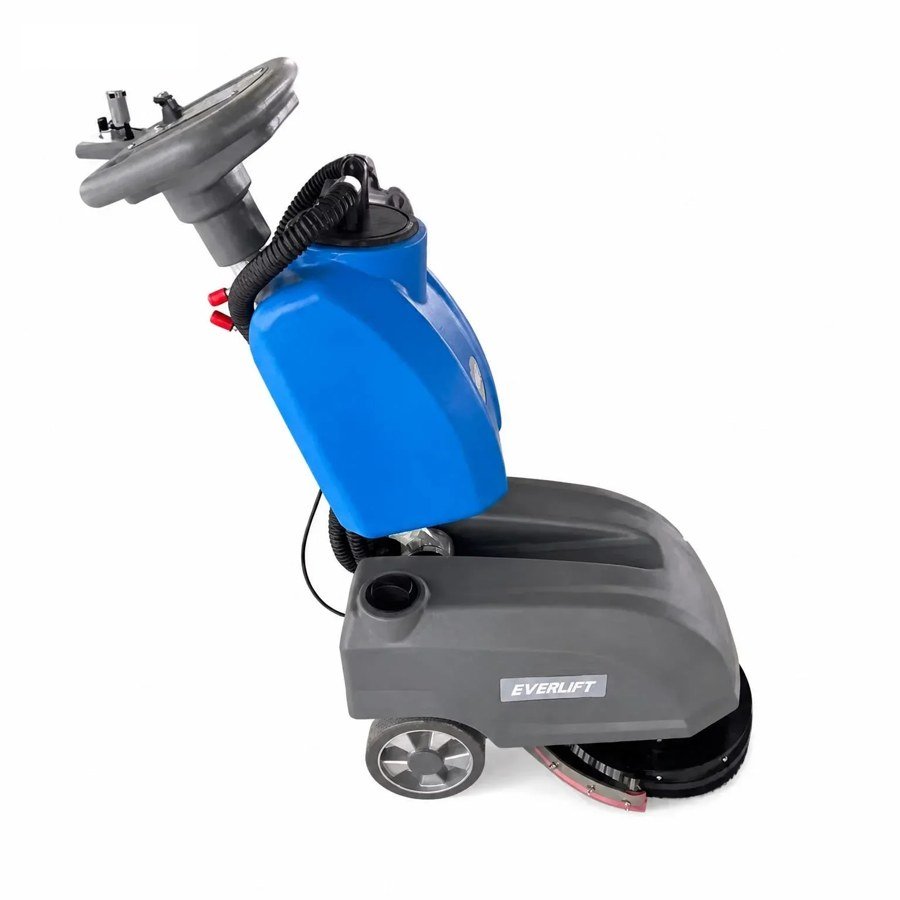
A walk behind machine is pushed. Cleaning widths start around 350mm, so it goes down a shop aisle, behind a checkout, round racking legs and through a standard doorway without a fuss. The 350mm mini walk behind scrubber, from £480 ex VAT, is the size most small retail units, food prep areas and back of house corridors actually need. Step up to a 540mm deck, from £795 ex VAT, and you clear more ground per pass while still fitting a normal aisle.
A ride on puts the operator on a seat with bigger tanks underneath. Cleaning widths start at 580mm and run to 850mm, and a full shift on one is far less tiring than walking the same distance. What it needs in return is turning room, a parking bay and a charging point. On a cluttered floor with 1.2 m aisles, a ride on spends its day reversing, and a walk behind does the job quicker.
Floor area is the number that decides between walk behind and ride on
Start with the area you clean, not the price. Then check it against the aisle you have to get down.
| Machine | Cleaning width | Typical site | Guide price |
|---|---|---|---|
| Mini walk behind | 350mm | Small retail units, food prep areas, back of house corridors, under roughly 1,000 m² | from £480 ex VAT |
| Walk behind | 540mm | Cash and carry aisles, mid size shop floors, workshops up to roughly 2,000 m² | from £795 ex VAT |
| Ride on | 580mm | Warehouses and busy retail floors cleaned daily, roughly 2,000 to 5,000 m² | from £1,275 ex VAT |
| Ride on | 850mm | Distribution floors and production halls above roughly 5,000 m² | from £2,720 ex VAT |
As a rough rule: under 1,000 m², buy a walk behind. Between 1,000 and 3,000 m², either will work and the deciding factors are how often you clean and how much clutter is on the floor. Above 3,000 m² cleaned daily, a ride on is the sensible answer.
You can put numbers on it. Ride on machines at 580mm are rated at roughly 4,100 m² an hour and 850mm machines at roughly 6,800 m² an hour. Those are theoretical figures at full speed in a straight line, so halve them for a real floor with racking, pallets and people on it, then add time for filling, emptying and charging. If the answer is longer than the cleaning window you have, you need a wider machine or a second one.
Scrubber or sweeper: which one your floor actually needs
Buyers often ask for a floor scrubber when the mess on the floor is dry, and the machine then struggles for the rest of its life. The two formats handle different dirt.
- A scrubber works wet. It removes films, spills, greasy residue, scuff and tyre marks from sealed concrete, tiles, epoxy resin and vinyl. It is the right machine for retail floors, food areas, production halls and anywhere the floor looks dull rather than littered.
- A sweeper works dry. A rotating brush throws dust, grit, cardboard, shrink wrap and leaves into a hopper, usually with a filter to keep the dust down. It is the right machine for yards, goods in areas, loading bays and unsealed concrete.
Plenty of sites need both, and the order matters: sweep first, scrub second. Sending a scrubber over loose grit turns it into slurry, clogs the squeegee, fills the recovery tank with sludge and wears the brush out early. If your floor carries both kinds of dirt, look at the full floor cleaning machine range and price a sweeper alongside the scrubber rather than expecting one machine to do everything.
What to check before you buy a floor scrubber
Six things decide whether the machine suits the building. Work through them before you fix on a model.
- The narrowest point on the route. Measure the tightest aisle, the doorway, the lift if there is one. The squeegee sits wider than the brush deck, so a 540mm machine needs more than 540mm of clearance. Check the turning circle too if the aisles are dead ends.
- Battery type and run time. Lead acid is cheaper to buy and needs a ventilated charging area. Lithium-ion charges faster and takes top ups between shifts. Either way, ask what one charge gives you in minutes of scrubbing, not in theory, and check it covers your cleaning window.
- Tank capacity and where you fill and drain. Clean and dirty water capacity in litres sets how far the machine goes before a trip back. A tap and a drain near the parking bay matter as much as the litre figure.
- Consumables. Brushes, pads and squeegee blades wear out, faster on textured or unsealed concrete. Ask for the part references on your quote so re-ordering later is straightforward.
- Who operates it. A ride on is work equipment. Under the Provision and Use of Work Equipment Regulations 1998 it has to be suitable for the job, maintained, and used by people who have been trained and instructed. Build a daily pre use check into the cleaning routine.
- Noise and trading hours. If the floor gets cleaned while customers are in the building, ask for the noise rating. A quiet walk behind is often the practical choice on a shop floor even when the area would justify a ride on.
What a floor scrubber costs and what the quote confirms
The ladder across the range is straightforward. A 350mm mini walk behind starts from £480 ex VAT and a 540mm walk behind scrubber from £795 ex VAT. A 580mm ride on starts from £1,275 ex VAT, and an 850mm ride on from £2,720 ex VAT. The jump from walk behind to ride on is roughly the cost of the seat, the drive motor, the larger tanks and the bigger battery pack.
Those are guide prices in GBP ex VAT. Price, freight, duty, VAT, minimum order quantity and lead time are confirmed on your written quote by email, and the quote holds for 30 days. Machines are made to order at our partner factories, inspected before dispatch with photographs and video sent to you, then delivered anywhere in the UK. The minimum order page explains how order quantities work if you are buying more than one.
Two costs sit outside the machine price and catch people out. The first is consumables over the first year, which depend on your floor finish more than on the machine. The second is a charging point in the right place, with the right supply, close to where the machine will live. Both are cheaper to sort out before the machine arrives than after.
Floor scrubbers discussed in this article
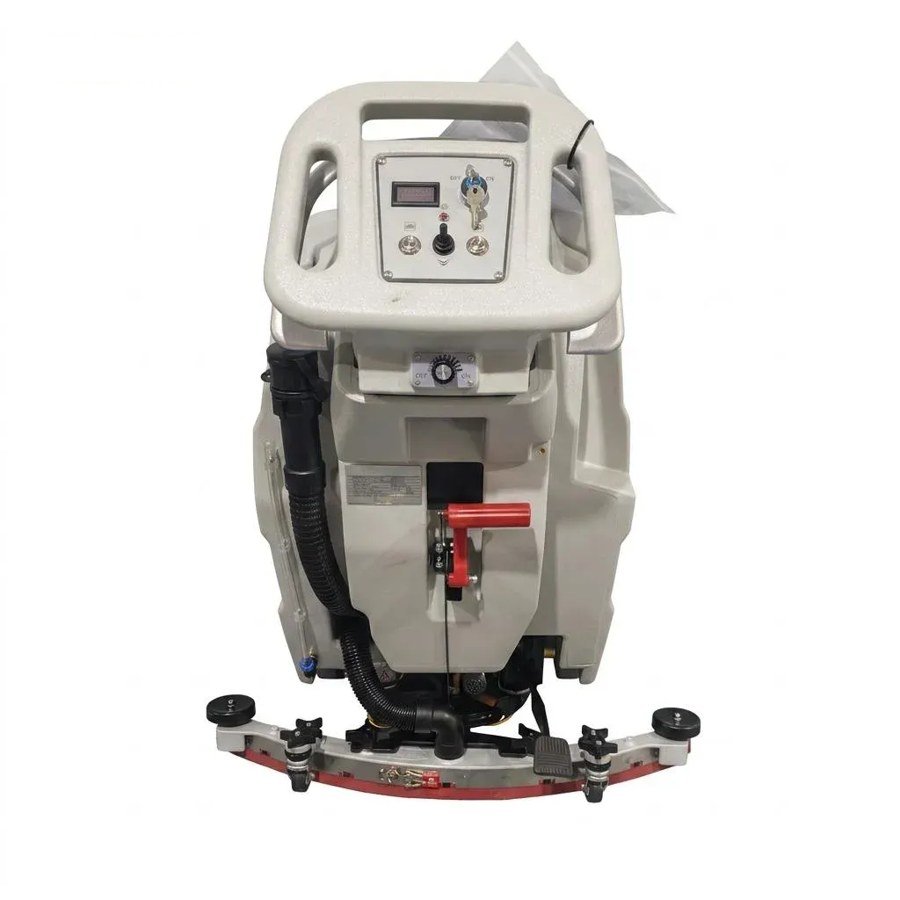
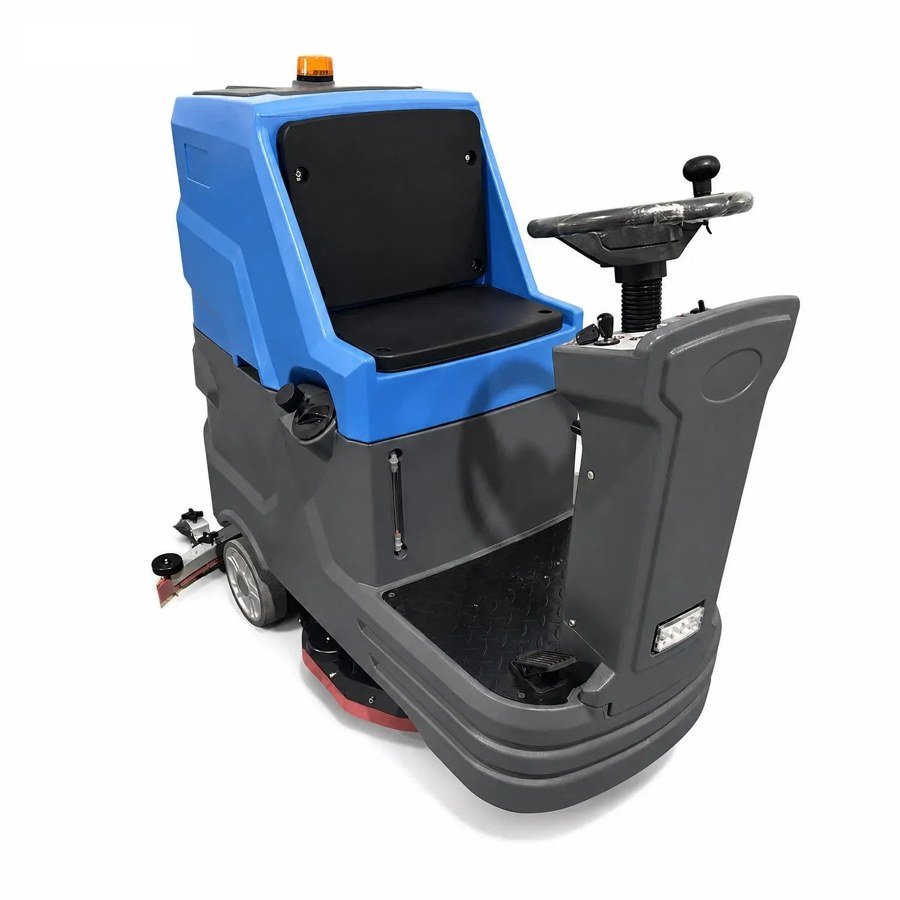
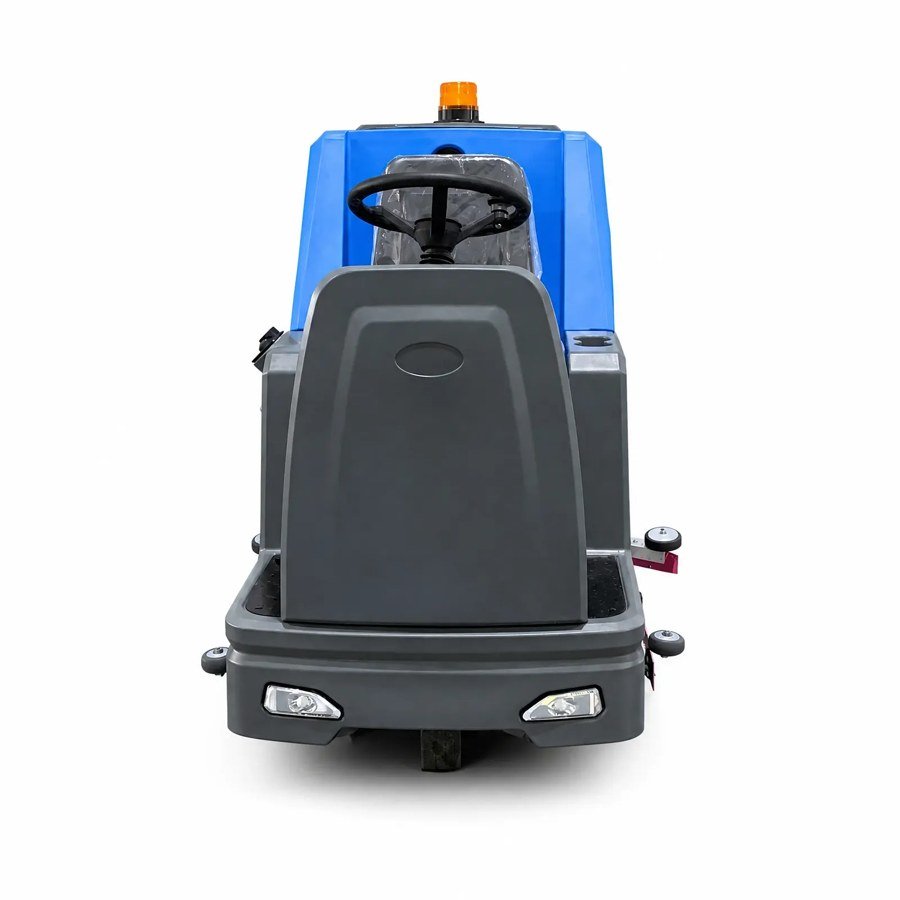
Questions people ask
What is the difference between a walk behind floor scrubber and a ride on?
A walk behind is pushed by the operator and starts at 350mm cleaning width, so it fits tight aisles and doorways. A ride on seats the operator, starts at 580mm width and carries larger tanks, so it covers more ground per hour but needs turning and parking room.
What size floor scrubber do I need for my warehouse?
Match cleaning width to floor area and aisle width. Under roughly 1,000 m², a 350mm or 540mm walk behind is enough. Above roughly 3,000 m² cleaned daily, a 580mm or 850mm ride on will finish inside a normal cleaning window.
Does a floor scrubber leave the floor dry?
Yes, if the squeegee is in good order. The machine vacuums the water back up as it passes, so the floor is dry enough to walk on immediately. A worn or badly set squeegee blade is the usual reason a machine leaves streaks or standing water.
Do I need a floor sweeper as well as a floor scrubber?
If the floor carries dry grit, dust or cardboard, yes. A scrubber run over loose debris turns it into slurry and blocks the squeegee. Sweep first and scrub second, or keep the sweeper for the yard and goods in area and the scrubber for the finished floor.
How long does the battery last on one charge?
It depends on battery capacity, brush pressure, the amount of water being laid down and whether the machine is a walk behind or a ride on. Ask for the rated scrubbing time and the charge time of the exact model, which is confirmed on your written quote.
Are the prices shown including VAT and delivery?
No. Prices are guide prices in GBP ex VAT for business customers. VAT, freight, duty, minimum order quantity and lead time are confirmed on your written quote, which is valid for 30 days.
Sources: HSE: Provision and Use of Work Equipment Regulations 1998 (PUWER)